Tomato, Currant, Cherry, Pomegranate Machine embroidery designs - 2 sizes
By knowing the speed of your embroidery machine, you can find out how long it will take to embroider a design.
To use the embroidery calculator, click on the number of stitches in the product description.
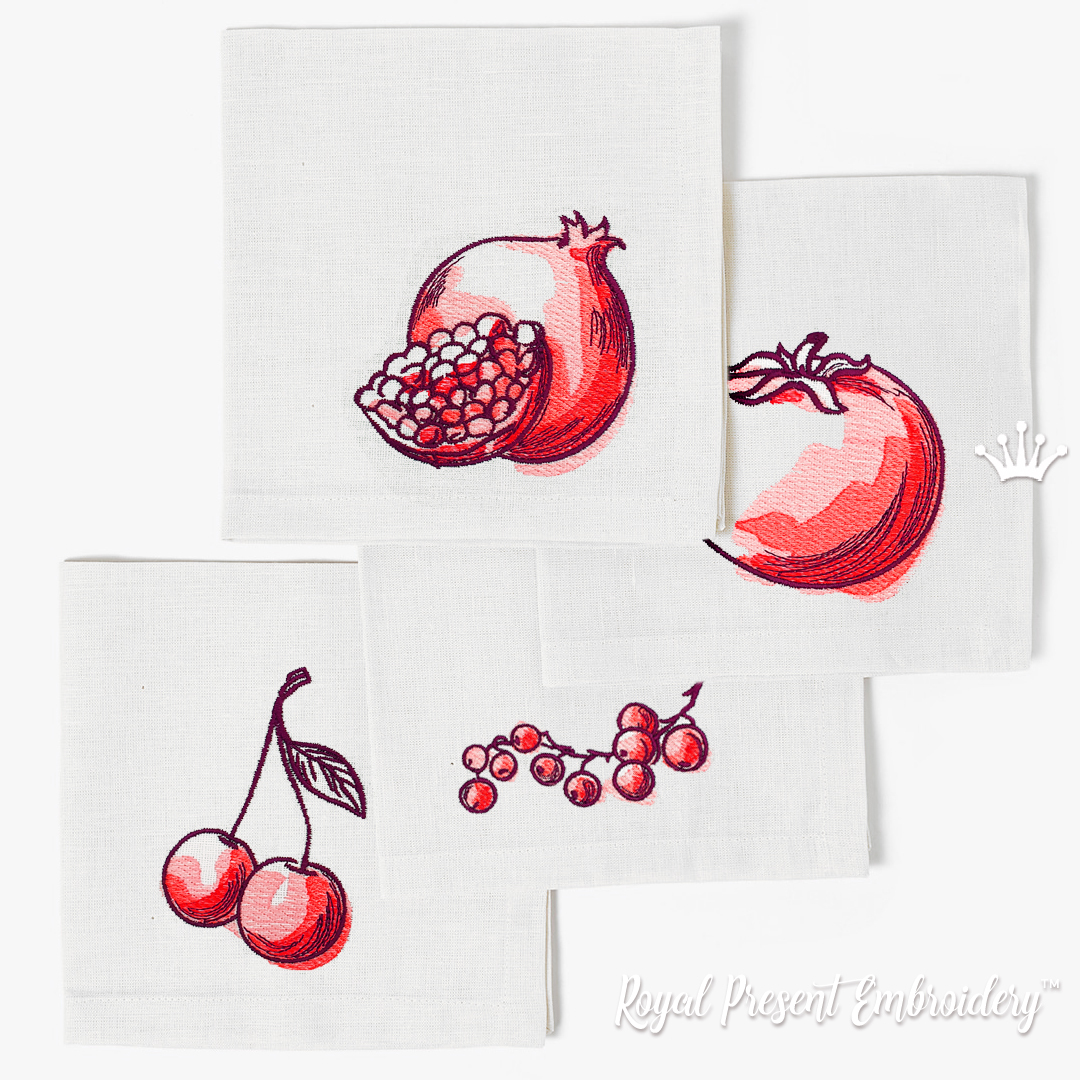
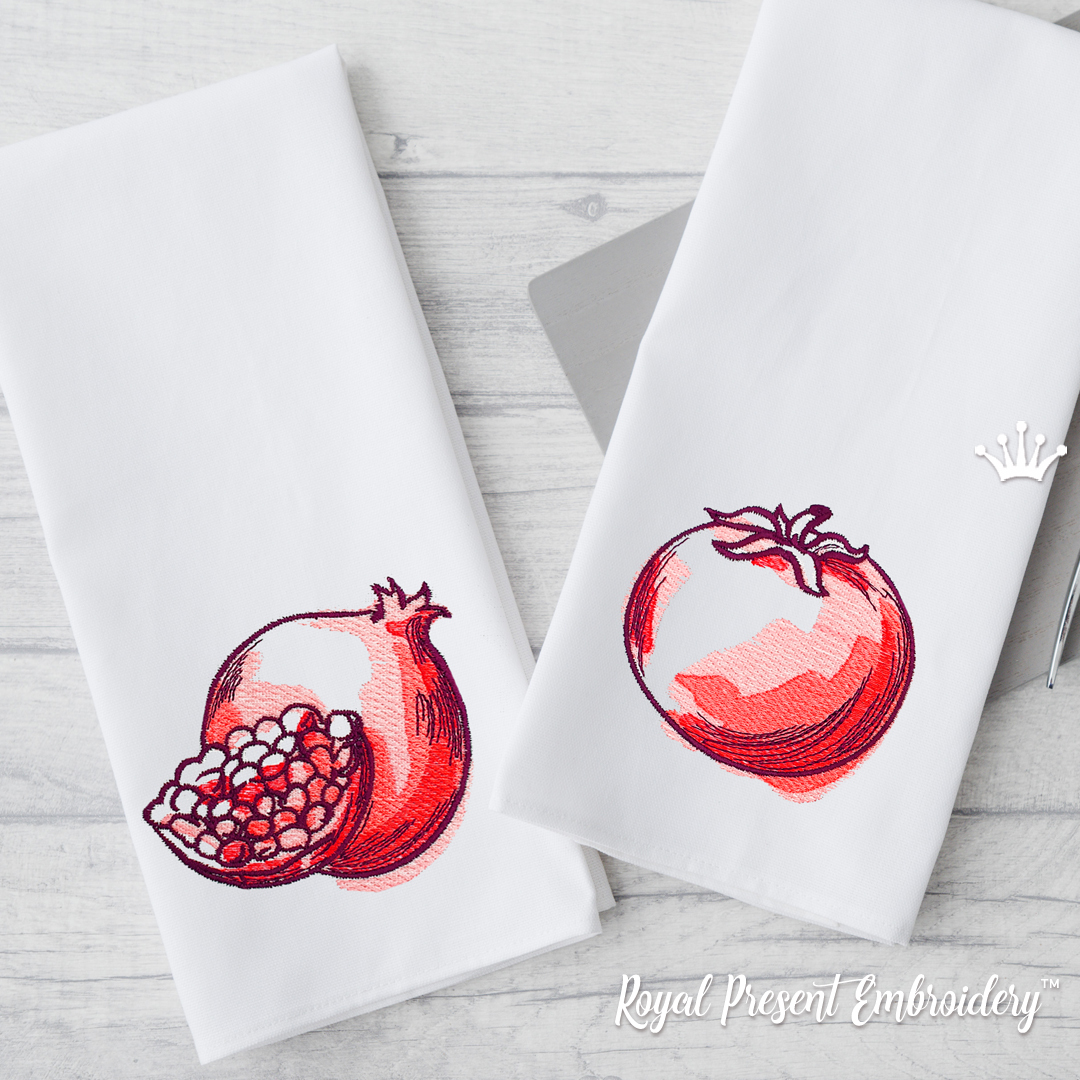
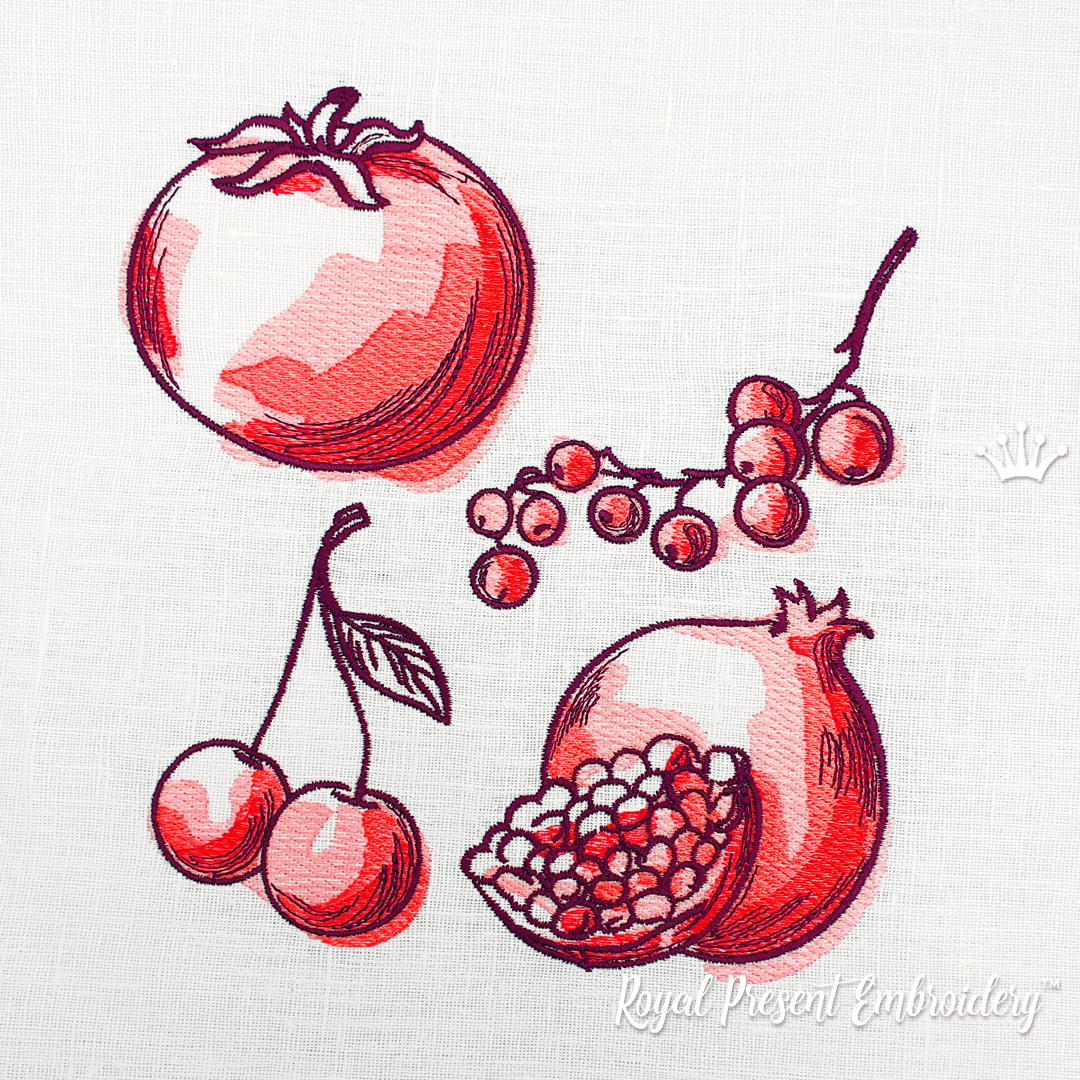
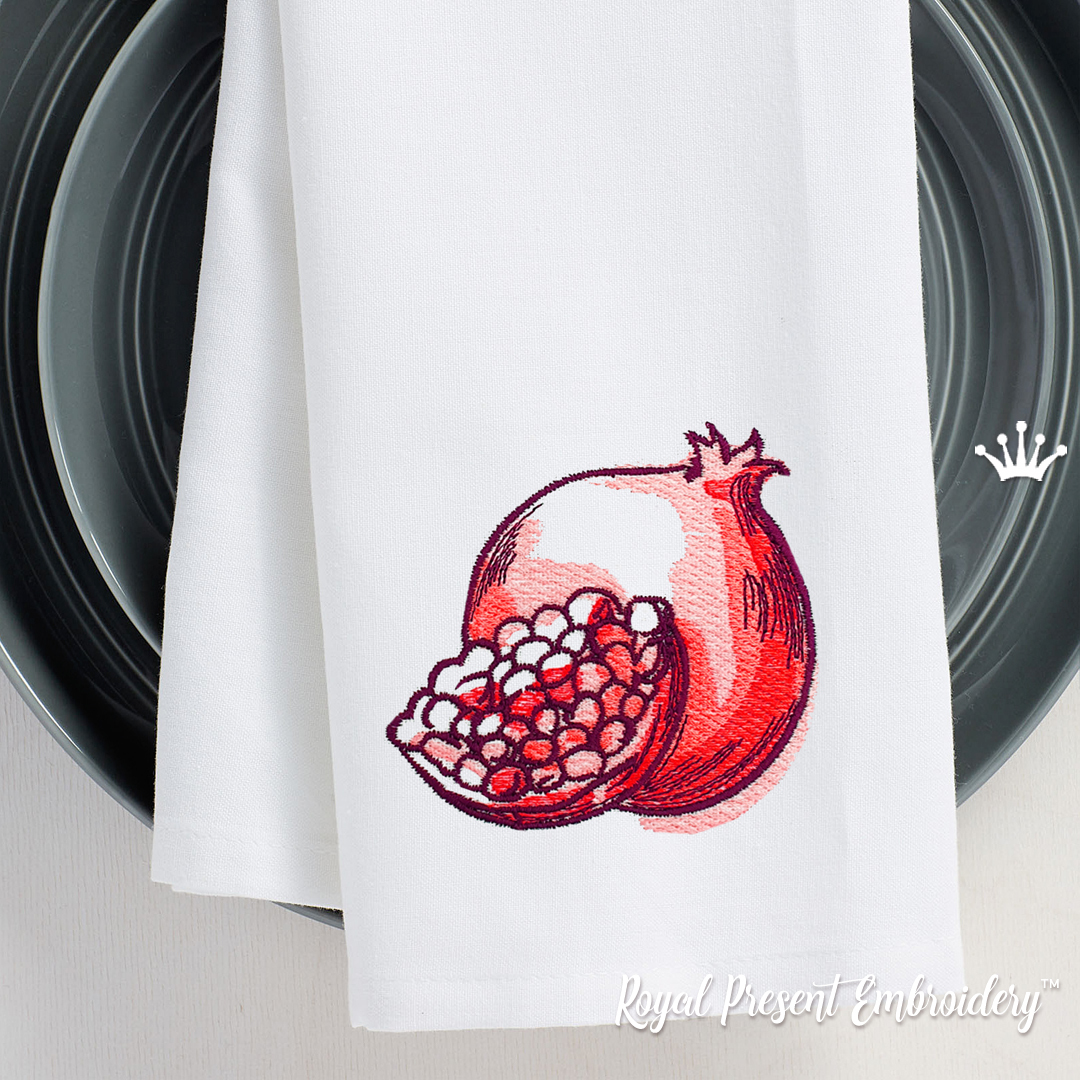
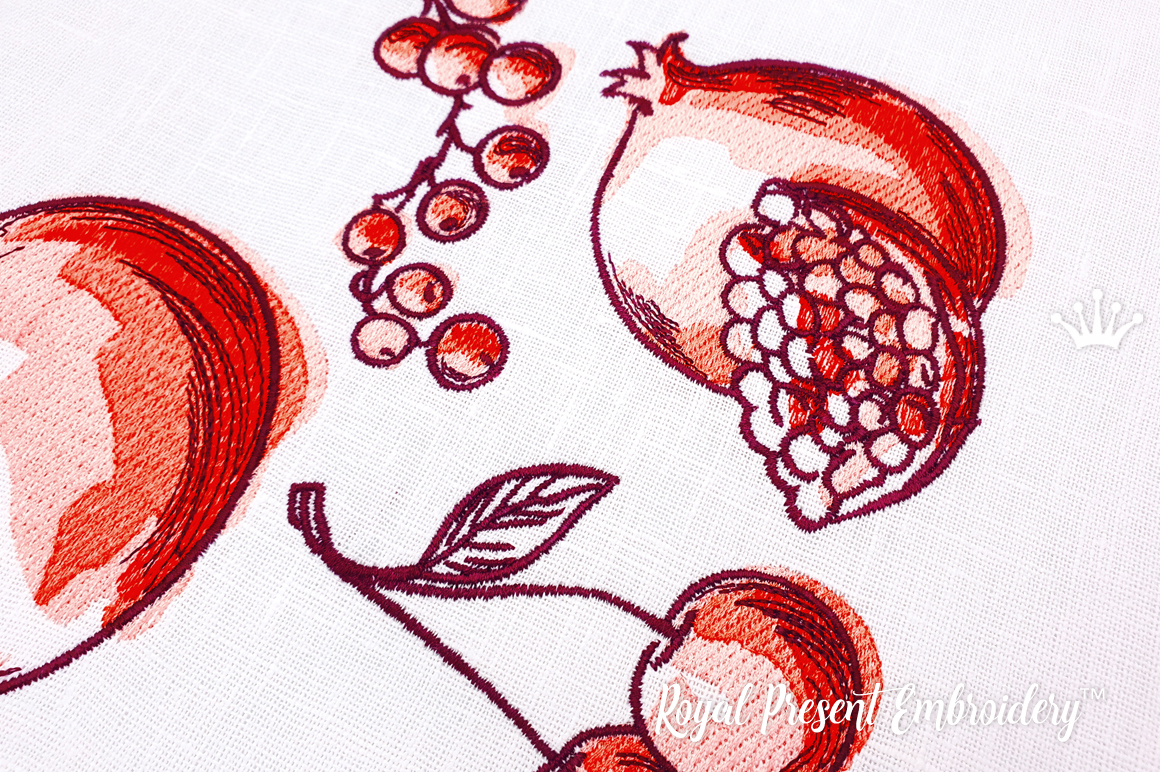
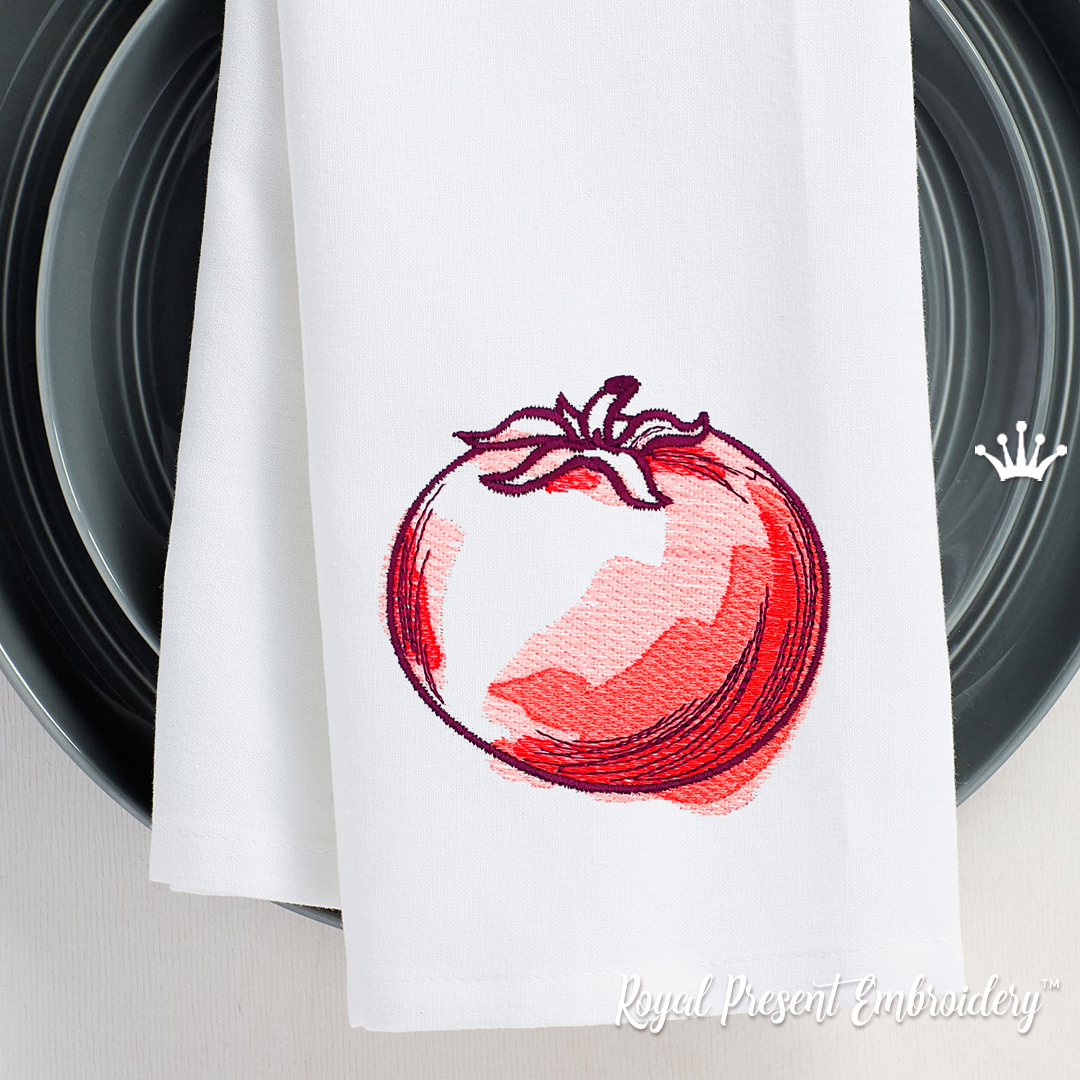
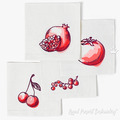
This downloadable machine embroidery set contains four separate watercolor-style motifs: a ripe tomato, red currants on a branch, a pair of cherries with a leaf, and a composition with a whole and cut pomegranate.
Transparent pink and red fills, dark sketch-like outlines and intentionally open highlights create the effect of a hand-painted botanical illustration. White, ivory or another very light smooth fabric becomes part of the design and keeps the watercolor transitions visible.
The purchase includes digital files for computerized embroidery machines. No finished embroidery, patch, fabric, thread or other physical product will be shipped.
Design sizes and stitch counts
Tomato
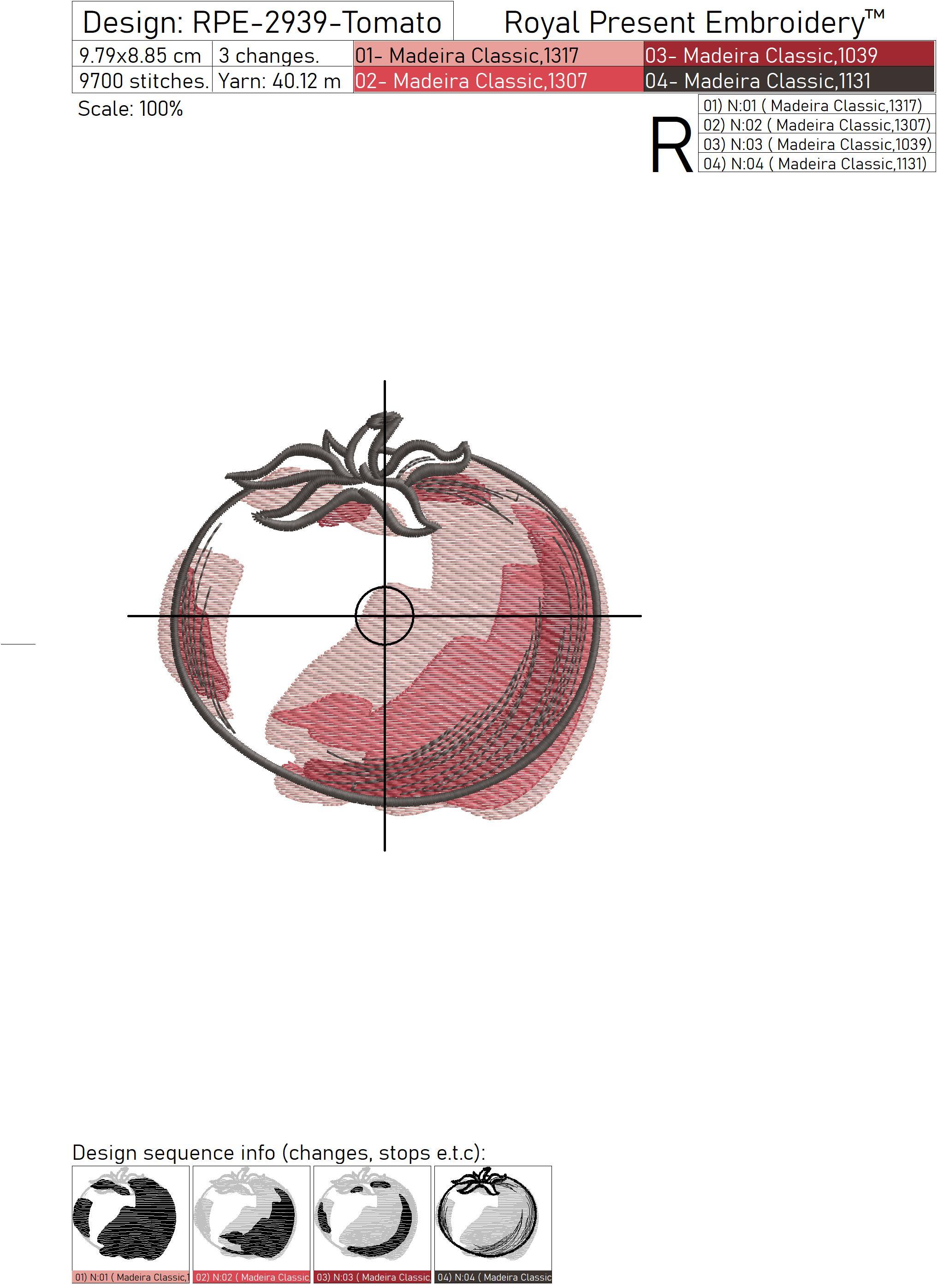
Size: 97.9x88.5 mm (9.79x8.85 cm; 3.85x3.48"), Stitches: 9609
Size: 117.6x106.4 mm (11.76x10.64 cm; 4.63x4.19"), Stitches: 12442Pomegranate
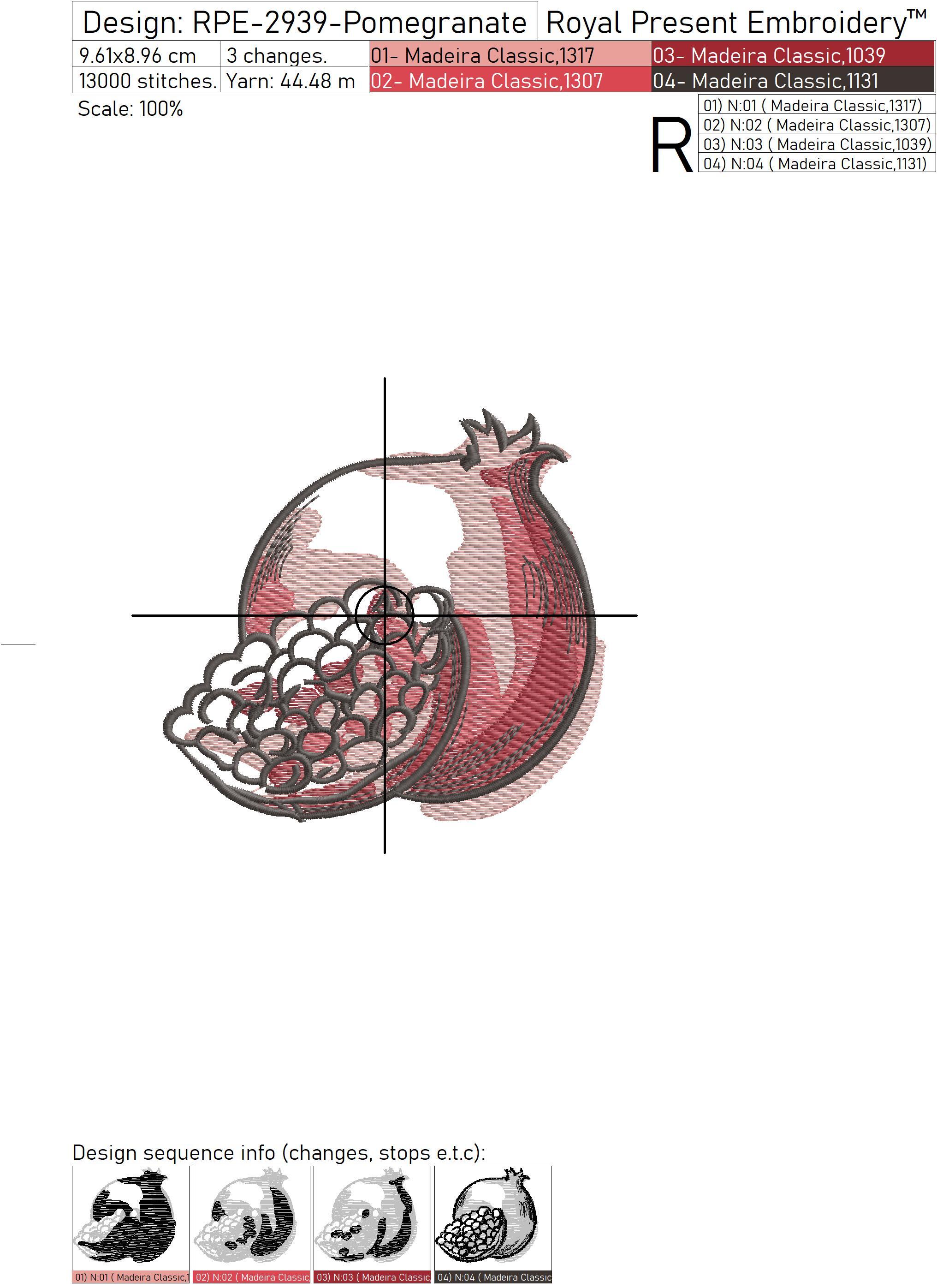
Size: 96.1x89.6 mm (9.61x8.96 cm; 3.78x3.53"), Stitches: 12567
Size: 115.3x107.5 mm (11.53x10.75 cm; 4.54x4.23"), Stitches: 15966Cherries
Size: 66.9x98.5 mm (6.69x9.85 cm; 2.63x3.88"), Stitches: 6143
Size: 80.3x118.2 mm (8.03x11.82 cm; 3.16x4.65"), Stitches: 7657Currant
Size: 98.1x90.8 mm (9.81x9.08 cm; 3.86x3.57"), Stitches: 7694
Size: 117.7x108.9 mm (11.77x10.89 cm; 4.63x4.29"), Stitches: 9457Formats: .dst, .pec, .exp, .hus, .vip, .pes, .dat, .vp3, .sew, .tap, .xxx
Hoop requirements
All four smaller files fit a 100x100 mm embroidery field, commonly called a 4x4 inch hoop.
- Tomato: 97.9x88.5 mm;
- Pomegranate: 96.1x89.6 mm;
- Cherries: 66.9x98.5 mm;
- Currant: 98.1x90.8 mm.
All four larger files require a 130x180 mm embroidery field, commonly called a 5x7 inch hoop. They do not fit a 100x100 mm field as single files.
The files can be used on Brother and Baby Lock machines that read PES, Husqvarna Viking and Pfaff machines that support VP3, VIP or HUS, Bernina machines that read EXP, and many commercial machines that use DST. The machine must also provide an embroidery field large enough for the selected file.
Commercial hoop names are rounded. Always compare both exact design dimensions with the usable embroidery area of your machine rather than the outside dimensions of the hoop.
Madeira Classic and Viking color libraries
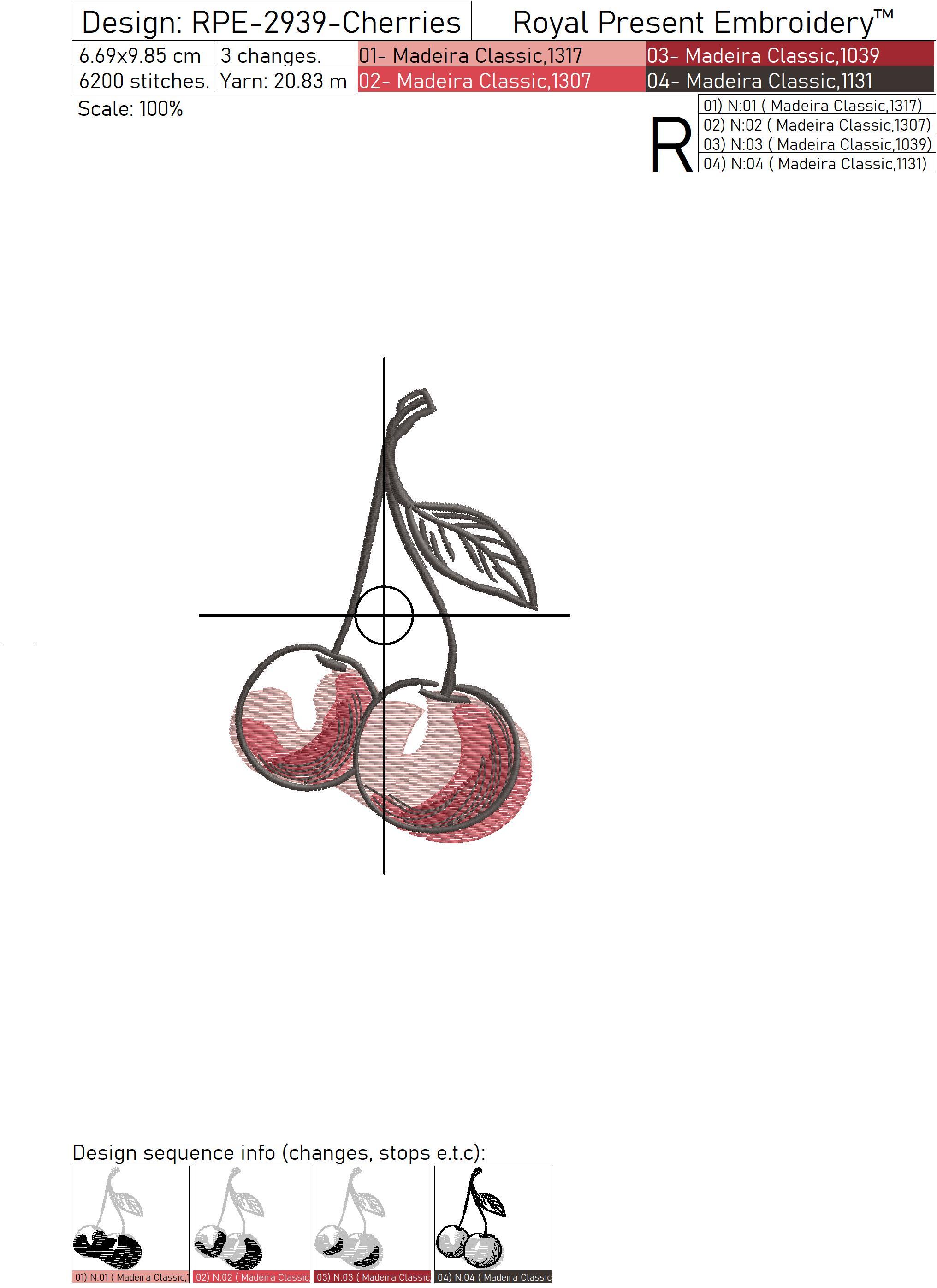
The image gallery includes a separate color chart for every motif. The tomato, cherries and pomegranate charts were created with the Madeira Classic Rayon No. 40 library. All three use the same four-color sequence.
| Sample | Madeira Classic | Shade | What it stitches |
|---|---|---|---|
| 1317 | Blush Pink — light warm pink | light watercolor foundations and the palest areas of the fruit | |
| 1307 | Raspberry Punch — raspberry red | middle red washes, curved shading and transitions | |
| 1039 | Brick Red — deep brick red | dark fruit shadows, pomegranate seeds and concentrated red accents | |
| 1131 | Espresso — very dark brown | outer contours, stems, cherry leaf, tomato calyx, pomegranate crown and internal sketch lines |
Tomato color sequence
Original color library: Madeira Classic Rayon No. 40.
Sequence: 1317, 1307, 1039, 1131.
Color blocks: 4.
Thread changes: 3.
Upper-thread consumption: approximately 40.12 m for the 97.9x88.5 mm file.
Pomegranate color sequence
Original color library: Madeira Classic Rayon No. 40.
Sequence: 1317, 1307, 1039, 1131.
Color blocks: 4.
Thread changes: 3.
Upper-thread consumption: approximately 44.48 m for the 96.1x89.6 mm file.
Cherries color sequence
Original color library: Madeira Classic Rayon No. 40.
Sequence: 1317, 1307, 1039, 1131.
Color blocks: 4.
Thread changes: 3.
Upper-thread consumption: approximately 20.83 m for the 66.9x98.5 mm file.
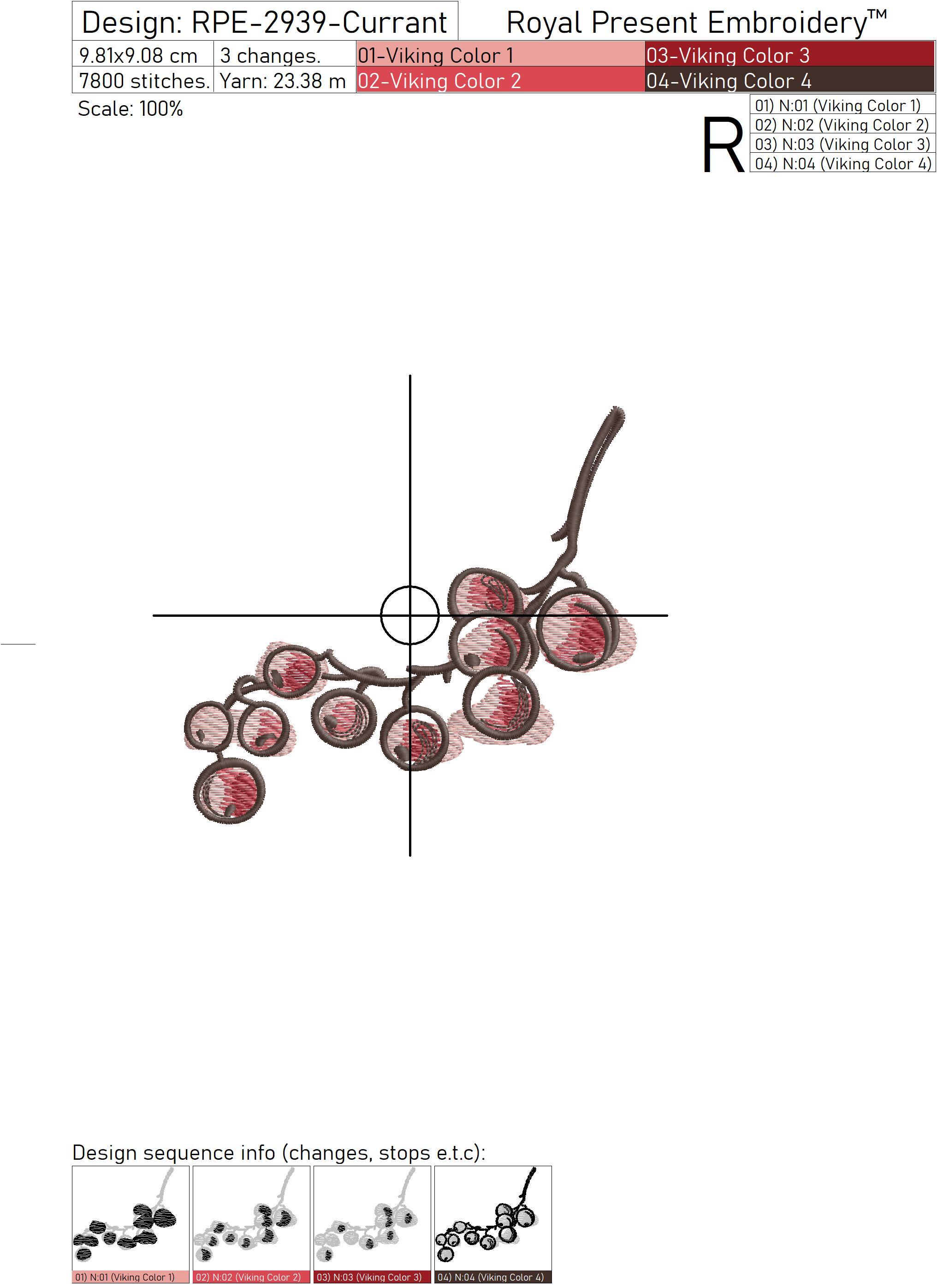
Currant color sequence
Original color library: Viking.
Sequence shown in the original chart: Viking Color 1, Color 2, Color 3, Color 4.
Color blocks: 4.
Thread changes: 3.
Upper-thread consumption: approximately 23.38 m for the 98.1x90.8 mm file.
The original currant chart contains generic Viking color names rather than manufacturer thread numbers. Color 1 forms the light pink areas, Color 2 creates the raspberry-red shading, Color 3 adds the darkest red accents, and Color 4 stitches the branch, berry outlines and internal details.
To embroider all four motifs as one coordinated collection, the currant can be stitched with Madeira Classic 1317, 1307, 1039 and 1131 in the same order. This is a practical visual match to the other three designs, not a numbered conversion printed in the original Viking chart.
The stitch totals printed on the chart images are rounded. Use the exact stitch counts in the size section when estimating embroidery time.
To find similar shades from other thread manufacturers, use the free Madeira thread converter.
On-screen swatches are a visual guide. Actual thread appearance depends on rayon sheen, lighting, monitor settings and the production batch.
Project ideas for the four designs
- four coordinated linen napkins with one motif on each napkin;
- smooth cotton kitchen towels and tea towels;
- opposite ends of a table runner;
- apron pockets and fabric recipe-book covers;
- reusable produce bags and small kitchen organizers.
The shared pink, red and espresso palette allows the four separate motifs to look like one planned table-linen collection.
Fabric, stabilizer and needle
- Smooth cotton, linen and poplin: use a light- or medium-weight tear-away stabilizer and a sharp embroidery needle No. 75/11.
- Lightweight or loosely woven linen: use an adhesive tear-away or an appropriate lightweight cut-away stabilizer to prevent the outline from shifting away from the watercolor fills.
- Napkins with a visible reverse side: test a wash-away backing on the same fabric before stitching the finished set.
- Terry or waffle towels: add a thin water-soluble topping, although smooth fabric produces a cleaner watercolor effect.
Hoop the fabric and stabilizer together without stretching the material. The three red layers and final dark contour must remain accurately registered. Make a complete test stitch on the same fabric before embroidering the finished item.
More information about selecting backing and topping is available in Choosing Stabilizers for Machine Embroidery.
Closest collection companion
The Watermelon, Apple, Raspberry and Pepper Machine Embroidery Designs set uses the same four-motif, two-size structure and can be combined with this collection on coordinated kitchen and dining textiles.
Matching watercolor designs
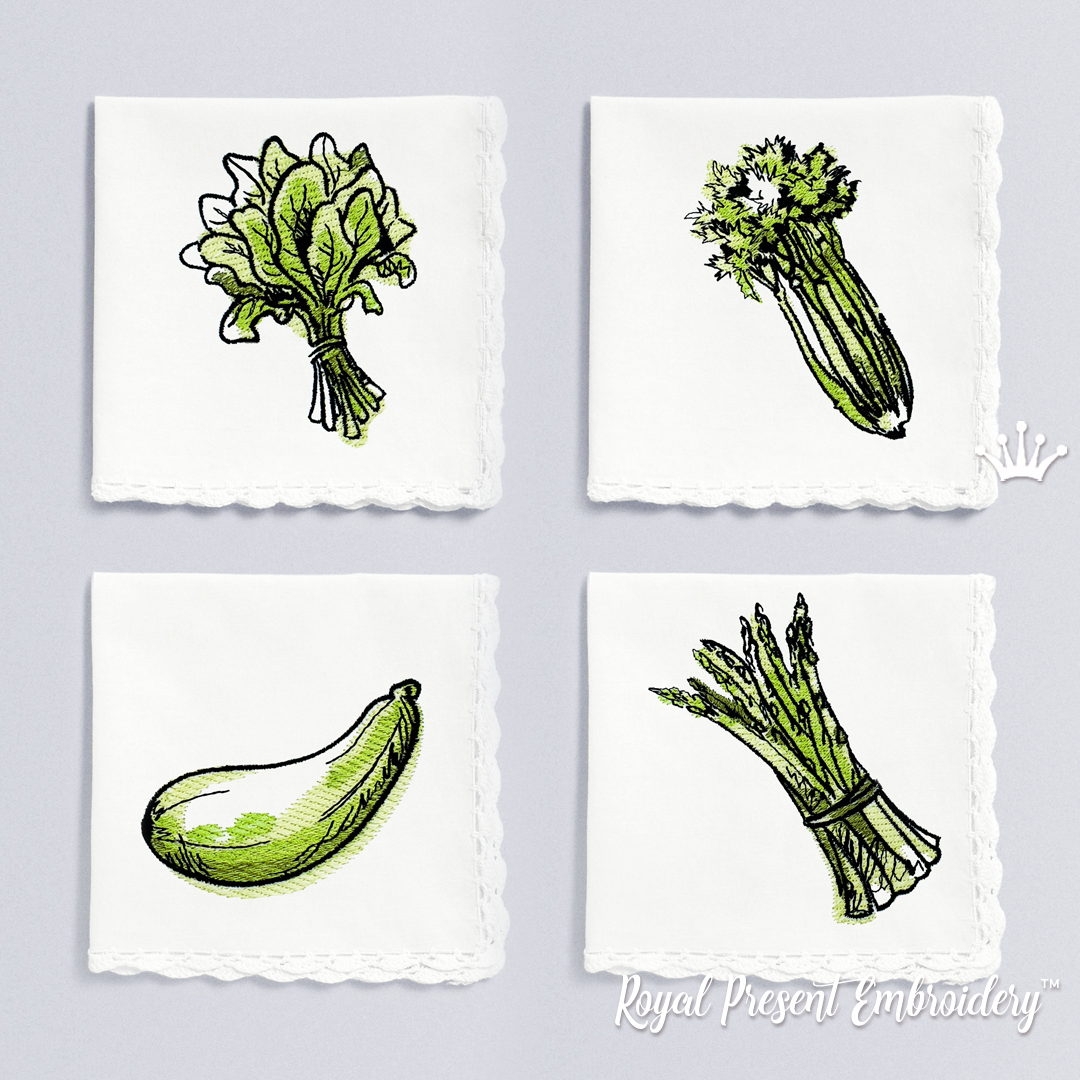 Zucchini, Asparagus, Celery & Sorrel
 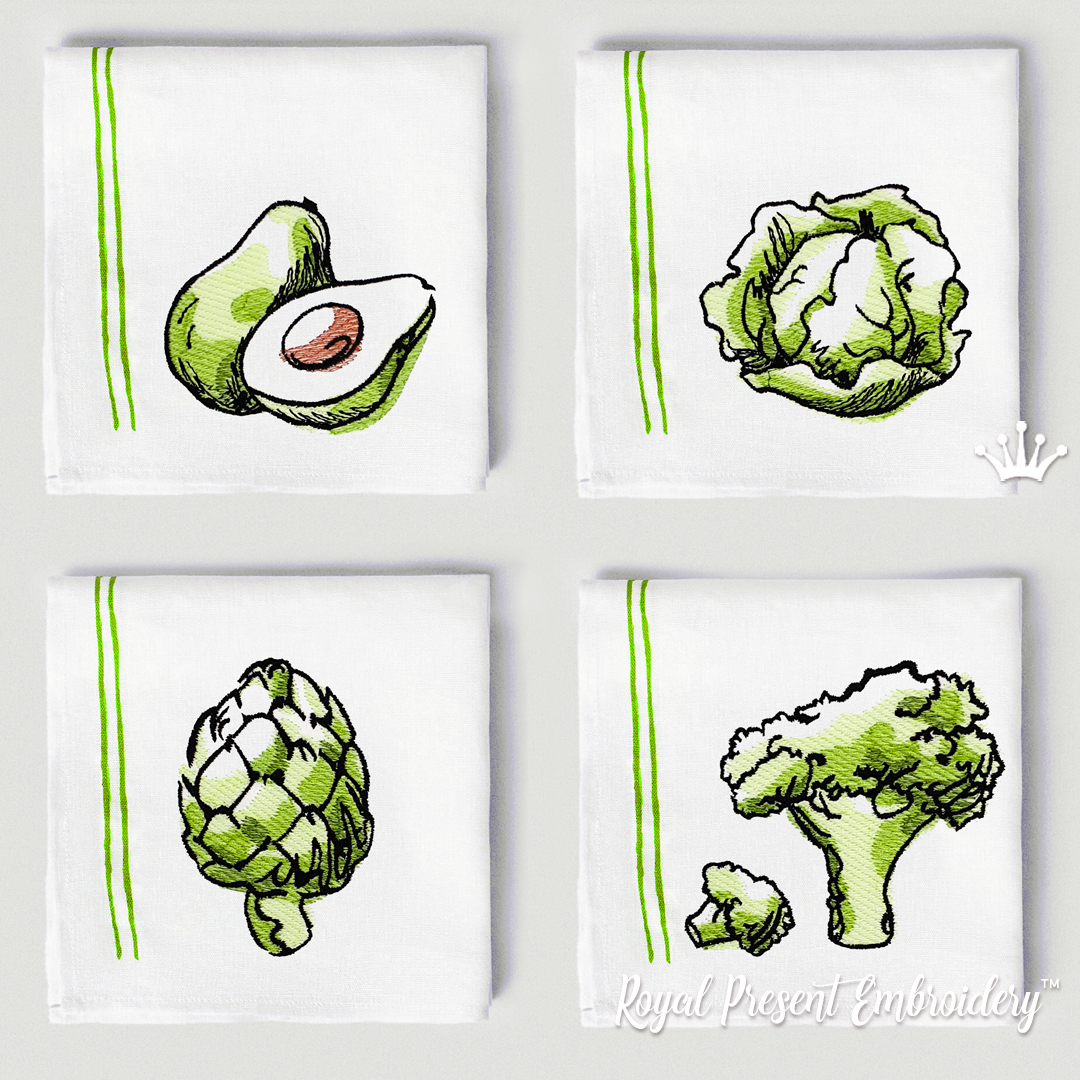 Broccoli, Avocado, Artichoke & Cabbage
 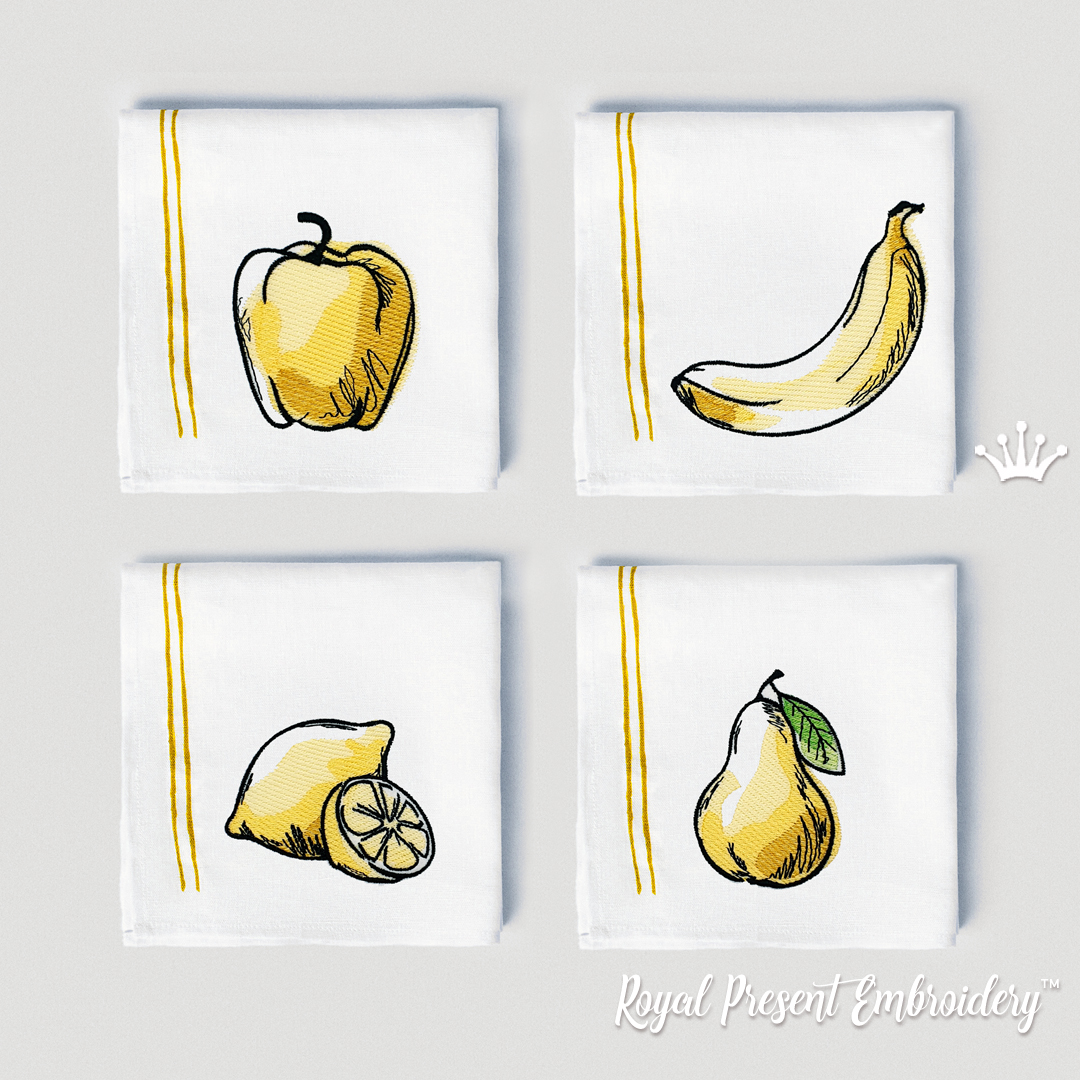 Banana, Lemon, Pepper & Pear
 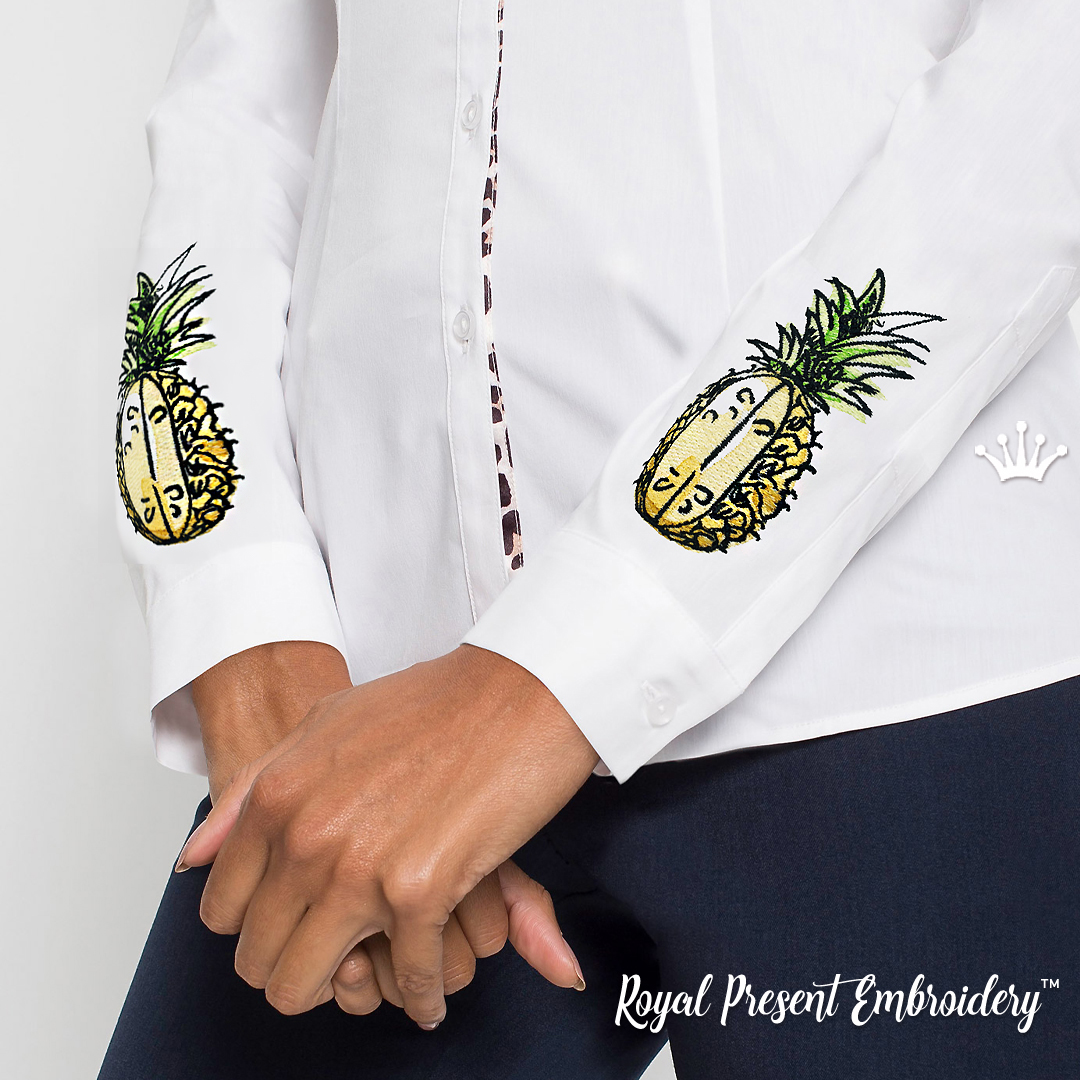 Watercolor Pineapple
More culinary and botanical motifs are available in the Fruits and Vegetables Machine Embroidery Designs collection.
Frequently asked questions
Will these fruit designs fit a 4x4 embroidery hoop?
Yes. The smaller tomato, pomegranate, cherries and currant files all fit a 100x100 mm embroidery field. The four larger files require a 130x180 mm field.
Is the currant design a red currant or a black currant?
The original palette depicts red currants in light pink, raspberry red and deep red. The motif can be changed to black currants by replacing the three berry colors with light, medium and dark purple shades while keeping a strong dark outline.
Does the pomegranate design show the seeds?
Yes. The composition contains a whole pomegranate behind a cut fruit section with the individual seeds visible. The darkest thread completes the seed outlines and exterior contours.
Can the four motifs be embroidered separately?
Yes. Tomato, currant, cherries and pomegranate are four independent files. They are not joined into one large composition, so one motif can be embroidered on each napkin or towel.
Why does the fabric show through the red fills?
The open areas are intentional elements of the watercolor technique rather than missing stitches. Light fabric forms highlights inside the fruit and keeps the three translucent red layers visually separate.
Can I embroider the cherry design on a kitchen towel?
Yes. A smooth cotton or linen kitchen towel gives the cleanest result with tear-away stabilizer. If the towel has a raised waffle or terry texture, add water-soluble topping and make a test stitch because the open watercolor areas depend on the appearance of the base fabric.
License
Finished physical items may be sold by small artisan businesses. Industrial or factory production is not permitted under the standard license. Digital files may not be copied, shared, published, exchanged, redistributed or resold.
Read the complete Royal Present Embroidery license and terms of use.
Design author: Ludmila Konovalova, Royal Present Embroidery.
Tomato, Currant, Cherry, Pomegranate Machine embroidery designs - 2 sizes
Auf weissen leinen Tücher einfach toll

 Get Sign-In Link
 Login with Google
 Login with Facebook
 Login with Amazon
 Login with Paypal