Kids' Christmas Machine Embroidery Designs include Santa Claus, elves, reindeer, snowmen, bears, Nutcracker characters and playful holiday motifs for children's clothing, stockings, pillows, blankets, gift bags and quilt blocks. Choose a motif by project, then compare its exact dimensions with the usable embroidery field of your machine.
The collection includes small individual characters, vertical designs for stockings and towels, festive sets, framed portraits and larger compositions for pillows or wall panels. Product pages provide the available sizes, stitch counts, formats and other details needed to plan the embroidery.
These products contain files for computerized embroidery machines. Finished clothing, stockings, toys, pillows, ornaments, bags and other physical products are not included.
Which Christmas Characters Can You Find?
The collection combines traditional Christmas figures with colorful child-friendly characters. Choose a familiar holiday symbol or build a coordinated set around several related motifs.
Santa Claus and Christmas Elves
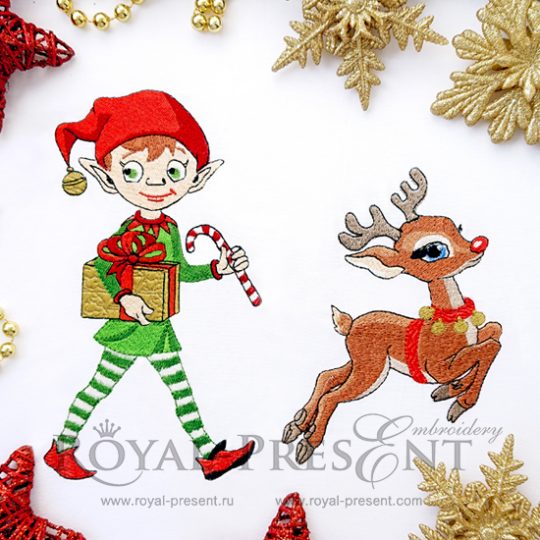
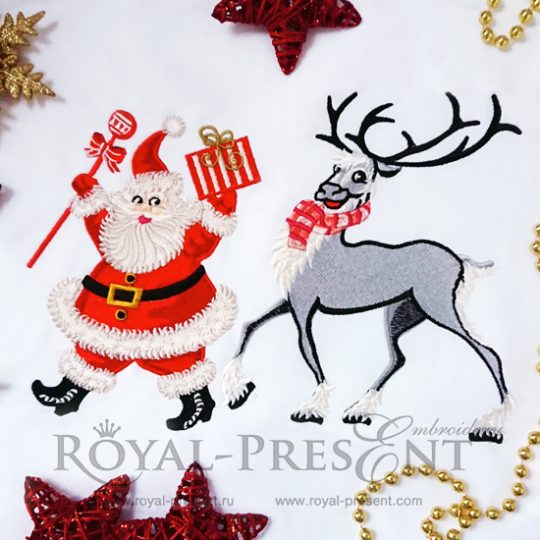
Santa Claus and elf designs work well on pajamas, sweatshirts, stockings, gift sacks, tote bags and Christmas pillows. Small single characters are useful for compact projects, while coordinated sets can decorate several items for the same family.
Browse more Santa Claus Machine Embroidery Designs.
Reindeer, Fawns and Winter Animals
Reindeer, young deer, bears, penguins and other winter animals suit children's shirts, blankets, cushion fronts, gift bags and nursery Christmas décor. Designs with scarves, ornaments and Christmas trees create a warm seasonal look without requiring additional text.
Nutcracker Story Characters
Nutcrackers, ballerinas, Mouse Kings and framed Christmas portraits are suitable for storybook projects, ballet gifts, pillows, wall panels and decorative stockings. Their detailed uniforms and theatrical accessories are especially effective on smooth, stable fabric.
Explore Nutcracker Machine Embroidery Designs.
Snowmen, Bears and Playful Holiday Characters
Snowmen, polar bears, cartoon deer, Christmas gnomes and mug-shaped characters are practical choices for cheerful children's projects. Their strong silhouettes usually remain readable on clothing, bags and pillow fronts when the thread colors contrast with the background.
See more Christmas Character and Animal Machine Embroidery Designs.
What Can You Make with Kids' Christmas Designs?
- children's Christmas shirts and long-sleeve tops;
- pajamas and holiday morning outfits;
- hoodies, sweatshirts and jacket backs;
- personalized Christmas stockings;
- pillows, cushion fronts and nursery décor;
- blanket corners and quilt blocks;
- tote bags, gift bags and drawstring sacks;
- Christmas towels and fabric basket liners;
- felt ornaments and flat decorative figures;
- framed textile pictures and wall panels.
How Do You Choose a Design for a Child?
Begin with the finished item, the child's age and the available embroidery area. A detailed portrait that works on a pillow may feel too large or stiff on a small shirt, even when it technically fits the machine hoop.
- For a small shirt: choose a compact single character with a moderate stitch count.
- For pajamas: use a proportionate design and keep dense stitching away from areas that press directly against the body.
- For a sweatshirt: larger characters can work well when supported with permanent stabilizer.
- For a stocking: choose a vertical motif and check the available area above or below the cuff.
- For a pillow: use a larger portrait, set or multi-character composition.
- For a gift bag: select a clear central motif that remains visible after the bag is filled and tied.
Print or open the placement template at actual size and position it on the project before hooping. This helps confirm visual scale as well as technical fit.
How Should You Check Hoop Compatibility?
Use the category hoop filter to narrow the selection, then verify the exact width and height on the individual product page. The listed millimeter measurements are more reliable than a general label such as 4x4, 5x7 or 6x10.
Machines using the same nominal hoop name may have different usable embroidery fields. A file close to the maximum width or height may fit one machine but exceed the working area of another.
- compare both dimensions of the file;
- check whether the machine permits design rotation;
- consult the embroidery-field specification in the machine manual;
- consider the orientation of the garment or stocking;
- do not load a file that exceeds the usable field, even slightly.
Are There Christmas Designs for a 4x4 Hoop?
The collection includes filters for smaller embroidery fields, but compatibility depends on the exact dimensions supplied with each product. Compact bows, mugs, small animals, ornaments and single characters are more likely to suit a 100x100 mm or 4x4 inch field than tall portraits or multi-character scenes.
Check every supplied size separately. A product may include several versions, while only its smallest file fits the intended hoop.
How Do You Place a Christmas Design on a Shirt?
- Wash and dry the garment first when shrinkage is possible.
- Measure the usable area between the neckline, side seams and hem.
- Mark the vertical and horizontal placement lines.
- Apply suitable cutaway stabilizer to the reverse side.
- Hoop the fabric without stretching it.
- Keep the shirt back, sleeves and collar clear of the embroidery field.
- Run a test stitch on similar fabric before embroidering the finished garment.
For a centered chest design, leave enough space below the neckline so hats, antlers or ornaments do not appear crowded. On a small child's shirt, the visual width of the motif is often more important than using the largest size that fits the hoop.
Which Stabilizer Should You Use for Jersey?
For a children's T-shirt or lightweight knit, use no-show mesh or lightweight cutaway stabilizer. Permanent support helps the embroidery retain its shape during wear and washing.
Do not stretch jersey while hooping. When stretched knit is released, it contracts and can create ripples around the design or pull the outlines away from the filled areas.
A soft protective covering can be applied over the finished reverse side when the stitches or trimmed stabilizer may touch sensitive skin.
How Do You Embroider a Hoodie or Sweatshirt?
Sweatshirt fabric can support larger Christmas characters more effectively than thin jersey. Use medium-weight cutaway stabilizer and avoid placing the design over a pouch pocket, zipper, ribbing, bulky seam or drawstring channel.
Support the weight of the garment near the machine so it does not pull against the hoop. Slow the machine around small facial details, antlers, eyes and decorative outlines when necessary.
Can You Embroider on Fleece or Plush Fabric?
Yes, but the surface pile can hide small outlines, lettering and lightly stitched details. Choose a design with clear coverage and test whether the character remains readable on the selected material.
Use cutaway stabilizer underneath and water-soluble topping above the fleece. The topper holds the pile down while the embroidery is formed and helps prevent fine stitches from sinking into the surface.
Avoid an excessively dense design on very soft or thin fleece. The fabric may become stiff or pucker around the edges of the embroidery.
How Do You Decorate a Christmas Stocking?
A regular Christmas character can be stitched onto the front stocking panel before assembly. Mark the cuff, toe direction, heel, seam allowance and intended name placement before hooping.
A vertical Santa, reindeer, bear or Nutcracker usually works well below the cuff. Smaller motifs can be placed beside a name or monogram, provided the added lettering does not overlap the existing design.
An ordinary decorative file does not automatically construct the stocking. For projects assembled partly or completely in the hoop, browse In-the-Hoop Christmas Stocking Machine Embroidery Designs and follow the construction instructions supplied with the selected project.
How Do You Embroider a Christmas Pillow?
Mark the finished pillow size and seam allowances before placing the design. Keep antlers, hats, bows and other projecting details inside the visible front panel.
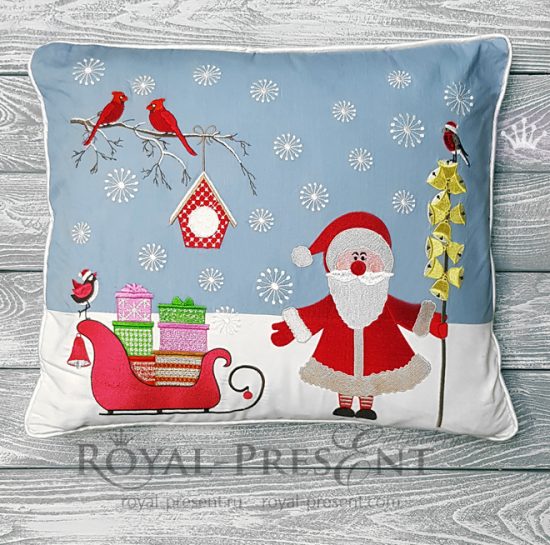
Large Christmas portraits and multi-character sets are generally better suited to a pillow than to lightweight clothing. Embroider the flat front panel before assembling the cushion whenever possible.
For a coordinated set, repeat one character on several pillows or combine related Santa, reindeer, bear and Nutcracker motifs while maintaining a consistent thread palette.
Can You Use the Designs on Blankets?
Yes, but placement and fabric weight need careful consideration. A corner motif, name panel or separate appliquéd fabric block is often more practical than placing a dense design directly in the center of a soft blanket.
For fleece blankets, use cutaway stabilizer and water-soluble topping. For quilted cotton blankets, avoid thick seam intersections and choose an area that can lie flat in the hoop.
A design used on an infant blanket should have a smooth, protected reverse side and must not include loose buttons, beads, bells or other detachable additions.
Can You Make a Flat Felt Christmas Figure?
A character with a clear outer silhouette can be turned into a flat felt ornament, storytelling figure or decorative gift tag. This is an additional craft project; a standard embroidery file does not include an outer cutting line, back piece or automatic assembly sequence.
- Embroider the character on dense felt with cutaway stabilizer.
- Leave the stabilizer directly beneath the stitched area.
- Prepare a second felt layer for the back.
- Add textile stiffener between the layers when a firm figure is required.
- Secure the layers temporarily with fusible web or fabric adhesive.
- Sew around a smooth outer silhouette several millimeters from the embroidery.
- Cut outside the connecting seam, leaving a narrow felt border.
- Insert a securely stitched fabric loop before closing the layers when making an ornament.
Textile stiffener is more practical than ordinary cardboard for an ornament or figure that may be handled. Cardboard can absorb moisture, crease and separate into layers.
Are the Designs ITH, Applique or Freestanding Lace?
Construction varies by product. A standard multicolor Christmas embroidery design is not automatically an applique, freestanding lace ornament or in-the-hoop project.
Read the individual product title and description before purchase. An ITH stocking or freestanding ornament requires a specific digitized construction sequence and should not be assumed from the product image alone.
Can Metallic Thread Be Used?
Metallic thread can add controlled highlights to Nutcracker uniforms, Christmas ornaments, stars, bells, bows and gift details. It is usually better as an accent than as a replacement for every color in a dense filled area.
- use a needle intended for metallic embroidery thread;
- reduce the machine speed;
- allow the thread to feed freely without twisting;
- check that the needle eye is not damaging the thread;
- test the complete color section before embroidering the final item.
How Do You Prevent Puckering and Outline Shifting?
- match the design size and stitch count to the fabric;
- use cutaway support for knitwear, fleece and handled projects;
- do not stretch the material while hooping;
- keep heavy garments and blankets supported near the machine;
- reduce speed around faces, eyes, antlers and narrow outlines;
- check upper-thread and bobbin tension;
- perform a complete test stitch on equivalent materials.
Which Needle and Thread Should You Use?
A fresh 75/11 embroidery needle is suitable for many cotton, jersey and sweatshirt projects. An 80/12 needle may be more appropriate for dense felt, canvas or layered stocking panels.
Quality polyester embroidery thread is practical for washable children's clothing, stockings and bags. Select colors that remain visible against the background fabric, especially for black outlines, white snow, pale faces and dark animal features.
How Do You Keep Children's Projects Comfortable?
Choose a design whose density suits the garment. A large, heavily stitched composition can feel stiff on thin pajamas or a lightweight shirt.
Trim the cutaway stabilizer with rounded edges rather than cutting directly against the embroidery. Cover the reverse side with a soft protective backing when it may rub against the child's skin.
For items intended for babies or young children, avoid adding loose bells, beads, buttons, magnets or other small detachable decorations. A handmade embroidered item is not automatically a certified toy.
How Can You Choose Faster?
- Choose Santa or elves for pajamas, stockings and traditional gift projects.
- Choose reindeer or winter animals for shirts, blankets and nursery décor.
- Choose Nutcracker characters for ballet gifts, framed pictures and elegant pillows.
- Choose snowmen, bears or holiday mugs for cheerful casual projects.
- Choose small individual motifs for compact hoops and children's clothing.
- Choose sets or portraits for large pillows, wall panels and coordinated collections.
Decision Guide Before Purchase
- decide which item will be embroidered;
- measure the usable area without seams, cuffs or pockets;
- compare the exact file dimensions with the machine field;
- check the stitch count and suitability of the fabric;
- confirm that the required machine format is listed;
- prepare the correct stabilizer and topping;
- plan a complete test stitch before using the final item.
Do Not Resize the Files Independently
Do not enlarge or reduce an embroidery file without professional stitch recalculation. Independent resizing can damage density, underlay, pull compensation, small facial details and alignment between filled areas and outlines.
Royal Present is not responsible for embroidery quality after the customer independently resizes, edits or converts the supplied files.
Explore More Christmas Designs
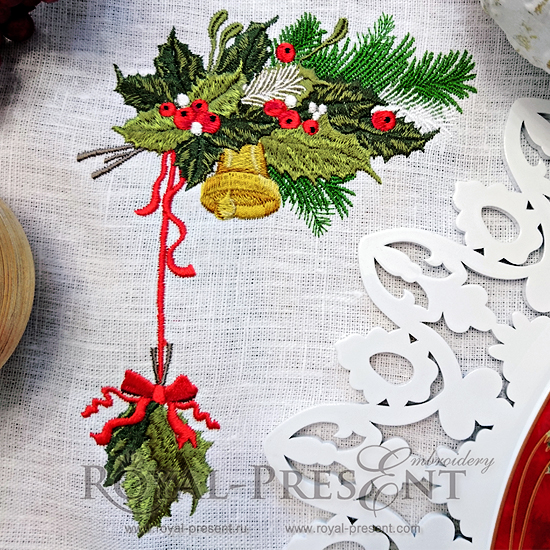
For table linens, ornaments, wreaths, snowflakes, poinsettias and other adult or family holiday projects, browse Christmas Machine Embroidery Designs.
About the Designer
Royal Present Embroidery collections are created by Ludmila Konovalova, machine embroidery designer. Check the exact dimensions, stitch count, construction type and available formats on the selected product page before purchasing.

 Get Sign-In Link
 Login with Google
 Login with Facebook
 Login with Amazon
 Login with Paypal