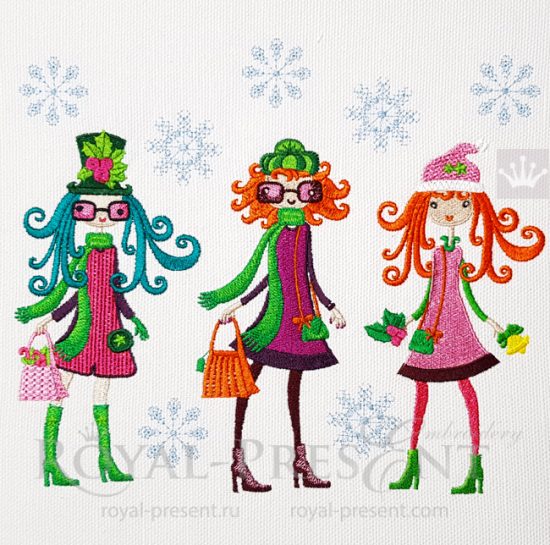
Winter Fashion Girls Machine Embroidery Designs
Ever felt that winter, with all its bulky coats, beanie hats and scarves, constantly tries to rob us from fashion? If you do, just stop right there and never feel like this again. Why? Becaus...
Machine Embroidery Designs for Girls include dolls, princess themes, fairies, Alice in Wonderland characters, storybook animals and playful motifs for children’s clothing, bags, backpacks, pillows, quilts and nursery projects. Browse by theme, then check the exact dimensions, stitch count and available formats on the individual product page before purchasing.
The collection includes compact motifs for smaller projects as well as tall, detailed characters for larger embroidery fields. Use the hoop-size filter to narrow the selection, but always compare the exact width and height of the chosen file with the usable embroidery area of your machine.
These products contain files for computerized embroidery machines. Finished clothing, toys, dolls, bags, pillows, patches and other physical products are not included.
The category combines several styles and project types. Choose a focused subcategory when you already know the theme, or browse the complete selection for gift and clothing inspiration.
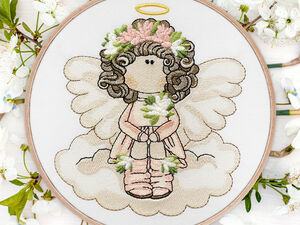
Doll designs include Tilda-style characters, angel dolls, Tooth Fairy dolls and seasonal characters. Their vertical silhouettes work well on shirts, sweatshirts, tote bags, pillow fronts and separate fabric panels.
Many doll products are supplied in several sizes, allowing you to compare options for smaller garments and larger decorative projects.
Browse Doll Machine Embroidery Designs
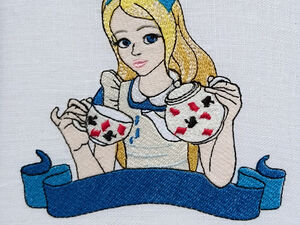
The Alice in Wonderland collection includes storybook scenes and characters such as Alice, the White Rabbit and the Cheshire Cat. These motifs suit themed clothing, backpacks, quilts, tea-party accessories and gifts for readers.
Explore Alice in Wonderland Machine Embroidery Designs
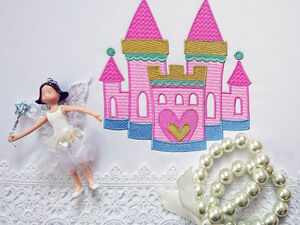
Princess Story designs include crowns, castles, magical accessories and coordinated royal elements. Use them individually or combine compatible motifs across dresses, birthday sets, pillowcases and gift bags.
Browse Princess Story Machine Embroidery Designs
Fairies, princesses and fantasy characters are suitable for nursery accessories, birthday gifts, children’s clothing, decorative pillows and fabric wall art. Before choosing a size, check the complete width of wings, dresses and surrounding decorative elements.
Explore Fairies and Princesses Machine Embroidery Designs
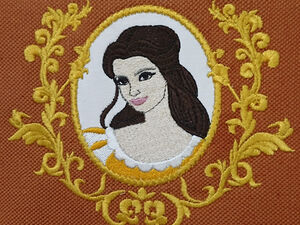
This mixed collection includes girls with pets, anime-style faces, gnomes, rocking horses, sewing themes and other playful characters that do not belong to one narrow storybook category.
Browse All Sorts of Machine Embroidery Designs for Girls
Begin with the finished project rather than choosing only by the product image. A tall doll may fit the embroidery hoop but still be too large for a small child’s shirt. A compact crown may look balanced on a dress bodice but appear too small on a large pillow.
Print or open a full-size placement template before hooping. Position it on the intended item to check scale, orientation and clearance around seams.
Use the category filter to narrow the catalog by embroidery field. The exact measurements on the product page remain the final reference.
A commercial hoop name such as 4x4, 5x7 or 6x10 does not always describe the machine’s complete usable stitching field. Different machine models may reserve additional space near the hoop edge.
Compact characters, crowns, small animals and simple storybook motifs are usually easier to balance on children’s clothing. Tall dolls, large fairies and multi-element scenes require more available garment space.
For a small child’s shirt, measure the usable area between the neckline, side seams and waist. The design should remain visually balanced after the garment is worn, not only while it lies flat.
For dresses and tunics, consider placing small motifs near a pocket, bodice or lower skirt. Large characters work better as a single central feature on a stable panel.
Smooth cotton, linen, quilting cotton, twill, gabardine, sweatshirt fabric and stable canvas are suitable for many designs in this category. A smooth surface helps preserve facial features, hair, clothing details and fine outlines.
Thin jersey, loose fabric and highly elastic materials need permanent support. A large design with a high stitch count can feel heavy on lightweight clothing and may be better suited to a sweatshirt, bag, pillow or separate fabric panel.
Some doll and character designs use a watercolor-style embroidery technique with lighter stitch coverage. When a product page recommends light-colored fabric, use white, ivory, cream, pale beige, light gray or another calm pastel background. Dark fabric may alter light thread colors or hide dark outlines.
The stabilizer should cover the complete hoop opening. Do not stretch the fabric while hooping. When stretched fabric is released, it contracts and can create puckering around the finished embroidery.
After embroidery, trim the excess stabilizer without cutting against the stitches. A soft protective covering can be applied over the reverse side when the embroidery will touch sensitive skin.
Whenever construction permits, embroider the front panel before assembling the bag. This provides better hoop access and reduces the risk of stitching through pockets or other layers.
Mark the future handles, zipper, pockets, side seams, boxed corners and upper hem. Keep hair, wings, ears, crowns and other extended details completely inside the visible area.
Support heavy canvas or multilayer bag pieces near the machine so their weight does not pull against the hoop during stitching.
A doll, fairy or other character with a clear silhouette can be turned into a flat figure for a felt board, fabric activity book, home theater or decorative display. This is an additional craft project; a standard decorative embroidery file does not include a back piece, cutting line or automatic ITH assembly.
Textile stiffener is generally more practical than ordinary cardboard for a handled figure. Cardboard can absorb moisture, crease and separate into layers. Adhesive can assist assembly, but a perimeter seam gives the project more reliable support.
Some doll-shaped designs can be used as the embroidered front of a separately sewn textile figure. You must create the back piece, seam allowance, turning opening and stuffing process yourself.
Embroider the design on stable woven fabric, draw a smooth silhouette around it and cut a matching back. Sew the pieces right sides together, leave an opening, turn the project and add a small amount of polyester fiberfill.
Do not overstuff the figure. Excessive filling can stretch the embroidered front, bend the stitched surface and visually shift the outlines. Unless a product is specifically identified as an ITH doll project, the file supplies decorative embroidery rather than automatic toy construction.
Do not enlarge or reduce an embroidery design without professional stitch recalculation. Independent resizing can damage density, underlay, pull compensation, fine facial details and registration between filled areas and outlines.
Royal Present is not responsible for embroidery quality after files have been independently resized, edited or converted by the customer.
Browse animals, baby motifs, storybook characters and additional children’s themes in Babies and Children Machine Embroidery Designs.
Royal Present Embroidery collections are created by Ludmila Konovalova, machine embroidery designer. Review the exact dimensions, stitch count, technique and available formats on each product page before purchasing.
Ever felt that winter, with all its bulky coats, beanie hats and scarves, constantly tries to rob us from fashion? If you do, just stop right there and never feel like this again. Why? Becaus...
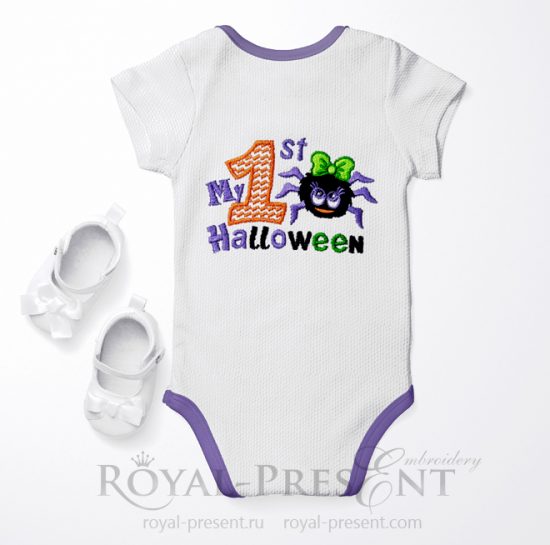
For many of us, the Halloween holiday has become special. On this day, we not only pay tribute to all saints, but also try to have fun. Each hostess prepares for Halloween in advance. She car...
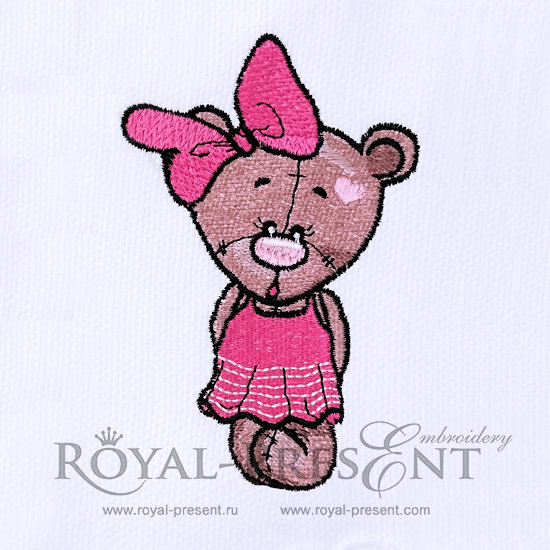
For small princesses and loving mothers, we created our collection of children’s designs. Each of them is colorful in its way and unique. Machine Embroidery Designs Teddy Bear Girl is an unfo...
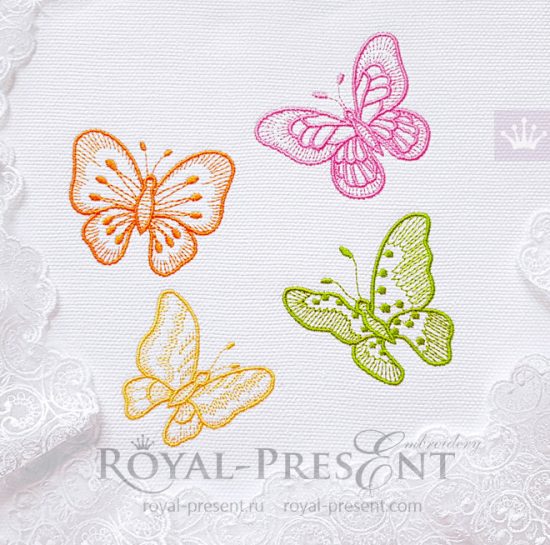
Ancient beliefs gave birth to wonderful legends about magical creatures, otherworldly places, and unbelievable miracles. Not all such myths survived until modern times, preserving their enchanted char...
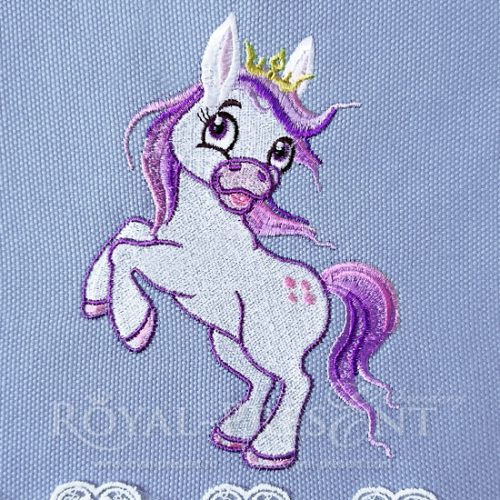
Do not know what to please your princess? Toys are already tired of the little girl, and the outfits have ceased to like? In this case, use My Little Pony Machine embroidery design. It’s no s...

 Get Sign-In Link
 Login with Google
 Login with Facebook
 Login with Amazon
 Login with Paypal