Roman Soldier Gnome Machine Embroidery Design for Rome - 4 sizes
By knowing the speed of your embroidery machine, you can find out how long it will take to embroider a design.
To use the embroidery calculator, click on the number of stitches in the product description.
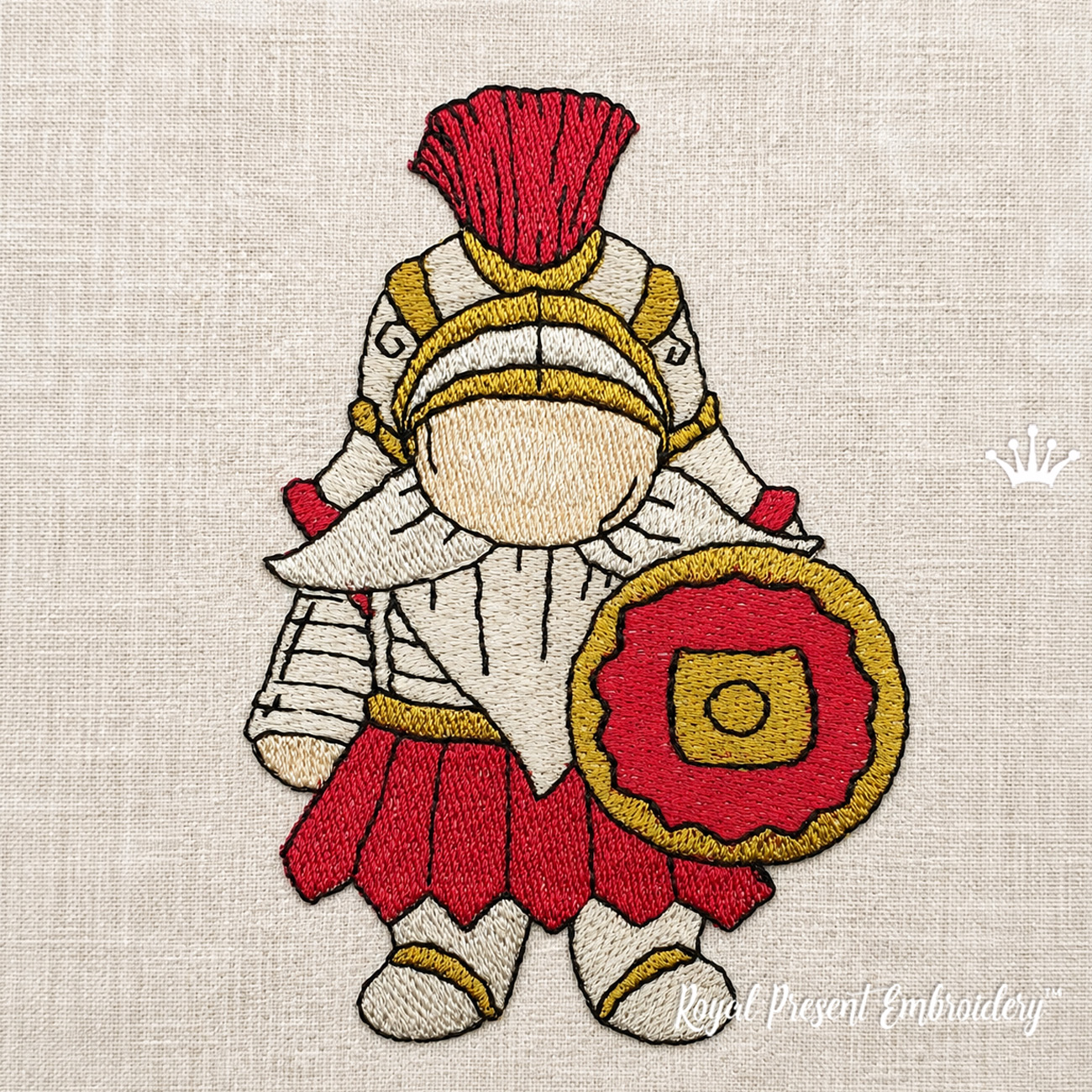
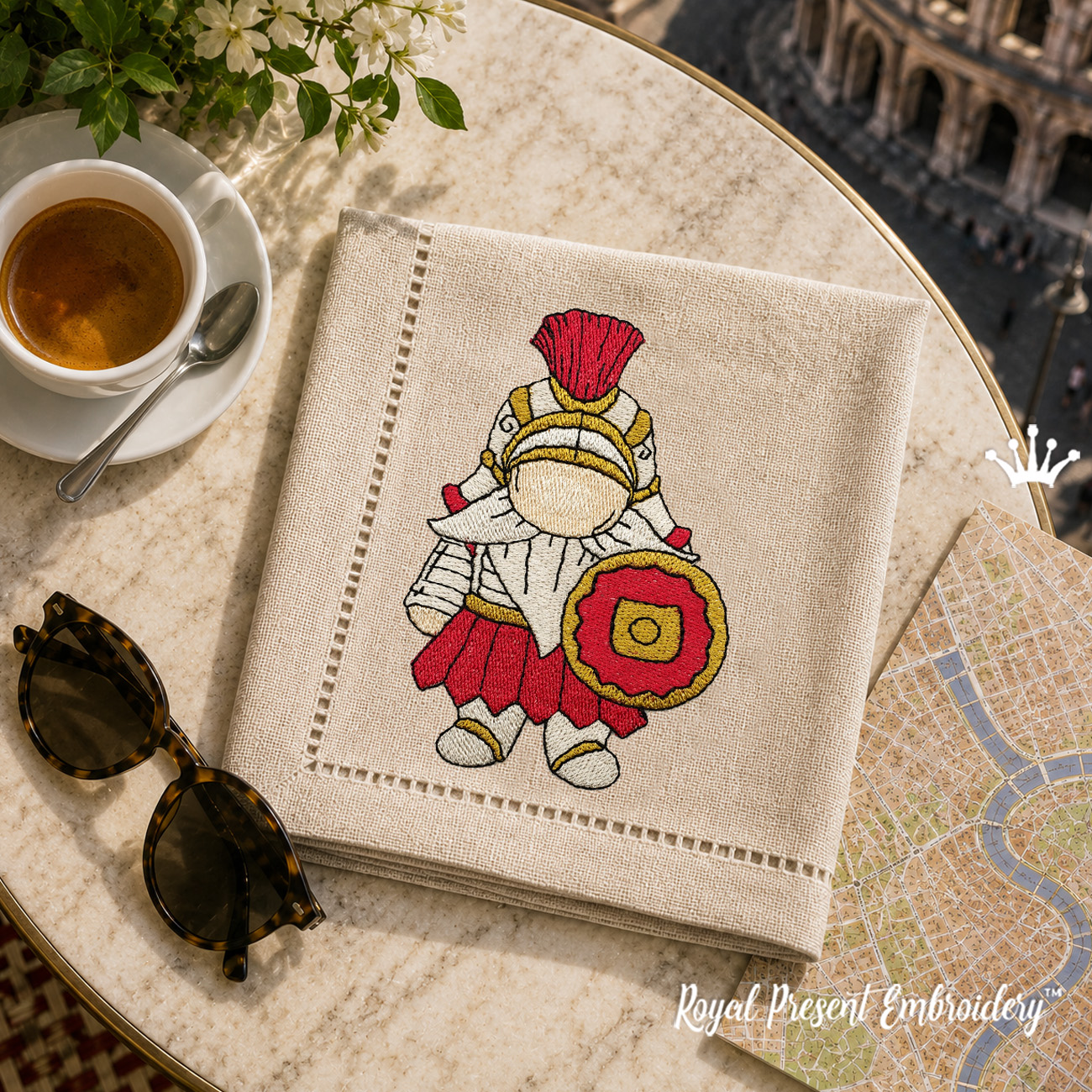
Roman Soldier Gnome Machine Embroidery Design is a digital embroidery pattern for computerized embroidery machines. It depicts a bearded gnome dressed as an ancient Roman legionary, wearing layered armor and a red-crested helmet and carrying a round shield and short sword. The motif combines Roman military imagery with a humorous gnome character for Rome, Italy, history and travel-themed textile projects.
Size: 68.4x97.9 mm (2.69x3.85"), Stitches: 13545
Size: 75.2x107.8 mm (2.96x4.24"), Stitches: 15589
Size: 82.9x118.4 mm (3.26x4.66"), Stitches: 17950
Size: 91.0x130.2 mm (3.58x5.13"), Stitches: 20706Formats: .dat, .dst, .exp, .hus, .jef, .jef+, .jpx, .pec, .pes, .sew, .vip, .vp3, .vp4, .xxx
Roman soldier details in the design
- Red-crested helmet: the tall plume creates the clearest visual reference to an ancient Roman soldier.
- Layered armor: pale panels, darker definition and gold trim separate the helmet, shoulders, sleeves and breastplate.
- Round shield: a red field, gold border and central boss make the military attribute readable even on smaller projects.
- Short sword: the weapon reinforces the legionary theme without overpowering the character.
- Gnome beard and proportions: the oversized beard, compact body and hidden eyes retain the friendly Royal Present gnome style.
The character is visually closer to a Roman legionary than an arena gladiator because he wears military-style armor and carries a shield and sword. Roman gladiator remains a useful search phrase, but Roman Soldier Gnome is the more accurate product name for the artwork.
Madeira Classic 40 color map
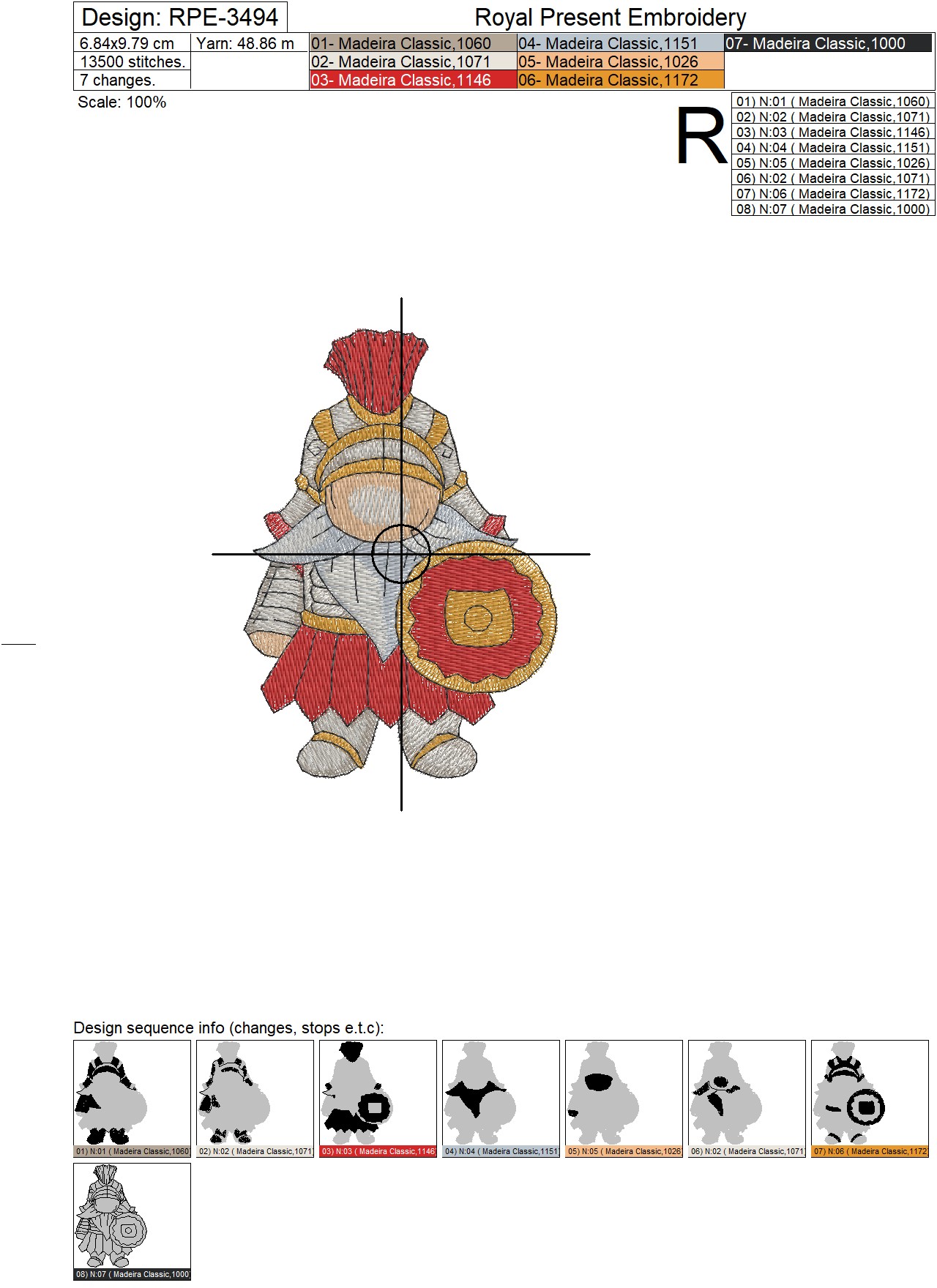
The gallery color chart identifies seven unique Madeira Classic 40 colors. The table below explains what each listed color stitches in the design. Screen swatches are approximate; use the Madeira number and the JPG color chart supplied with the product as the main reference.
| Swatch | Madeira Classic 40 | Visible color | Embroidered fragments |
|---|---|---|---|
| 1060 | Cool ivory-gray | Base sections of the pale helmet and armor, sleeve wraps and footwear. | |
| 1071 | Warm off-white | Lighter helmet and armor sections plus later pale highlights on the costume, beard area and shoes. This color is used in two programmed blocks. | |
| 1146 | Roman red | Helmet crest, sleeve accents, segmented skirt and the red field of the shield. | |
| 1151 | Pale blue-gray | The large moustache and beard shape and the cool silver-gray central armor details. | |
| 1026 | Light skin tone | The round face and visible hand areas. | |
| 1172 | Antique gold | Helmet bands, shoulder and armor trim, belt, shield rim and boss, and the bands on the footwear. | |
| 1000 | Black | Final outlines, facial definition, armor divisions, plume lines and details inside the shield. |
Do not merge the two uses of Madeira 1071. They build pale areas at different stages, and combining them can change the intended layering around the costume and finishing details.
Fabric, stabilizer, needle and thread
| Project material | Recommended preparation | Detail to protect |
|---|---|---|
| Medium linen or firm cotton | Use medium tear-away or cut-away chosen for the fabric weight; a 75/11 sharp embroidery needle suits most tests. | Support the full character so the helmet bands, armor panels and shield remain aligned. |
| Terry or textured towel | Place stabilizer underneath and thin water-soluble film on top; use 40-weight polyester thread for washable items. | Topping keeps the beard, gold trim and dark outline above the loops. |
| Canvas tote or cushion panel | Stabilize the outer panel while it is flat, before adding a lining, zipper, handle or piping. | Flat preparation prevents thick construction seams from disturbing the round shield. |
| Sweatshirt or knit | Use medium cut-away or no-show mesh with a 75/11 ballpoint embroidery needle; do not stretch the knit during preparation. | Permanent support reduces movement beneath the filled skirt, helmet crest and final outline. |
Stitching tips for the helmet, shield and outlines
- Use a printed placement template. Keep the crest, sword and shield clear of hems, pocket seams, handles and construction allowances.
- Support the complete stitch area. The separate armor panels and round shield need even backing tension across the whole character.
- Slow down for the gold trim and final black definition. A test range near 500–650 stitches per minute can improve registration around narrow bands and small divisions.
- Do not pull textured fabric tight. Stretching during preparation can relax after stitching and move the final outline away from the fills.
- Test pale threads on the chosen ground color. Ivory armor needs enough contrast to remain visible on white or cream fabric.
- Run the complete test sample. The shield circle and helmet crest quickly reveal whether the stabilizer and thread tension are balanced.
For more detail on balancing filled embroidery with the selected textile, read the Royal Present guide to stitch density, fabric and stabilizer balance.
Rome and Italy project ideas
- embroider a linen guest towel or decorative kitchen towel for an Italy-themed interior;
- place the soldier on the front panel of a travel pouch or canvas tote;
- create a cushion cover for a study, library or history-themed room;
- make a framed textile picture or a souvenir gift for someone who loves Rome;
- decorate a fabric notebook cover for a classics or ancient-history student;
- combine the soldier with the other Italian gnomes on coordinated bags, towels or bottle sleeves.
Companion designs from the Italian gnome collection
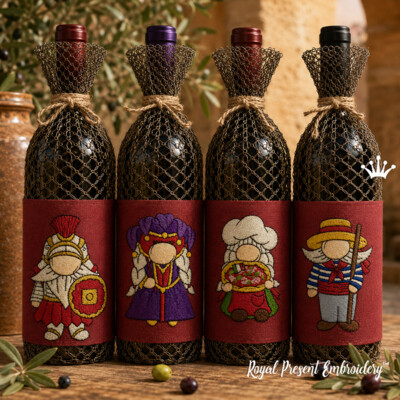 Italian Gnomes Mini Set
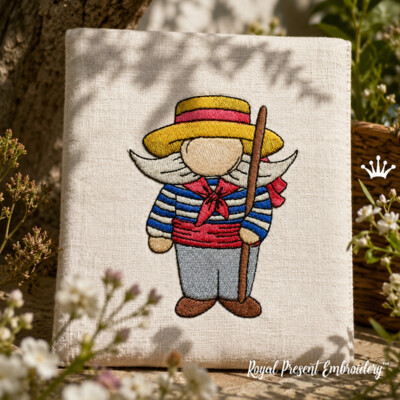 Venice Gondolier Gnome
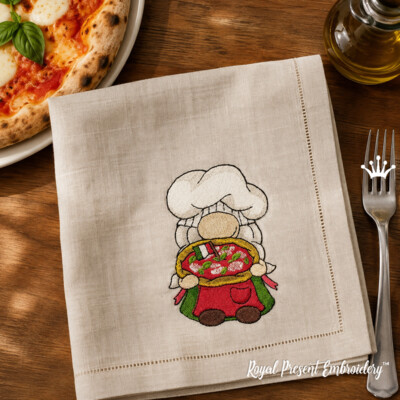 Italian Pizza Chef Gnome
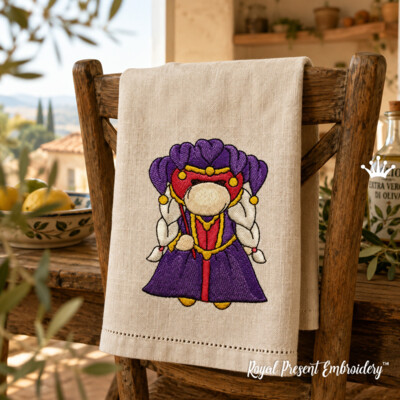 Italian Carnival Gnome
Frequently asked questions
Is this character a Roman gladiator or a Roman soldier?
The armor, crested helmet, shield and sword present the gnome as a Roman soldier or legionary. Gladiator is a related popular search term, but soldier describes the illustrated costume more accurately.
Can the design be embroidered on a terry towel?
Yes. Use stabilizer underneath and thin water-soluble film on top. The topping prevents the beard, armor divisions, gold trim and dark definition from sinking between the loops.
How can I prevent the final black outline from shifting?
Prepare the fabric without stretching it, support the complete stitch area and reduce speed around the final definition. A worn needle, weak backing or thick nearby seam can also cause movement.
Can I replace the red and gold palette?
Yes. Keep strong contrast between the plume, pale armor, beard, skin, shield and final dark outline. Test the complete palette because colors that look different on the spool can merge visually after stitching.
Which background colors show the pale armor clearly?
Natural linen, medium gray, muted blue, olive and warm beige give the ivory and off-white sections visible separation. On white fabric, substitute one pale thread with a slightly deeper stone or silver shade after testing.
Machine embroidery designer: Ludmila Konovalova.

 Get Sign-In Link
 Login with Google
 Login with Facebook
 Login with Amazon
 Login with Paypal