Laurel Mini Frame with Bee and Bow machine embroidery design - 3 sizes
By knowing the speed of your embroidery machine, you can find out how long it will take to embroider a design.
To use the embroidery calculator, click on the number of stitches in the product description.
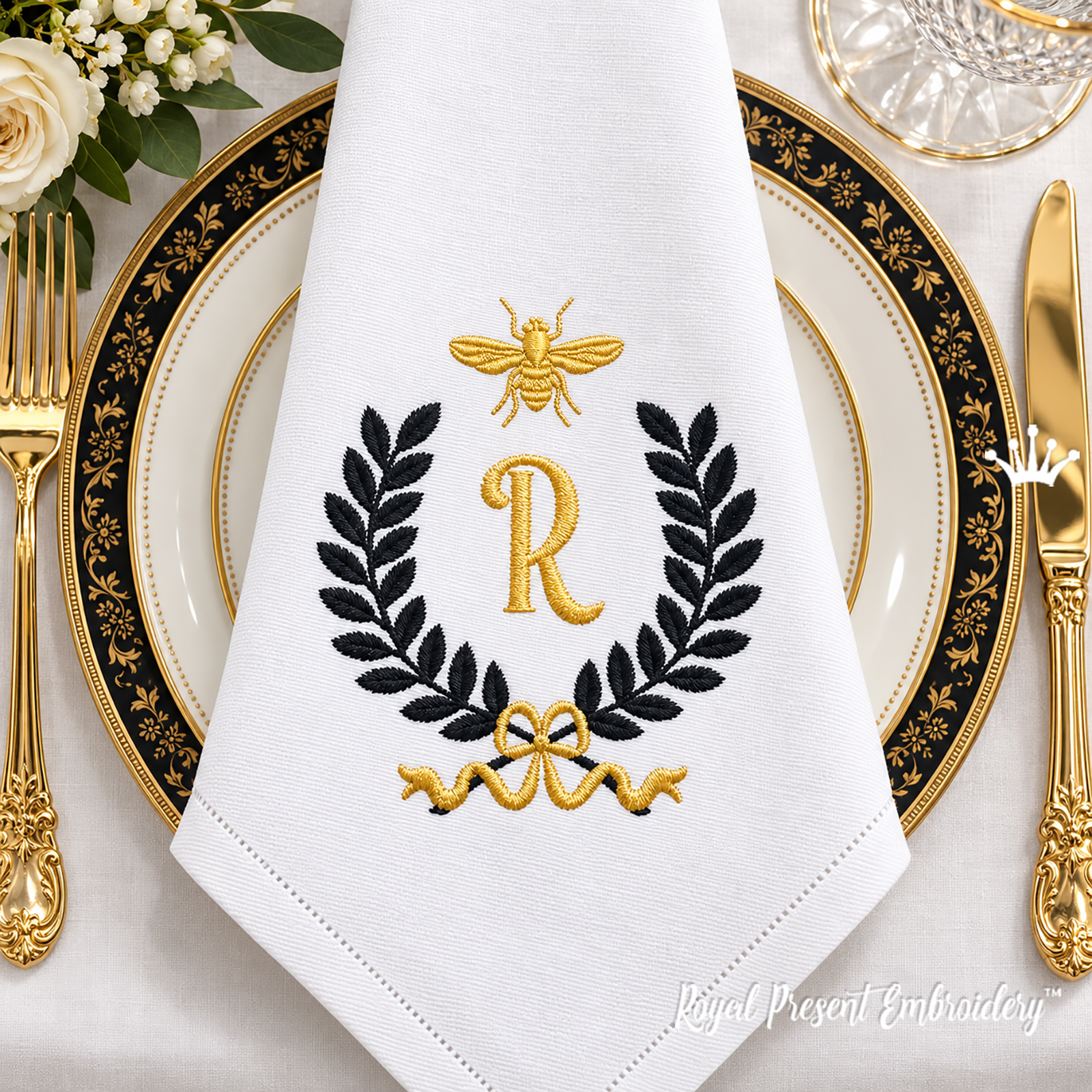
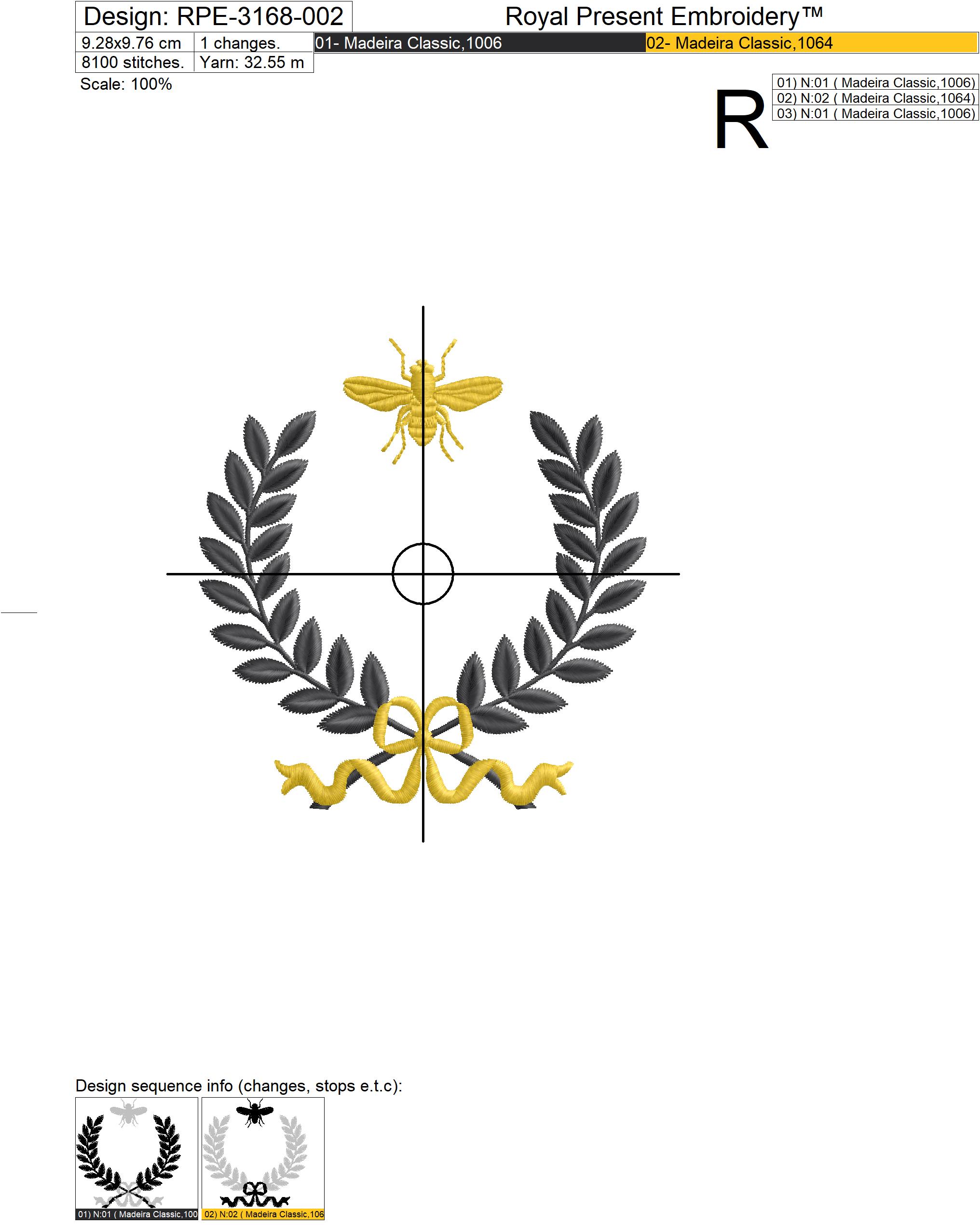
Laurel Mini Frame with Bee and Bow is a digital machine embroidery file featuring a golden bee, a black laurel wreath and a bow. The blank center leaves space for a separate letter or initials. It is suited to linen napkins, towels, table runners and small monograms.
This is a digital download. No finished item, fabric, thread, hoop or letter is included.
Design details
| Product type | Digital machine embroidery file |
| Theme | Bee, laurel wreath and bow |
| Blank center | For a letter or initials |
| Letter and font | Not included |
| Ready sizes | 3 |
| Thread colors | 2 colors, 3 color blocks |
| Delivery | Instant ZIP download |
Sizes, stitches and hoops
| Option | Exact design size and stitches | Minimum hoop |
|---|---|---|
| 1 | Size: 92.8x97.6 mm (3.65x3.84"), Stitches: 8100 | 100x100 mm (4x4") |
| 2 | Size: 102.1x107.3 mm (4.02x4.22"), Stitches: 8800 | 130x180 mm (5x7") |
| 3 | Size: 112.2x118.1 mm (4.42x4.65"), Stitches: 9700 | 130x180 mm (5x7") |
Formats: .dst, .jef, .pec, .vip, .hus, .pes, .exp, .sew, .dat, .vp3, .xxx.
Complete the composition
 Laurel Wreath with Bow
|
 Tiny Bee
|
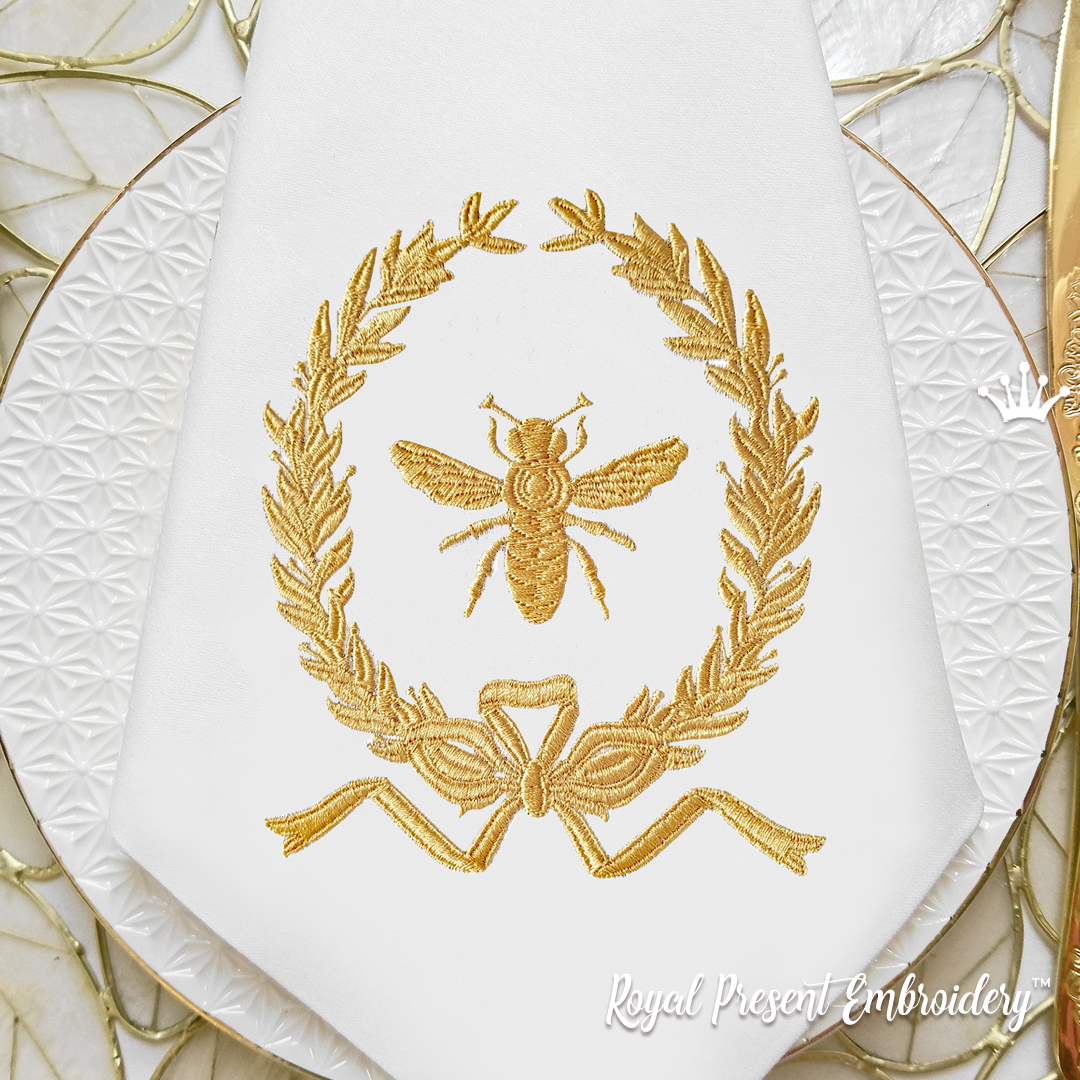 Bee in a Laurel Frame
|
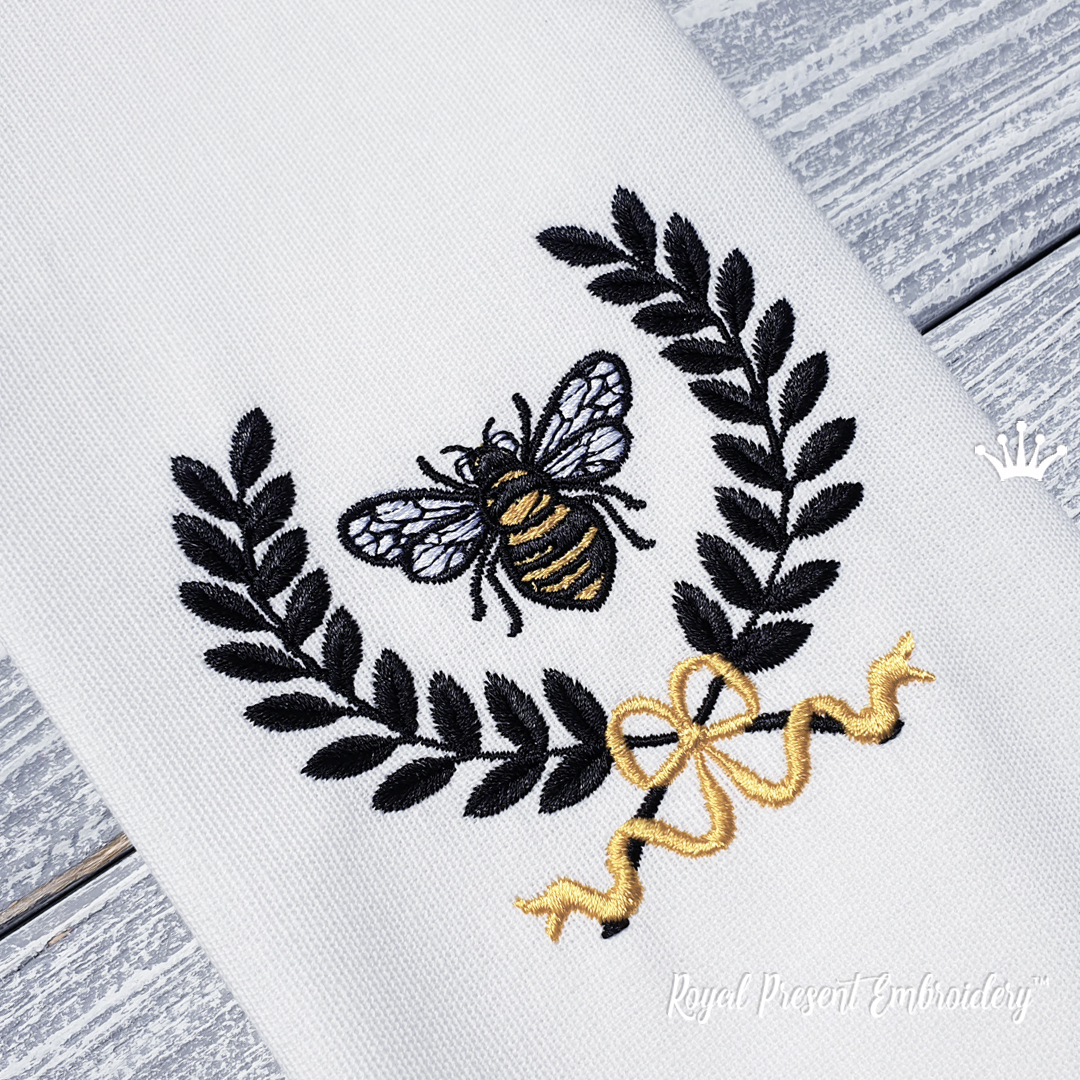 Bee in a Laurel Frame
|
Madeira Classic 40 thread chart
The color squares are an on-screen guide. Use the Madeira number on the included color chart as the main reference.
| Thread color | Madeira Classic 40 | Stitches | |
|---|---|---|---|
|
1006 — Diamond Black | Laurel wreath and final dark details | |
|
1064 — Goldenrod | Bee and bow |
Thread order: 1006 → 1064 → 1006. Do not merge the repeated 1006 block; it is needed for the correct layering of the details.
Stitching this frame on linen and napkins
What linen works best
A stable linen or linen-cotton blend around 150–220 g/m² with a close, even weave is the best choice. It keeps the fine leaves and bee outline clean. On very open or loosely woven linen, stitch a full test first. If the needle pushes yarns apart or the laurel line falls into the gaps, choose a denser linen. After tear-away backing is removed, it cannot replace the ground fabric.
Which stabilizer to use for a napkin
For a firm linen napkin or table runner, begin with tear-away backing. It supports stable woven fabric and can be removed after stitching, so it does not leave a rigid permanent layer. Common Madeira options are Cotton Soft for basic tear-away support, Cotton Stable for fabric that shifts, Weblon Plus for very thin or unstable fabric, and Avalon Film as a water-soluble topping. For an ordinary firm linen napkin, Cotton Soft is the starting choice, not all four products.
How to calculate backing weight
Use this starting rule for this medium-density frame: fabric weight in g/m² ÷ 3 = total backing weight in g/m². For example, 180 g/m² linen needs about 60 g/m² of total backing support. This is the combined weight of all backing layers, not the weight of each layer. Do not add two layers automatically; test one suitable tear-away backing first.
Do you need water-soluble topping
Not on smooth linen. Place Avalon Film on top only for terry, fleece, velvet and other napped surfaces, so the stitches do not sink into the pile. Topping does not replace lower backing and does not solve the problem of loose linen.
Needle and how to avoid puckering
For Madeira Classic 40 on ordinary linen, begin with a new sharp 75/11 embroidery needle. For heavy, coarse linen, test an 80/12. Prewash and press linen, then hoop the fabric and backing together flat and firm without stretching the fabric. Use the smallest suitable hoop, begin with your machine’s normal embroidery tension, and rethread the machine and replace the needle before changing tension. If the fabric starts gathering while stitching, stop: the usual cause is weak support or layers slipping, not a need for tighter thread tension.
Before stitching the final item, embroider the complete design on a scrap of the same linen with the same thread, needle, backing and planned wash cycle. This shows whether the napkin stays flat after unhooping and laundering.

 Get Sign-In Link
 Login with Google
 Login with Facebook
 Login with Amazon
 Login with Paypal