By knowing the speed of your embroidery machine, you can find out how long it will take to embroider a design.
To use the embroidery calculator, click on the number of stitches in the product description.
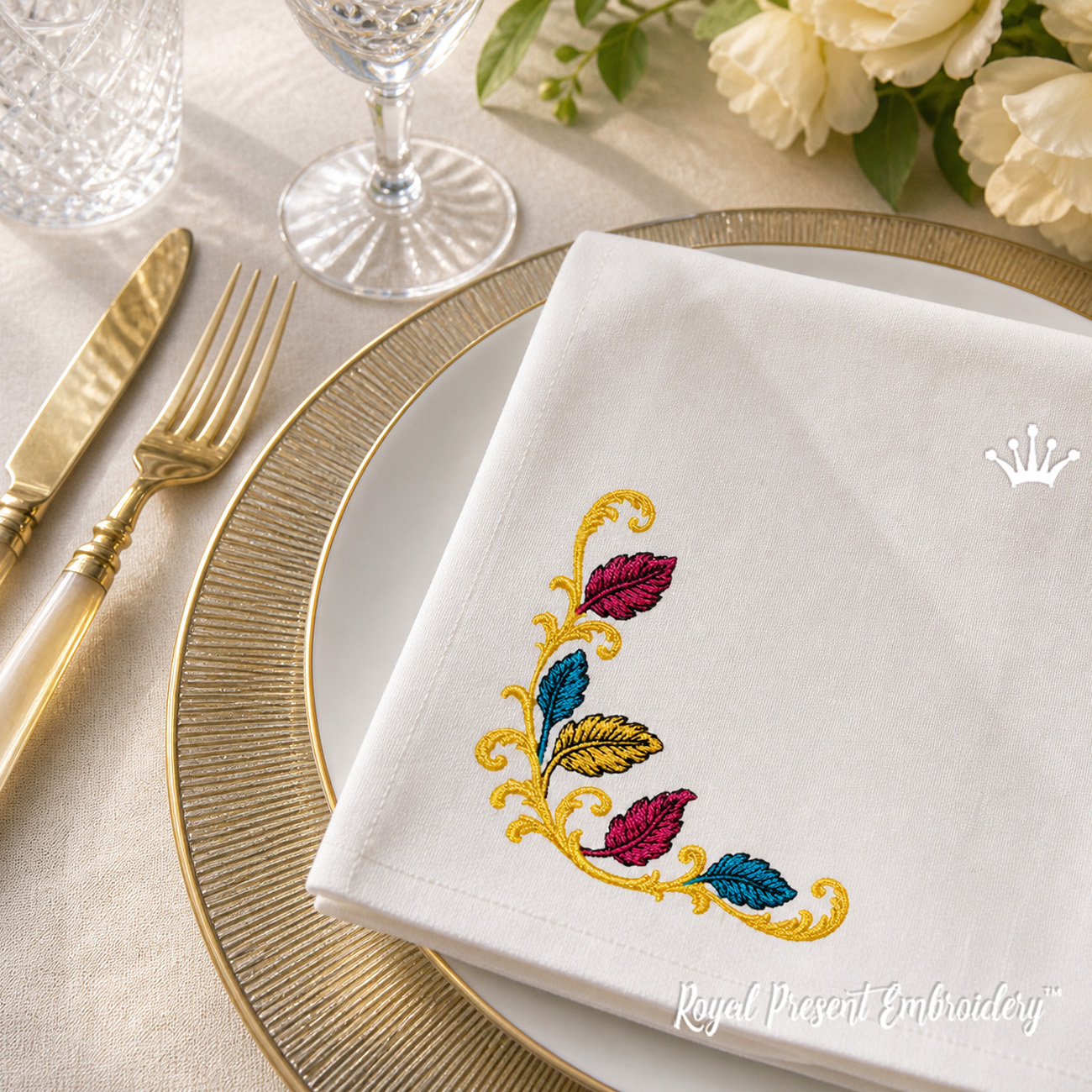
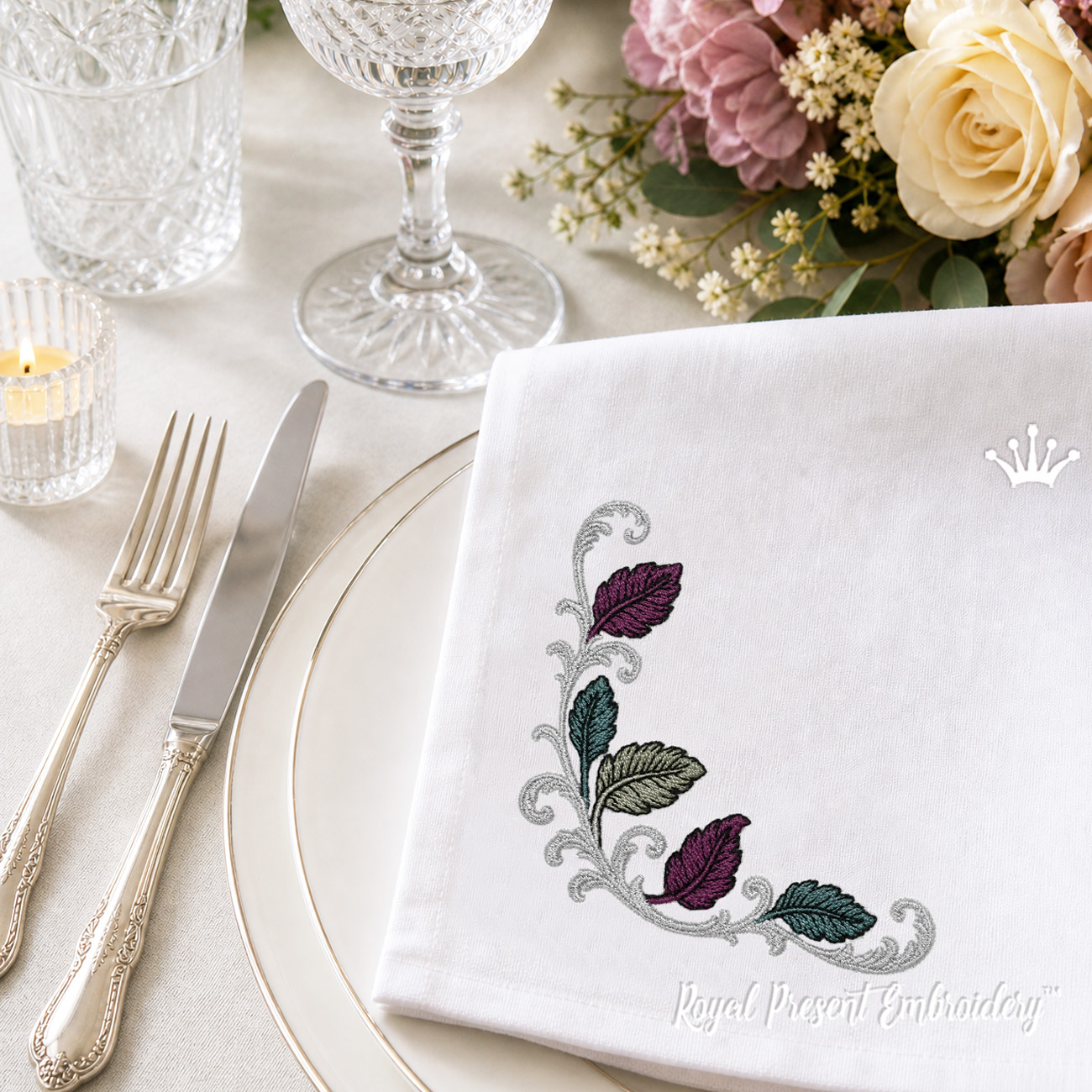
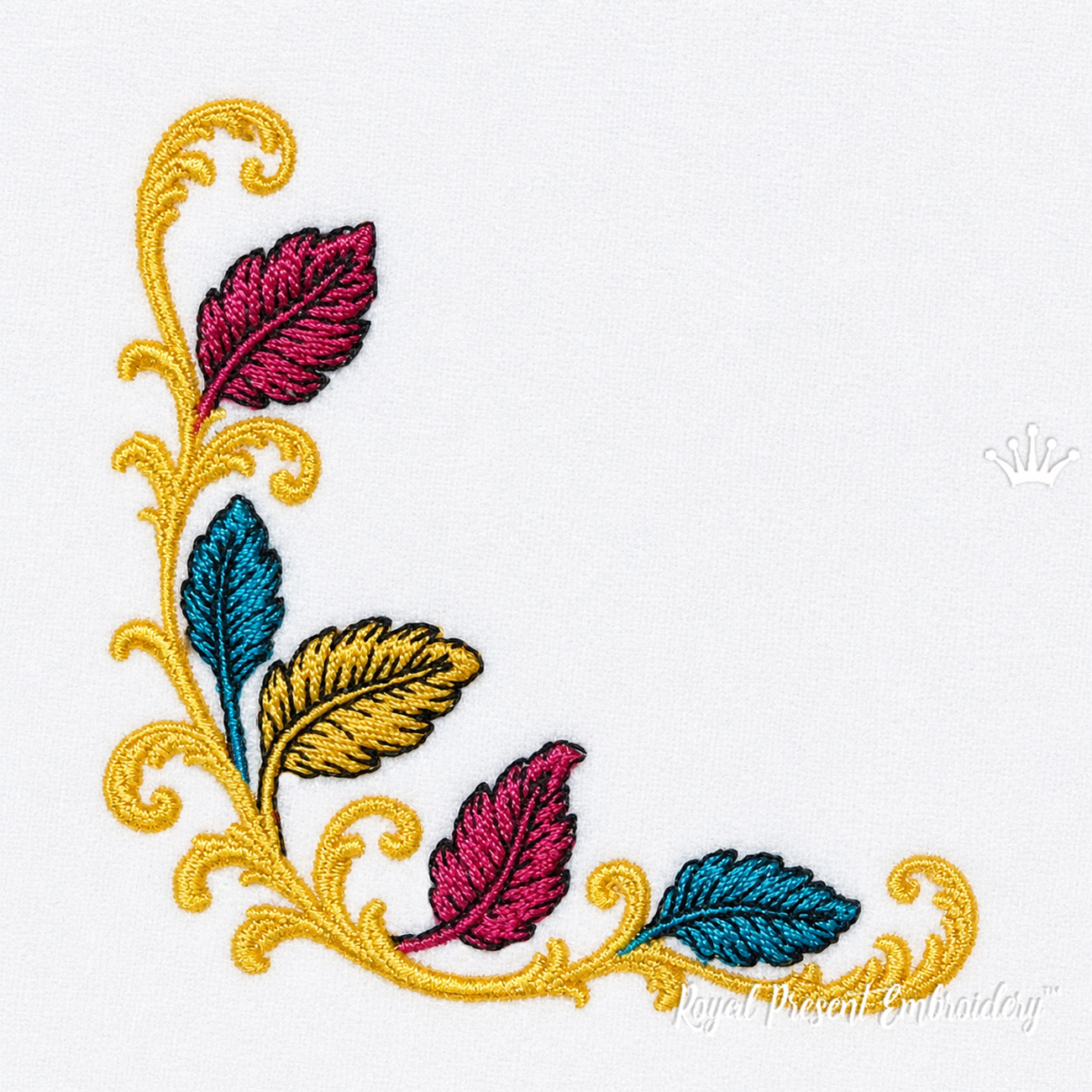
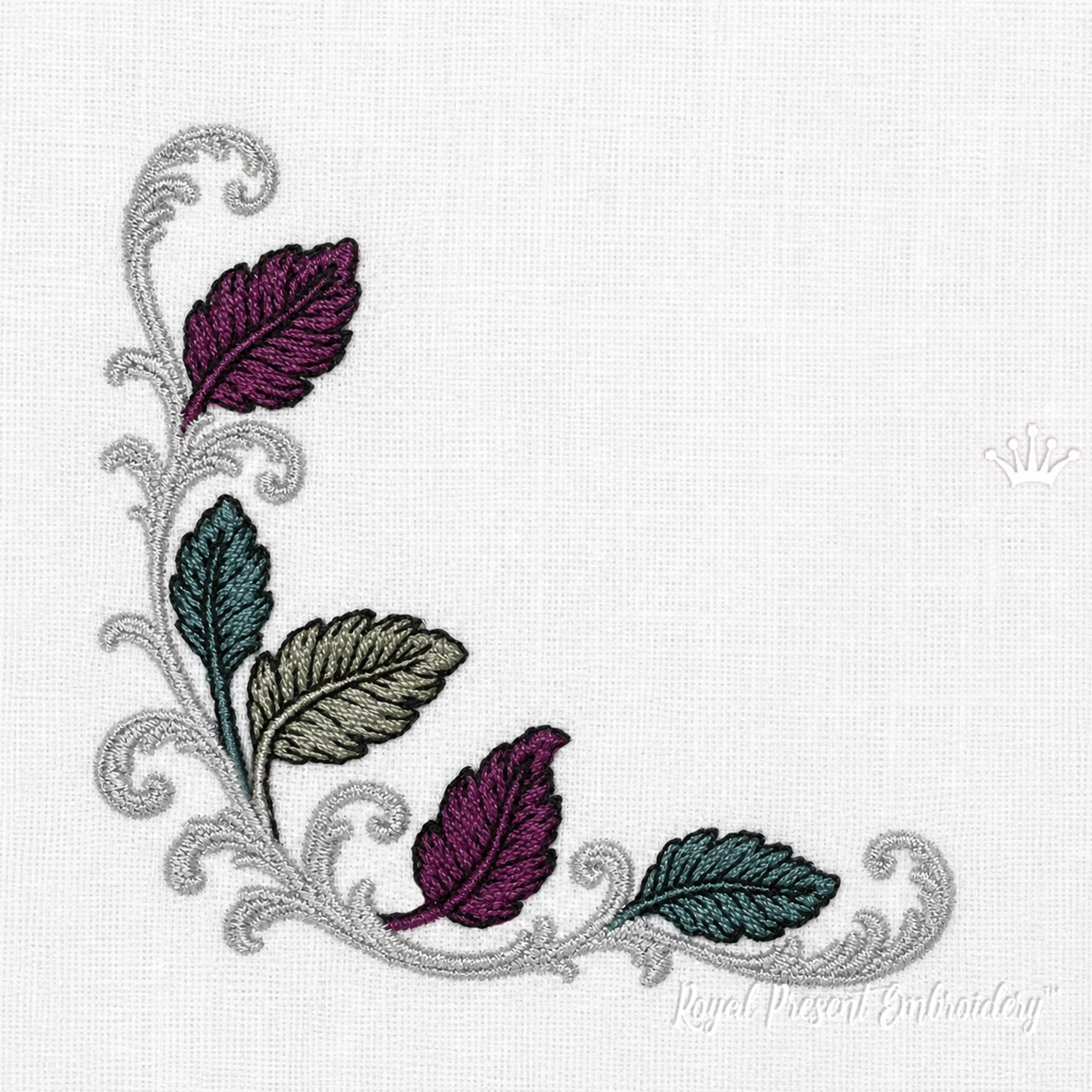
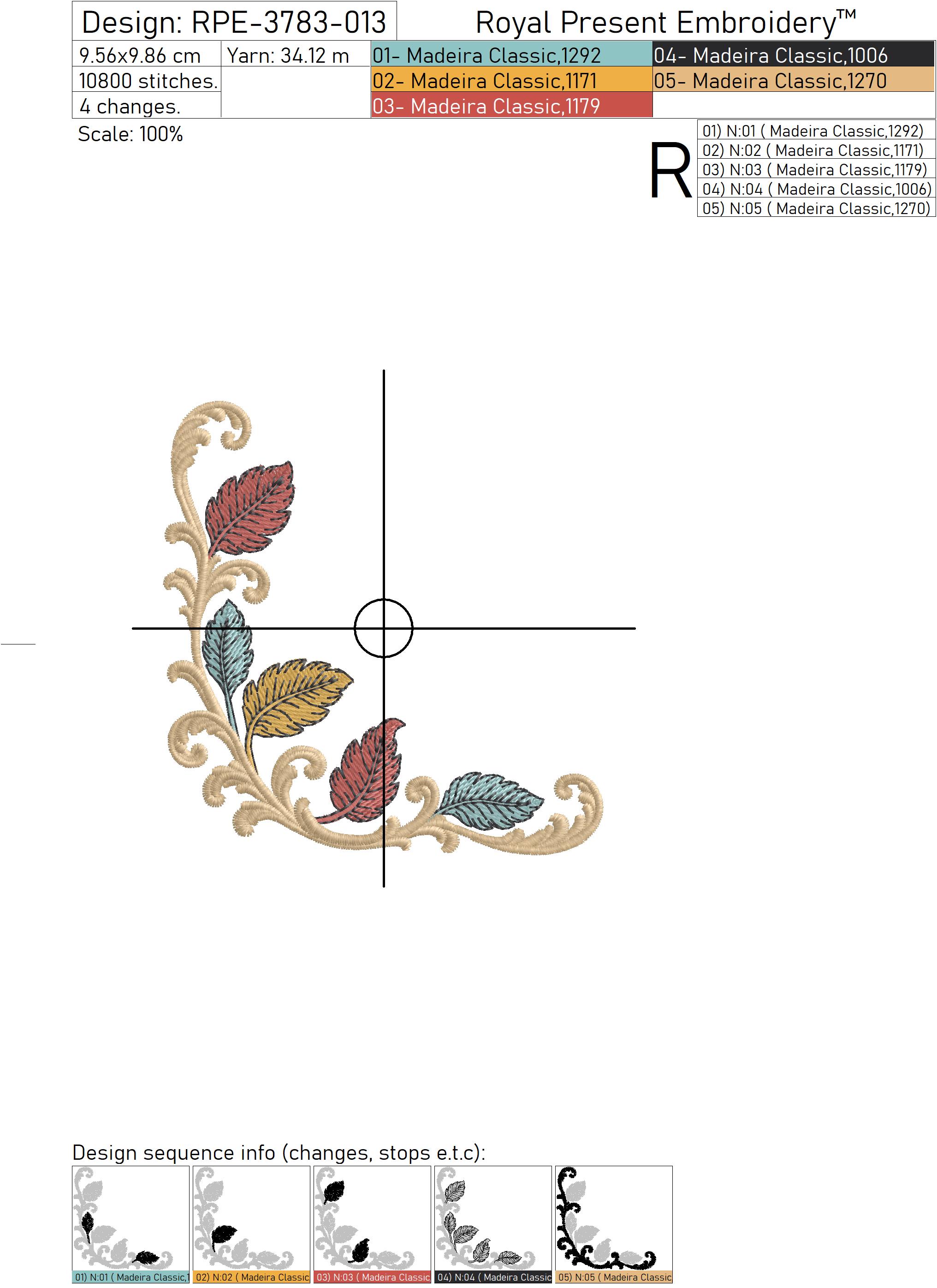
This baroque corner machine embroidery design is suitable for linen napkins, placemats, table runners, tablecloth corners, decorative towels and cushion covers. Use medium-weight linen, cotton or table textile fabric with a suitable stabilizer. For terry cloth, waffle fabric or textured towels, add a water-soluble topping before stitching. Hoop the fabric firmly without stretching, follow the color chart and press the finished embroidery from the wrong side.
Size: 95.6 x 98.6 mm (3.76 x 3.88"), Stitches: 10576
Size: 105.0 x 108.4 mm (4.13 x 4.27"), Stitches: 11587
Size: 115.4 x 119.2 mm (4.54 x 4.69"), Stitches: 12949
Size: 128.6 x 132.7 mm (5.06 x 5.22"), Stitches: 14506
Formats: .dst, .pec, .exp, .hus, .vip, .pes, .dat, .vp3, .sew, .tab. xxx
Use stable medium-weight fabrics:
linen, cotton, table linen, canvas, dense blended fabric.
For towels, terry cloth, waffle fabric or textured fabric, use a water-soluble topping on the surface before stitching.
Recommended stabilizer
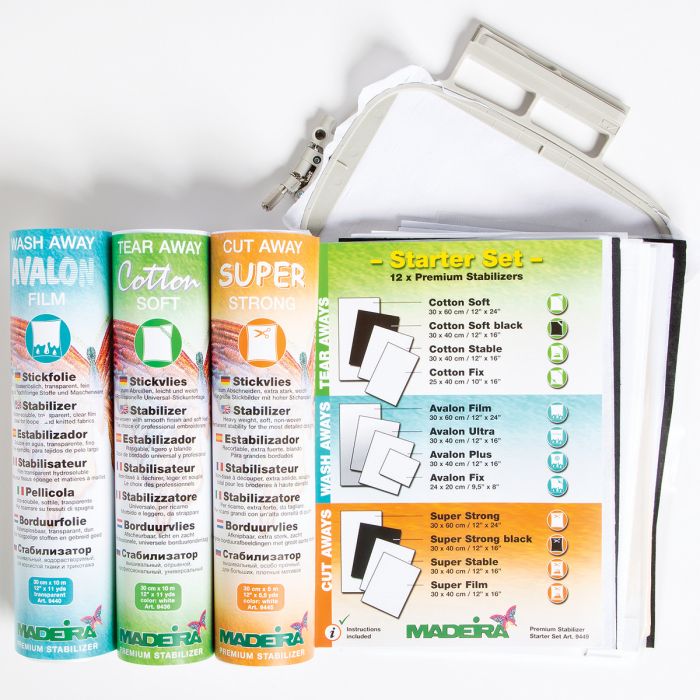
For linen, cotton and table textiles, use a medium-weight tear-away stabilizer.
For softer, thinner or stretch-sensitive fabrics, use a cut-away stabilizer to keep the embroidery stable after washing.
Hooping
Hoop the fabric and stabilizer firmly together. The fabric must be flat, smooth and not stretched. Correct hooping helps prevent puckering, distortion and shifting during embroidery.
Embroidery process
Check the color sequence before stitching. Use good-quality machine embroidery thread. Follow the thread changes shown in the color chart included with the design.
After stitching
Carefully remove the stabilizer. If water-soluble topping was used, remove or dissolve it according to the manufacturer’s instructions. Press the finished textile from the wrong side on a soft towel to protect the embroidery relief.




 Get Sign-In Link
 Login with Google
 Login with Facebook
 Login with Amazon
 Login with Paypal