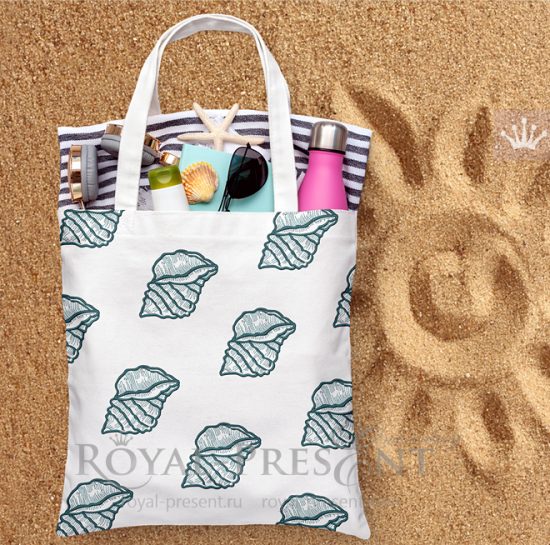
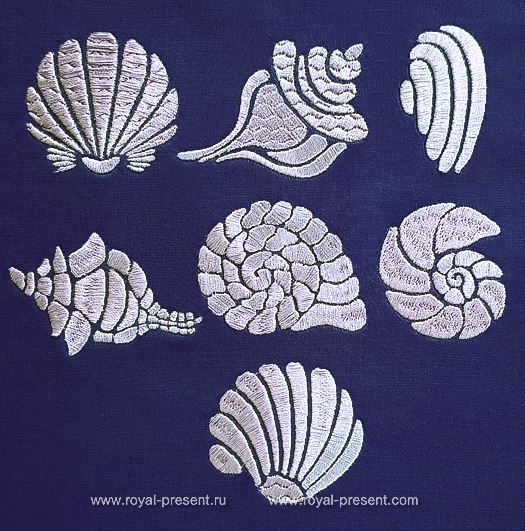
Free Shell Machine Embroidery Design – 3 sizes
Each of us loves and represents the summer in its own way. For some, summer is a time of rest, travel and new discoveries. Someone spends the summer far from the bustle of the city along with...
Showing 1-22 of 22 results
Seashell Machine Embroidery Designs is a collection of downloadable embroidery files featuring scallop shells, nautilus shells, cone and conch shells, tall spirals, clam shells, ammonites, mini motifs and coordinated shell sets. The category includes filled designs, one-color outlines, vintage Line Art and Bluework-style shells for towels, linen napkins, tote bags, pillows, clothing, framed textiles and coastal home decor. These are digital files for an embroidery machine, not finished patches and not hand-embroidery patterns.
Choose a shell by its shape first, then open the product page and check the exact design dimensions against the embroidery field of your machine. Several products include multiple sizes, but the number of sizes and file formats varies from one listing to another.
Scallop and clam shells
Fan-shaped shells work well as centered motifs, napkin corners and repeating coastal accents. Start with the Scallop Seashell in 4 sizes or the lighter Line Art Clam Shell.
Nautilus shells
The rounded spiral reads clearly on a single napkin, pocket, cushion or framed textile. Compare the Nautilus Shell in 2 sizes, the Small Nautilus and the Nautilus Shell in 5 sizes.
Spiral and tower shells
Long vertical shells suit towel ends, narrow bag panels and border-like placement. See the Spiral Seashell in 5 sizes and the Towering Spiral Shell.
Cone, conch and vintage line shells
These elongated shells create a strong horizontal or diagonal focal point. Open the Cone Seashell, the Vintage Conch Line Art or the Vintage Ammonite Line Art.
Mini shells, sets and a free shell
Use small motifs across a set of napkins, pockets or cosmetic bags without repeating the same shell. Browse the Mini Seashells Set, the Shells Design Set and the Free Shell in 3 sizes.
Filled and multicolor shells create a stronger focal point and are useful on cushions, tote bags, wall panels and sturdy household textiles. They cover more fabric, so the stabilizer must support both the stitch count and the material.
Line Art and Bluework shells build the form with outlines and short engraved-looking marks instead of a large solid fill. More fabric remains visible, which keeps linen napkins, shirts and light decorative towels more flexible.
Mini shell sets are the practical choice when several items must coordinate. One shell can be placed on each napkin, or the motifs can be scattered across a tote panel while the same thread palette keeps the collection visually connected.
For a 4x4 hoop: check that both sides of the selected file are within the actual 100x100 mm or 4x4 inch embroidery field. The smallest Scallop Seashell is 99.9x98.7 mm, so it uses almost the entire field and should be traced before stitching. Small nautilus and free shell files provide more placement flexibility.
For a 5x7 hoop: medium shells, horizontal conch motifs and tall spiral shells become easier to position. A vertical shell that is longer than 4 inches does not fit a 4x4 hoop merely because it is narrow; both dimensions must fit the embroidery field.
For napkins and table linens: use an open one-color shell or a compact filled motif. Print the placement template at 100 percent and check the design while the napkin is folded, because a motif that looks centered on the open square may disappear under the fold.
For bags and cushions: mark the finished panel inside the seam allowances before positioning the shell. Embroider the flat panel before inserting a zipper, lining or side seams whenever possible.
Smooth linen, cotton or twill: use a medium-weight tear-away stabilizer and hoop the fabric without stretching it.
Loose or open-weave linen: use an adhesive tear-away or temporary fabric-safe fixation so the weave cannot shift under the shell outlines.
Knits and garments with stretch: use a soft cut-away stabilizer that remains behind the embroidery after washing.
Terry towels: use backing underneath and water-soluble topping above the fabric. Fine Line Art may still disappear in deep pile, so a smooth woven towel band is the safer placement.
Canvas is stable, but that does not mean every canvas project should be stitched without backing. A dense shell can still distort the panel or pull along the edges. Test the actual fabric and stabilizer together before embroidering a finished bag.
For a coordinated set, keep one thread color and change the shell shape. If a product page provides a specific Madeira color chart, that number belongs to that individual design; it is not a mandatory palette for the entire category.
One color, different shells: stitch a scallop, nautilus, cone shell and clam shell on four napkins using the same navy thread and the same distance from the corner.
One shell, different sizes: arrange several included sizes along a table runner or long cushion panel. Place the largest shell near the visual center and use smaller versions as supporting motifs.
One focal shell with mini companions: place a larger filled shell on a tote or cushion and repeat mini shells on the pocket, cosmetic pouch or reverse side.
Nautical, Ocean and Marine Life
The parent collection for lighthouses, boats, shells, fish, coral and other sea themes.
Sea Life Line Collection
Open linear designs that coordinate naturally with one-color seashells.
Under the Sea Embroidery Designs
Marine animals and small ocean motifs for towels, accessories and summer projects.
Each of us loves and represents the summer in its own way. For some, summer is a time of rest, travel and new discoveries. Someone spends the summer far from the bustle of the city along with...
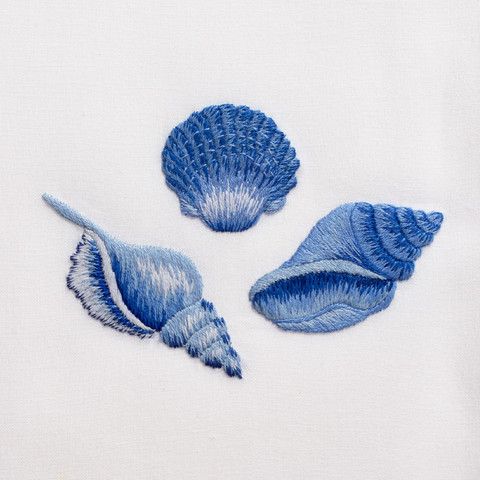
Seashell embroidery designs Each of us has his own special items and words associated with the summer, the hot sun and, of course, the holiday. For someone it is a sweet strawberry and cold l...
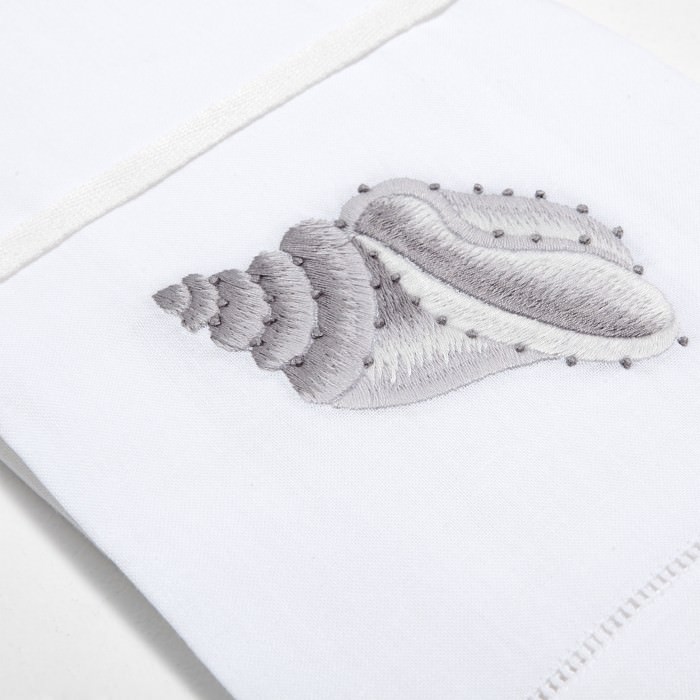
Watching this design, each of us remembers how he rested in the summer by the sea, wandered barefoot on wet, warm sand and collected on the foamy shore of the shells, choosing from all the va...
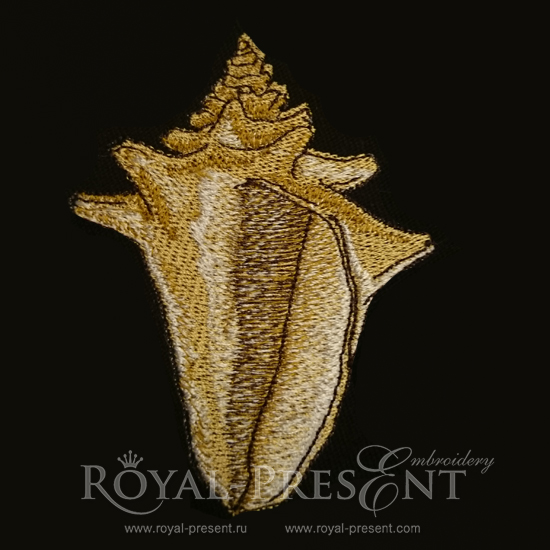
A seashell is probably the most popular keepsake to bring from vacation. Small and large shells of sea creatures take their places of honor at home to remind of summer holidays. Seashell Mach...
The most beloved time of all children and many adults is summer. It pleases us not only with warm sunrays, which strive to penetrate through our sunglasses and to please our eyes with their l...

 Get Sign-In Link
 Login with Google
 Login with Facebook
 Login with Amazon
 Login with Paypal