Square Acanthus Arabesque Machine Embroidery Design: 3 Sizes
By knowing the speed of your embroidery machine, you can find out how long it will take to embroider a design.
To use the embroidery calculator, click on the number of stitches in the product description.
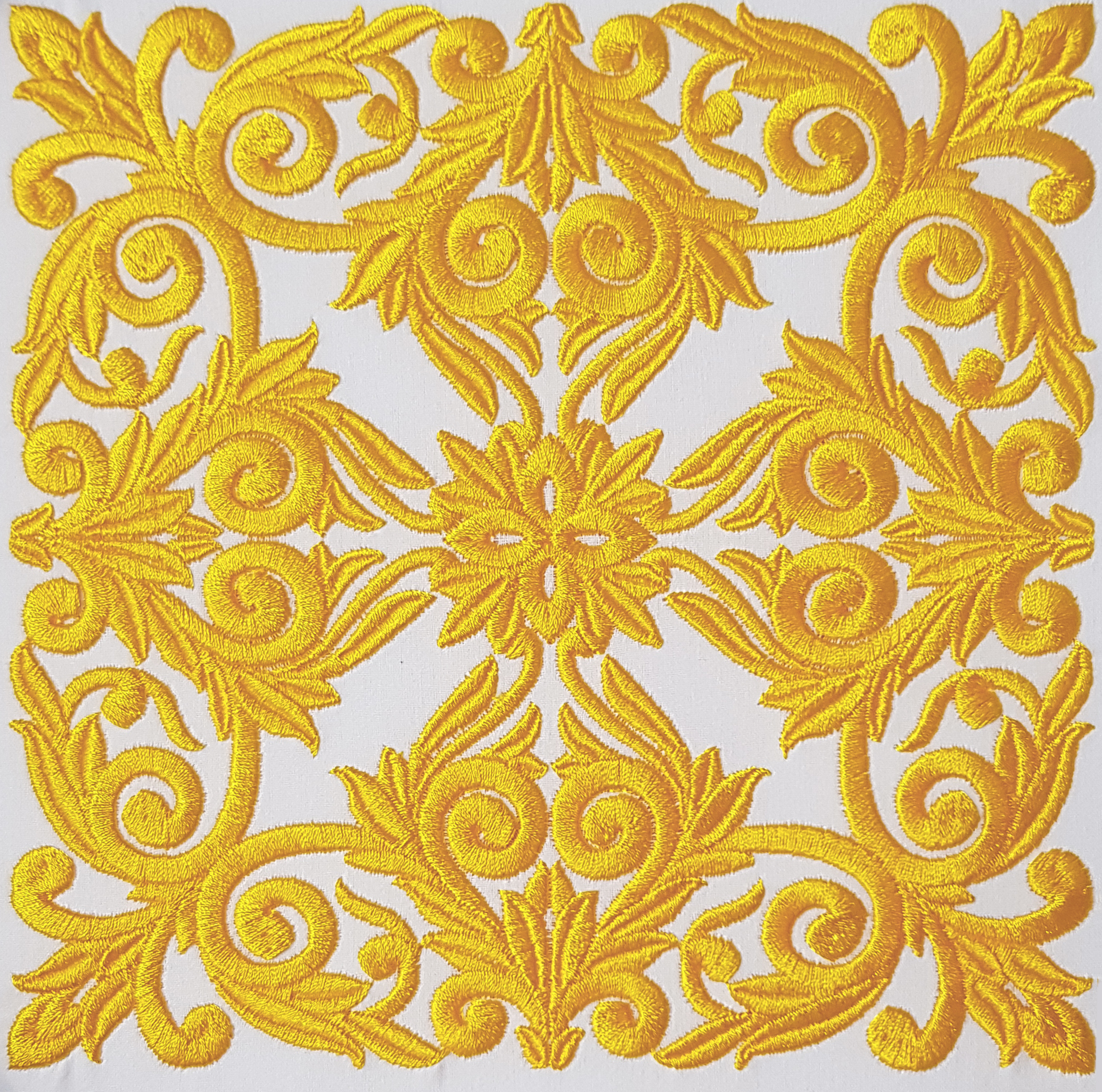
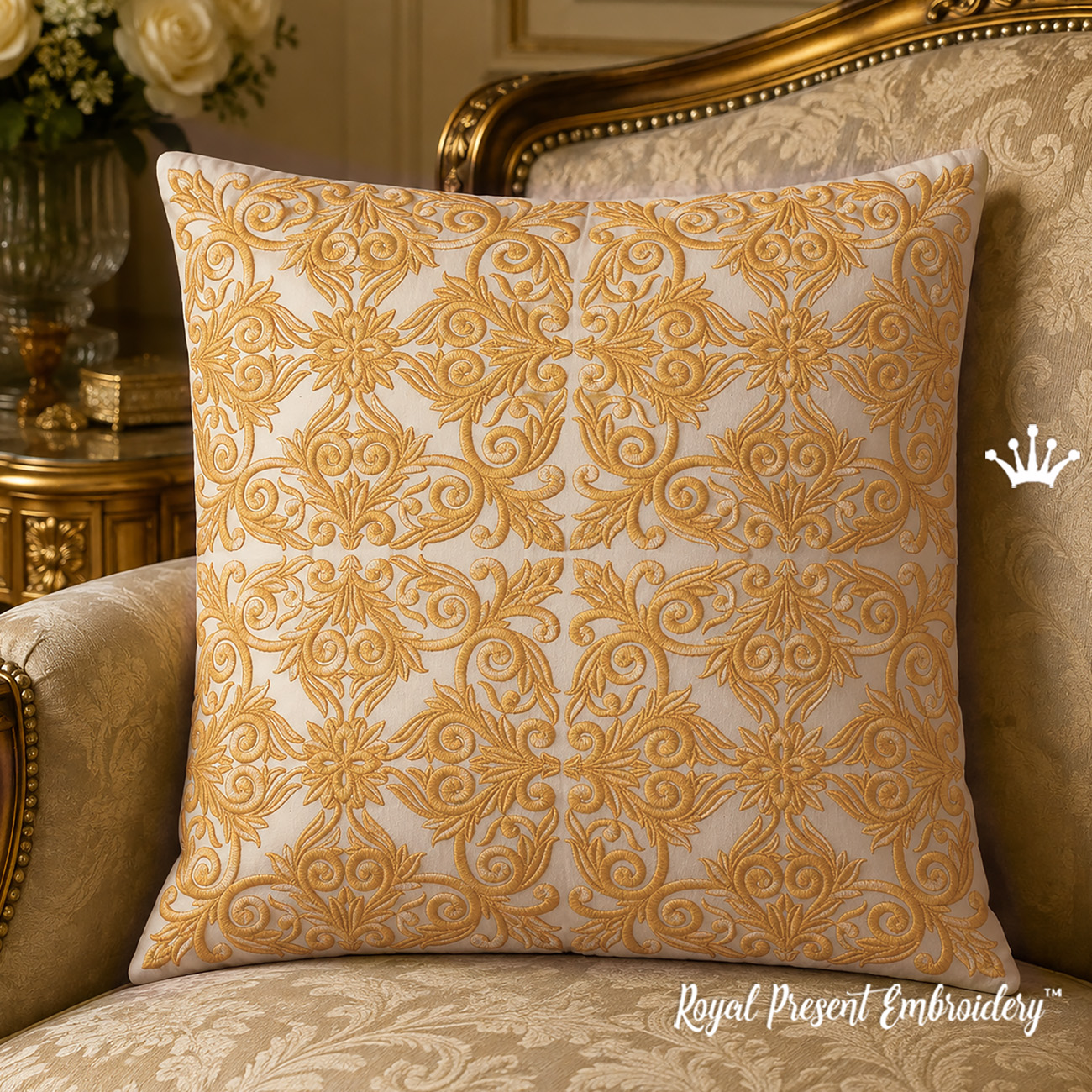
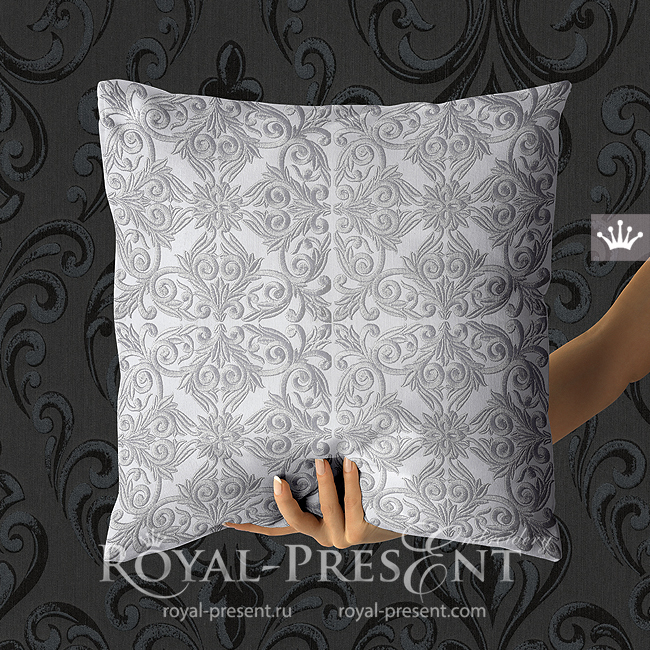
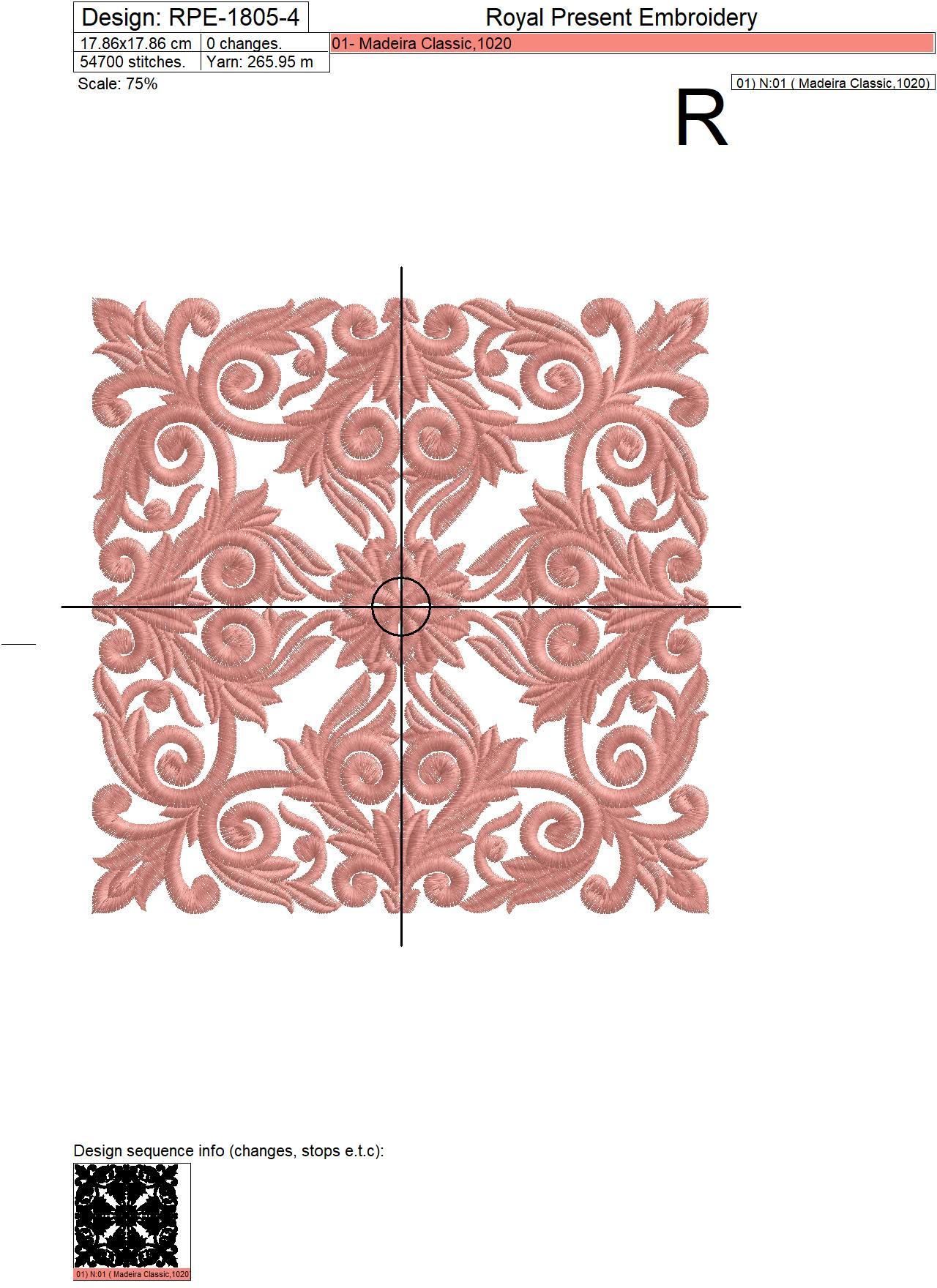
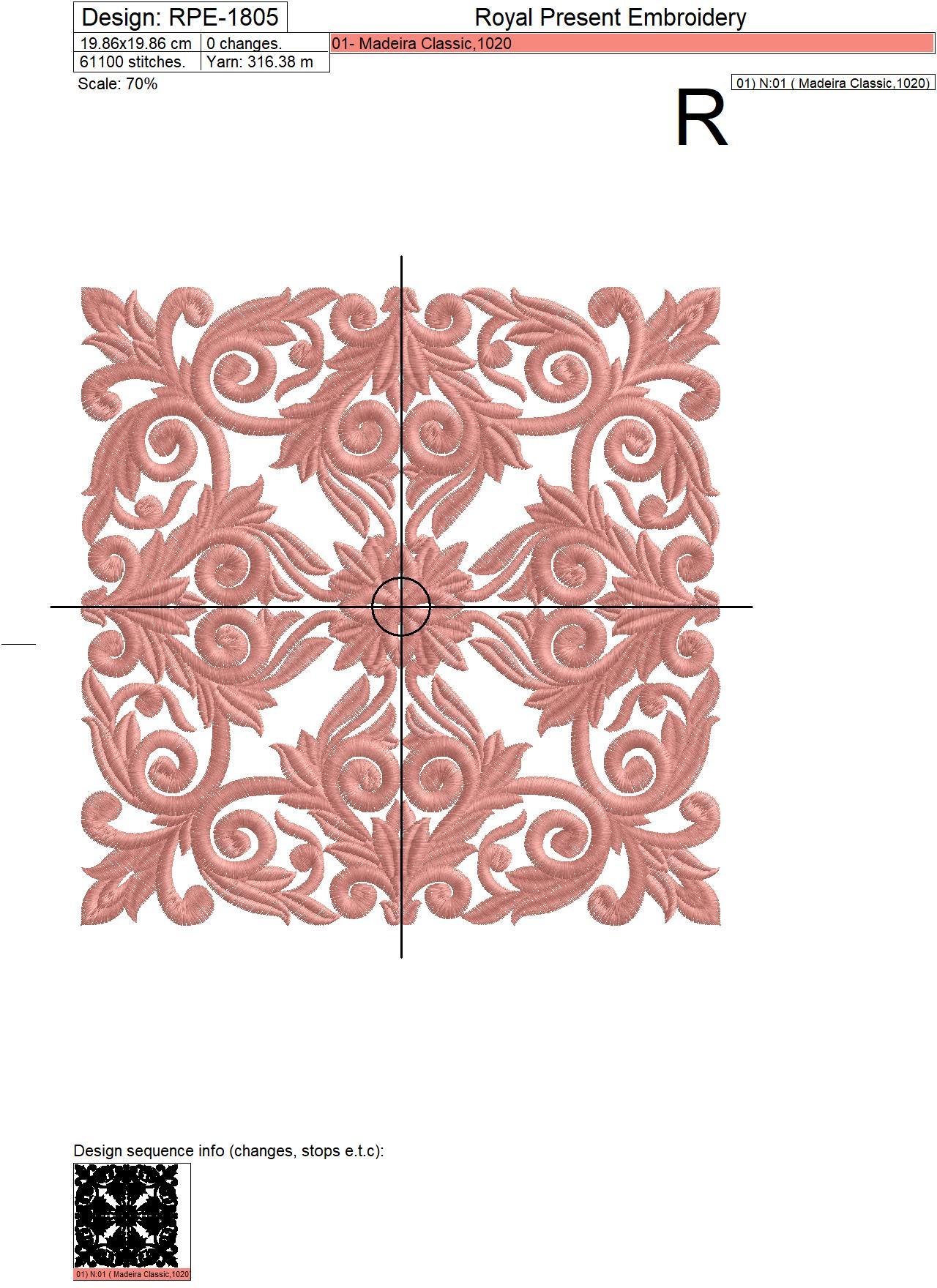
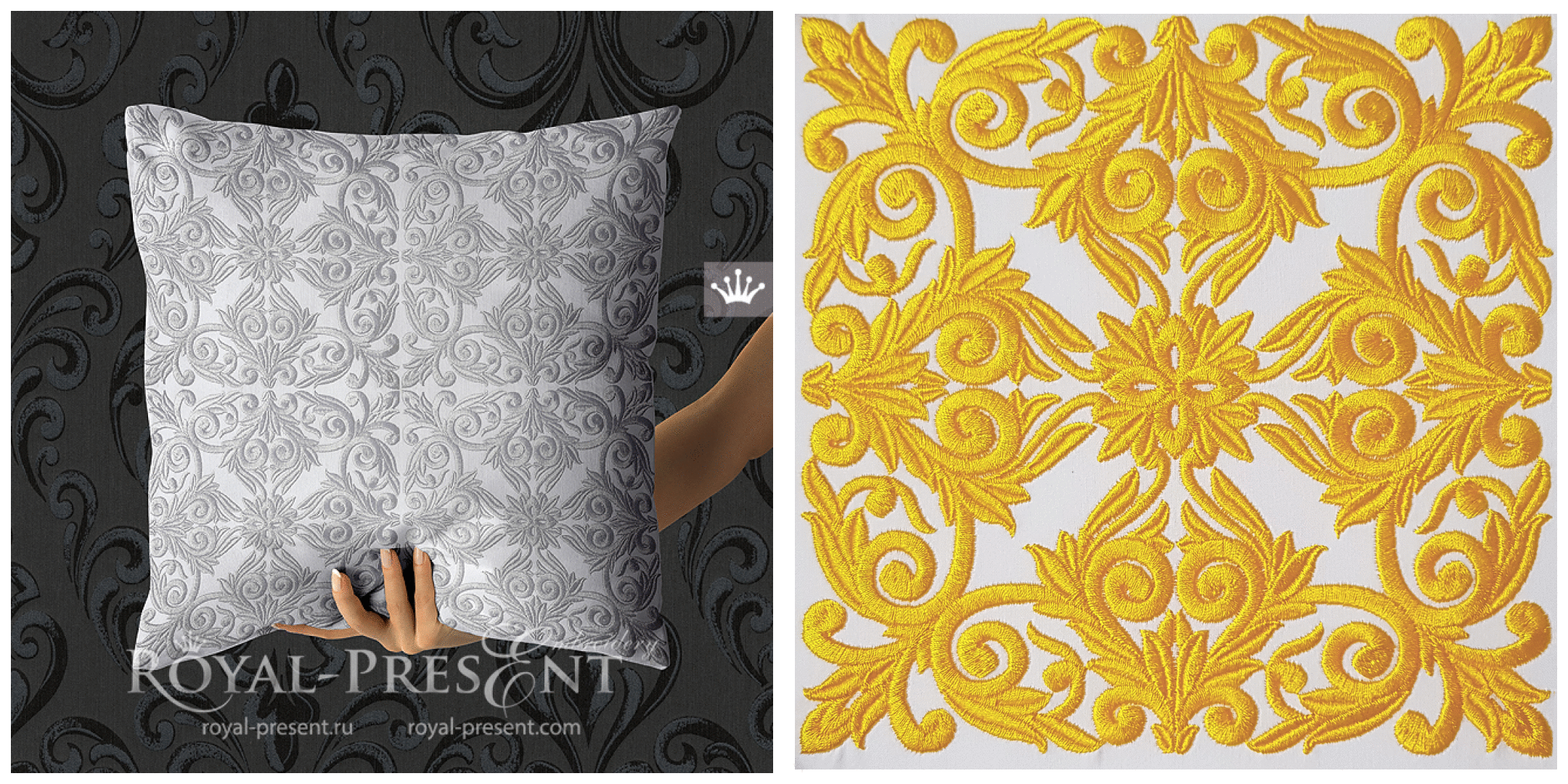
The Square Acanthus Arabesque is a one-color machine embroidery design supplied in three sizes; the download also includes a separate quarter motif for a 4x4 inch (100x100 mm) hoop. The symmetrical composition of stylized acanthus leaves and flowing arabesque scrolls is suitable for decorative cushions, bedspreads, quilt blocks and textile wall panels. This is a digital product; fabric, thread and a finished embroidered item are not included.
Sizes, stitches and formats
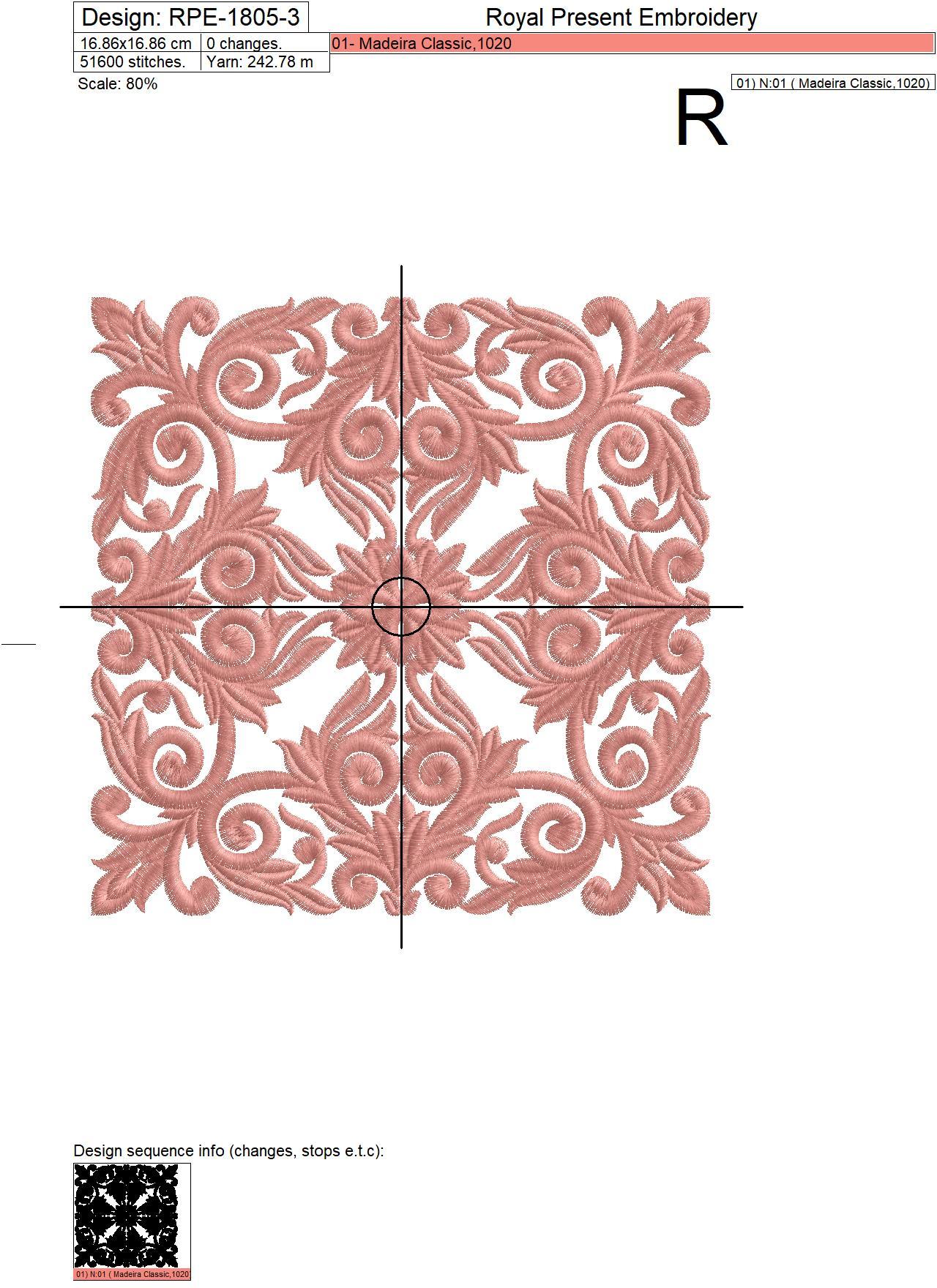
Size: 168.6x168.6 mm (6.64x6.64 "), Stitches: 51563
Size: 178.6x178.6 mm (7.03x7.03 "), Stitches: 54645
Size: 198.6x198.6 mm (7.82x7.82 "), Stitches: 61071
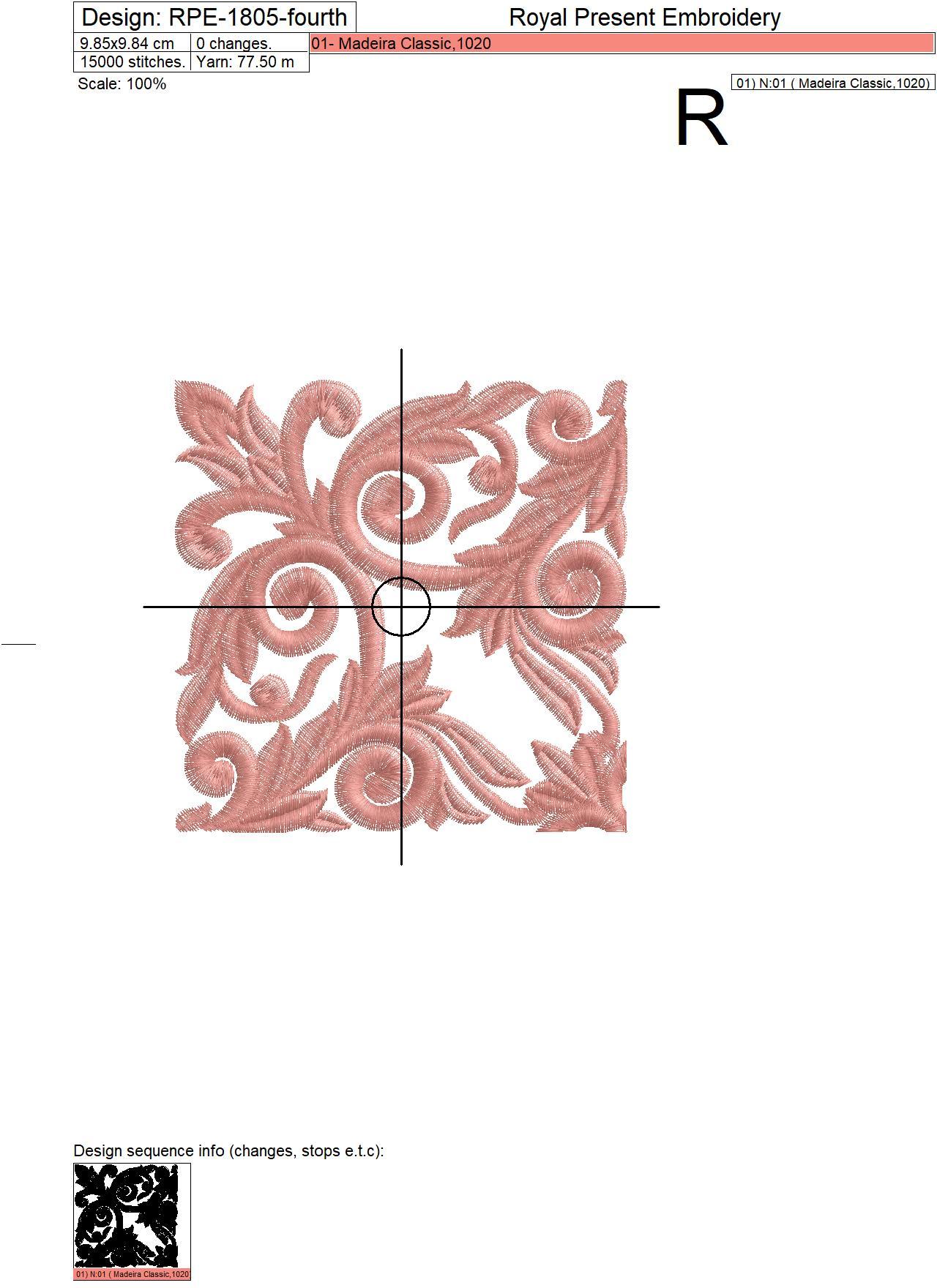
Size: 98.5x98.4 mm (3.88x3.87 "), Stitches: 14976Formats: pes, .pec, .hus, .vip, .dst, .exp, .sew, .dat, .vp3, .jef, xxx
What is included
| File | Quantity | Suggested use |
|---|---|---|
| Complete square acanthus arabesque | 3 sizes | A central cushion motif or a complete block for a quilt, bedspread or wall panel |
| Quarter of the ornament | 1 file | Building the full square from four embroidered sections or four patchwork blocks |
What is acanthus?
Acanthus is a plant known for its large, deeply cut leaves. In decorative art, the word also names the stylized leaf motif associated with classical Greek and Roman architecture, particularly Corinthian capitals. The motif later became part of Renaissance, Baroque and neoclassical decoration, where the natural leaf was reshaped into balanced ornamental curves.
An arabesque is an ornamental composition made from flowing, repeating or interlacing scrolls and stylized plant forms. This design combines acanthus foliage with the continuous rhythm of an arabesque.
An ornament fitted into a square
Square-shaped ornaments are designed so that their main leaves, scrolls, corners and negative spaces form a complete composition within the boundaries of a square. Unlike a border, which is meant to continue in one direction, this motif is visually finished on all four sides. The acanthus elements and arabesque curves are distributed symmetrically toward the sides and corners, so the embroidery reads as a balanced square unit.
This structure makes the design especially useful as a quilt block, a centered cushion motif or a repeatable module for a larger bedspread or textile panel. Repeating identical square units also makes it easier to keep spacing and alignment consistent across a large project.
Required hoop sizes
- The separate quarter motif fits a 4x4 inch (100x100 mm) hoop.
- The two smaller complete versions require a 7x7 inch (180x180 mm), 7x12 inch (180x300 mm), 8x8 inch (200x200 mm) or larger embroidery field.
- The largest complete version requires an 8x8 inch (200x200 mm) or larger embroidery field.
Why cotton thread suits an acanthus arabesque
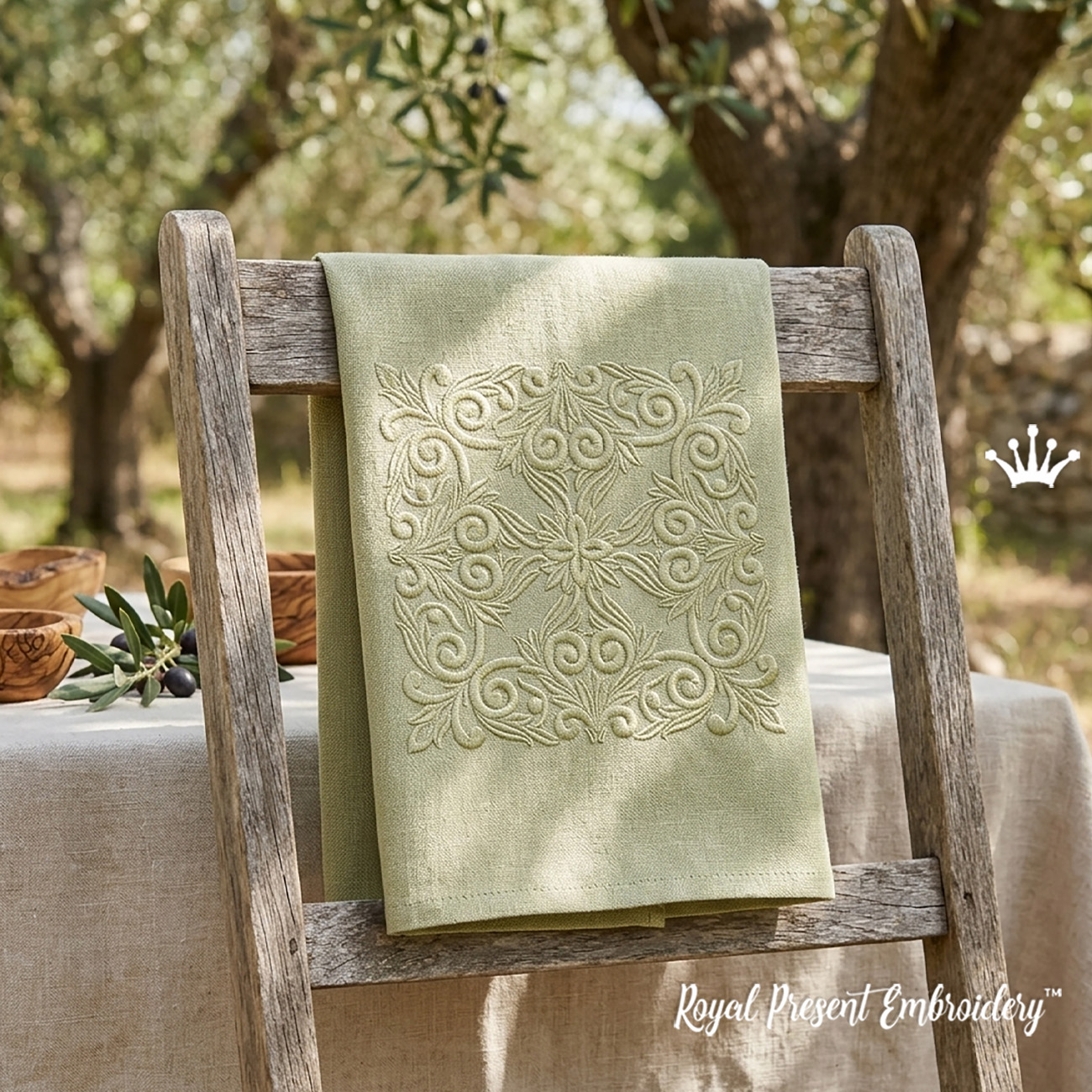
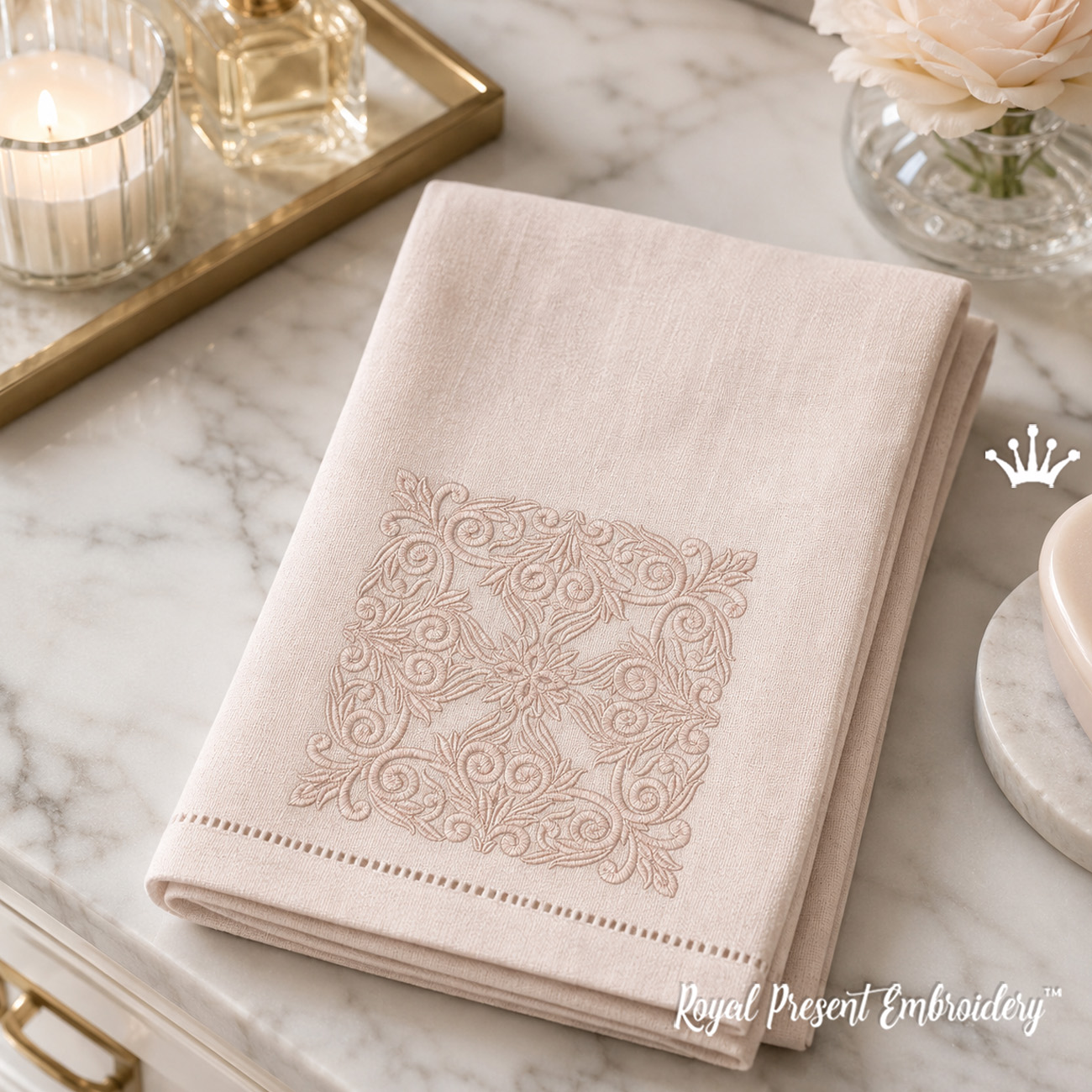
Cotton does not produce the high synthetic shine of rayon or standard polyester embroidery thread. Its soft matte surface emphasizes the symmetry of the acanthus leaves and the measured rhythm of the arabesque scrolls, giving the embroidery the character of an old woven or quilted textile. Tone-on-tone stitching is particularly effective on linen: the pattern appears through stitch relief instead of strong color contrast.
Choose long-staple mercerized cotton made for machine work. Long fibers reduce fuzz and thread breaks, while mercerization improves strength, dye uptake and thread consistency. Even high-quality cotton leaves more lint than smooth polyester or rayon, so the hook area and bobbin case need more frequent cleaning.
Suitable cotton embroidery threads
| Thread line | Fiber and weight | Characteristics | How to use it for this design |
|---|---|---|---|
| SULKY COTTON 50 | 100% long-staple mercerized Egyptian cotton, 50 wt | Fine matte thread that adds less bulk where stitches overlap | The most cautious starting point for the supplied file without density editing |
| Madeira Cotona No. 30 | 100% double-mercerized Egyptian cotton, 30 wt | Matte texture, high tensile strength and 220 yd (200 m) home spools | Creates stronger relief; stitch the quarter motif first and inspect dense intersections |
| Gunold COTTY 30 | 100% long-staple mercerized Egyptian cotton, 30 wt; Nm 50/2, dtex 200x2 | Warm matte appearance and a soft natural surface | Suitable when pronounced matte texture is wanted, after a test stitch |
Important: 30 wt cotton is thicker than standard 40 wt machine embroidery thread. In a dense design, simply changing the spool can increase friction, stitch buildup and needle load. If the machine begins to labor, the thread becomes fuzzy or breaks repeatedly, do not tighten the tension. Stop stitching and change to 50 wt cotton, or use a version of the embroidery file with density adjusted for the thicker thread.
Powder linen and powder thread: a tone-on-tone example
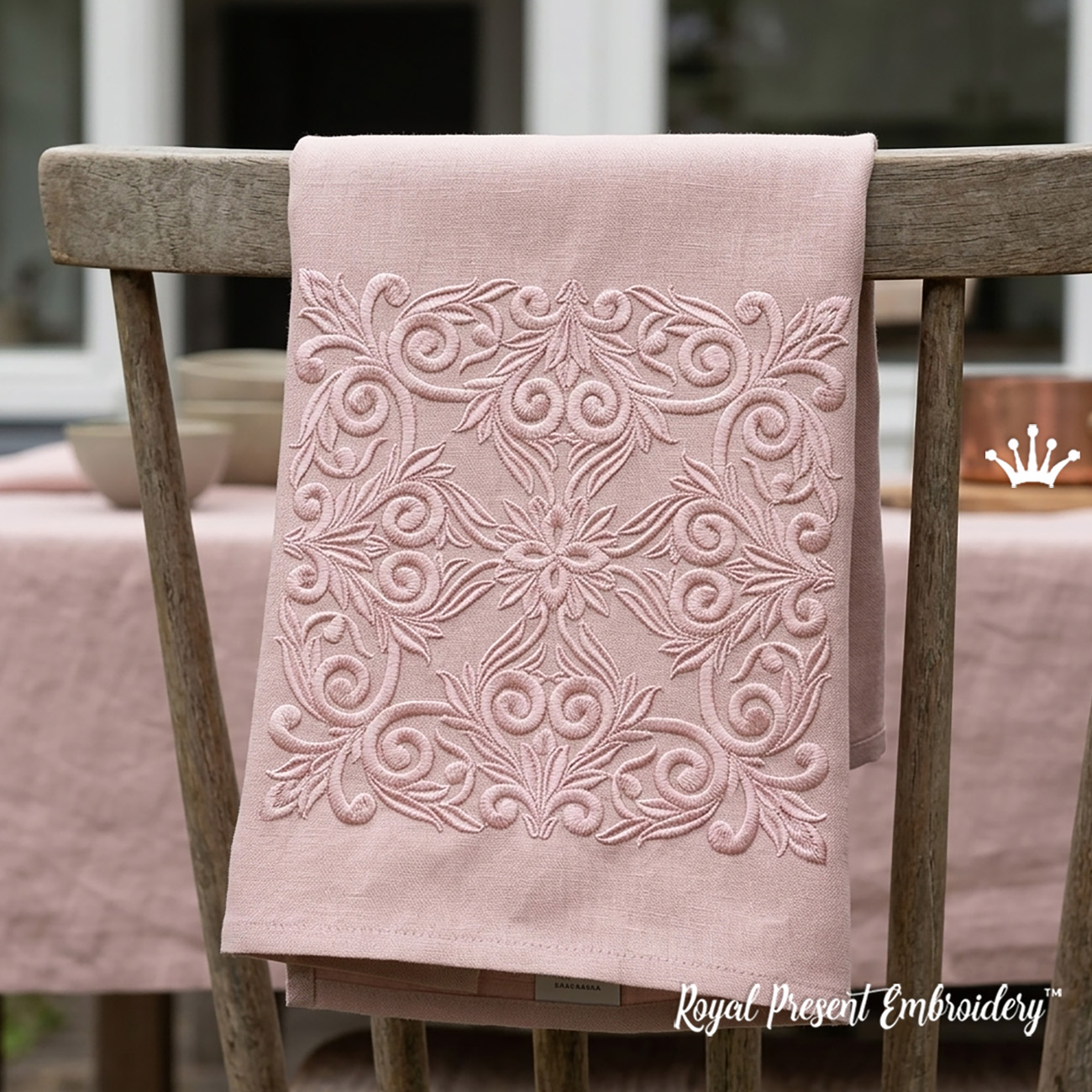
For a result similar to the product image, use prewashed dusty-pink or powder-pink linen with Gunold COTTY 30 No. 200 Petal Pink. This is an actual shade in the COTTY 30 cotton thread range.
| Color | Brand and number | Official color name | Effect |
|---|---|---|---|
| powder pink | Gunold COTTY 30 No. 200 | Petal Pink | Soft matte relief without a harsh contrast against powder-colored linen |
The square is only an approximate screen representation. Monitor settings, lighting and dye lots change how a shade appears. Identify the spool by its number and compare it with the fabric using a physical thread chart in daylight. Choose thread half a shade darker when the ornament needs clearer definition; select the closest possible match for an almost embossed effect.
How to embroider with cotton thread
- Prewash the fabric. Wash and dry linen before cutting. Fabric shrinkage after embroidery can gather the cloth around a dense ornament.
- Estimate the stabilizer weight. A practical starting formula is stabilizer weight ≈ fabric weight ÷ 3. For 180 g/m² (5.3 oz/yd²) linen, begin with approximately 60 g/m² (1.8 oz/yd²) stabilizer. Because this is a large, dense motif, an adhesive cut-away that remains inside a decorative cushion is preferable. Increase support if the fabric stretches or the test stitch puckers.
- Hoop the fabric and stabilizer together. Keep the linen flat and secure but do not stretch it. Stretched fabric returns to its original size after unhooping and creates ripples around the embroidery.
- Install a new needle. Start with an Embroidery or Topstitch 75/11–80/12 needle for 50 wt cotton. Use a Topstitch 80/12–90/14 needle with a larger eye for 30 wt cotton.
- Reduce the speed. Begin at 450–550 stitches per minute. A calmer run reduces needle heat, friction and breaks in natural-fiber thread.
- Test the tension. If bobbin thread appears on the face, slightly loosen the upper tension. Change only one setting at a time so the cause of a fault remains clear.
- Stitch the quarter motif first. It is a full technical sample for checking density, puckering, shade and cotton-thread behavior before starting a complete square.
- Prepare enough thread from one dye lot. Each complete version contains more than 50,000 stitches, so one small 220 yd (200 m) spool may not be enough. Matching dye lots prevent a visible shade change in the middle of the one-color ornament.
- Remove cotton lint. After a long stitchout, clean the hook area and bobbin case with a soft brush. Compressed air can drive lint farther into the mechanism.
How to assemble the full ornament from four sections
If the machine is limited to a 4x4 inch (100x100 mm) embroidery field, stitch four identical quarter motifs on separate fabric squares. Mark the grainline and center axes on every block before embroidery. After stitching, trim all squares to the same measurement, align the joining lines and then sew the blocks together. This patchwork method is more reliable than repeated rehooping: the seams absorb small differences caused by pull compensation and help preserve the square geometry.
How to wash cotton-thread embroidery
- Wash a removable cushion cover separately, inside out, on a delicate cycle at 86°F (30°C).
- Use a mild liquid detergent without chlorine bleach or optical brighteners, which can alter a powder-pink shade.
- Do not leave the wet item crumpled. Reshape it immediately and dry it flat or air-dry without high heat.
- Press slightly damp linen from the wrong side through a pressing cloth, with the embroidery face down on a soft terry towel. This prevents the stitches from being flattened.
- Before the first wash, test the dye lot for color transfer by pressing a damp white scrap against the sample stitchout. If color transfers, wash the item separately in cool water.
Before transferring the file to your machine
Unzip the downloaded folder, select the format supported by your machine and confirm that the chosen size fits its actual embroidery field. Do not automatically resize this dense ornament in the machine menu. For the first stitchout, use the same linen, stabilizer, needle and thread planned for the finished project.

 Get Sign-In Link
 Login with Google
 Login with Facebook
 Login with Amazon
 Login with Paypal