Small Sad Pumpkin Machine Embroidery Design - 4 Sizes
By knowing the speed of your embroidery machine, you can find out how long it will take to embroider a design.
To use the embroidery calculator, click on the number of stitches in the product description.
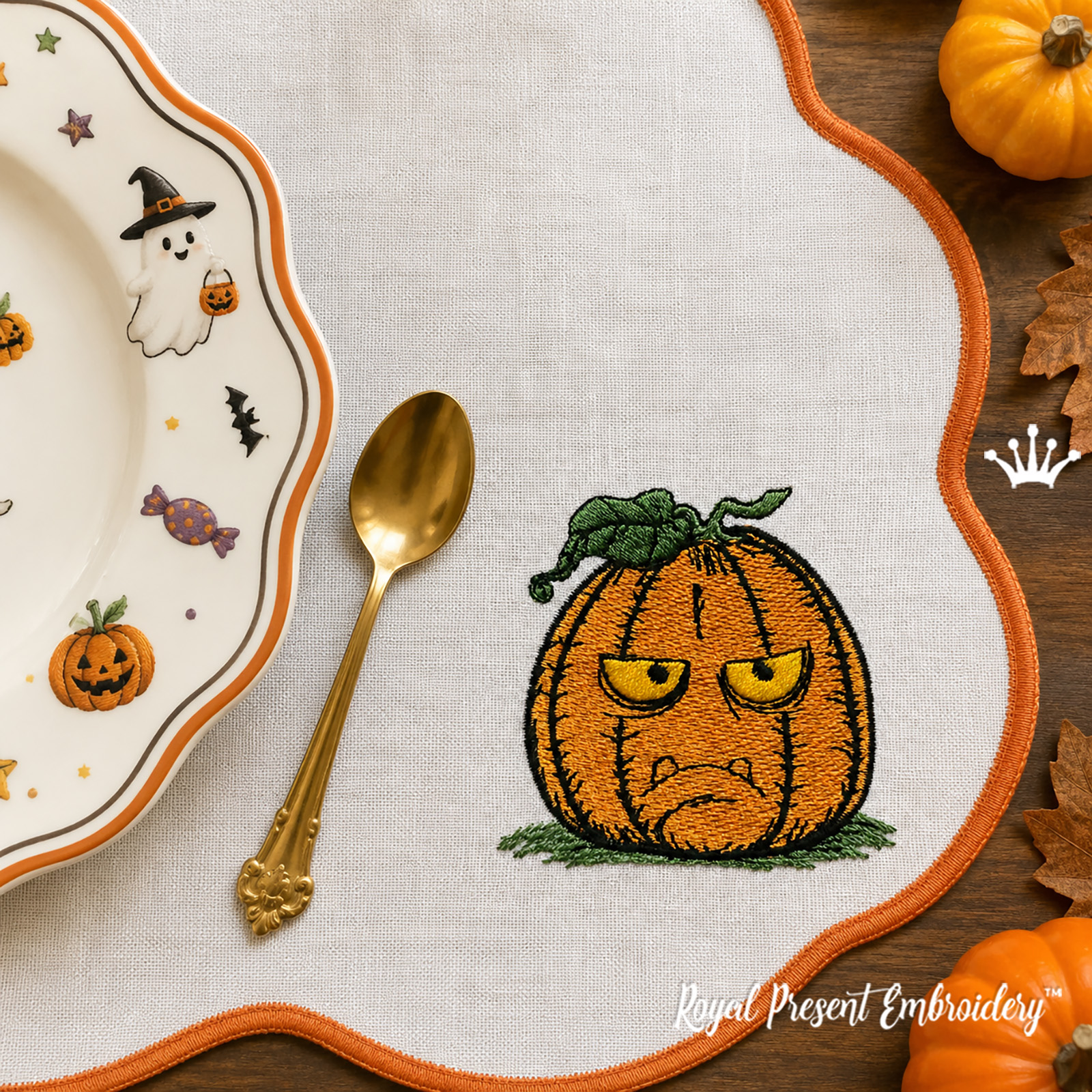
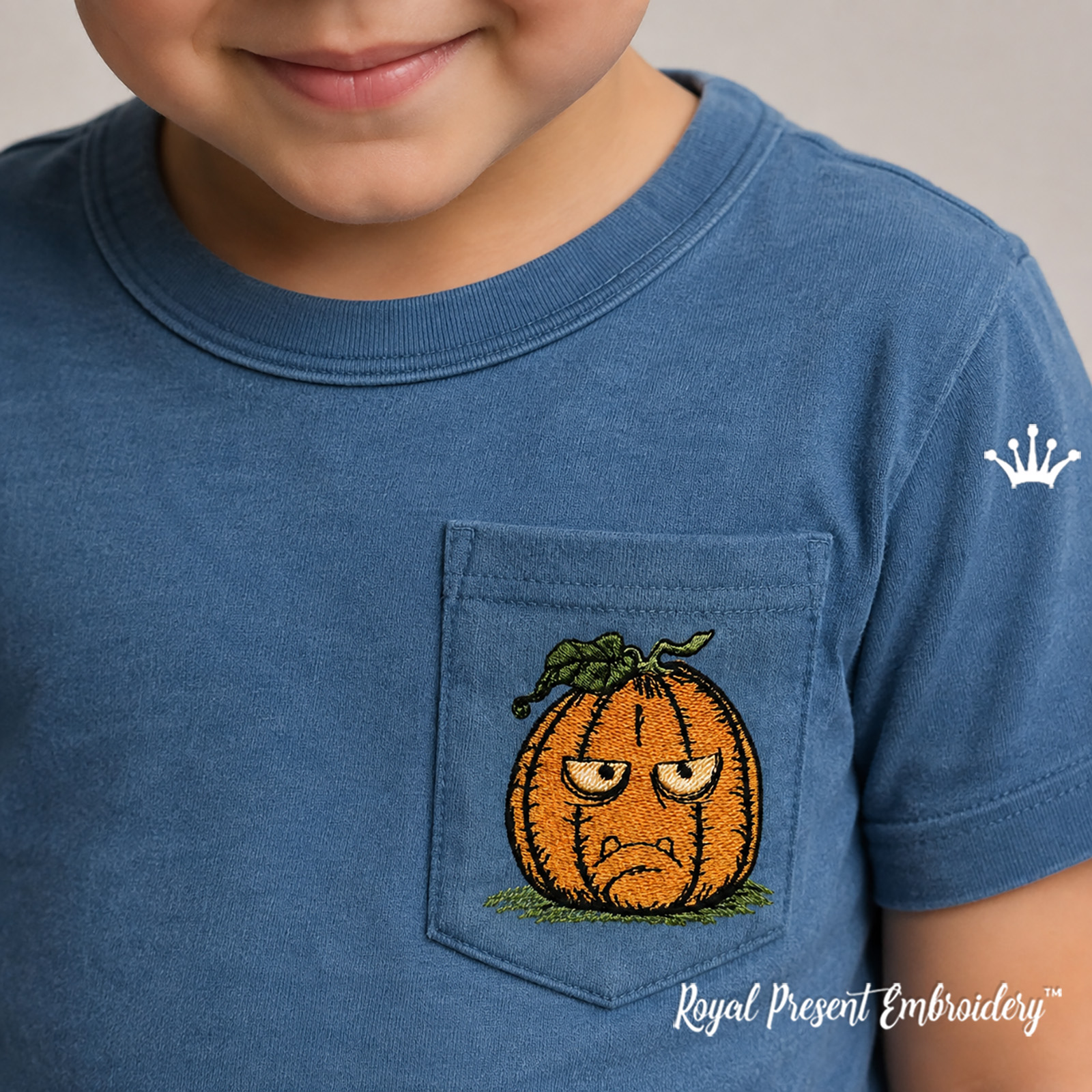
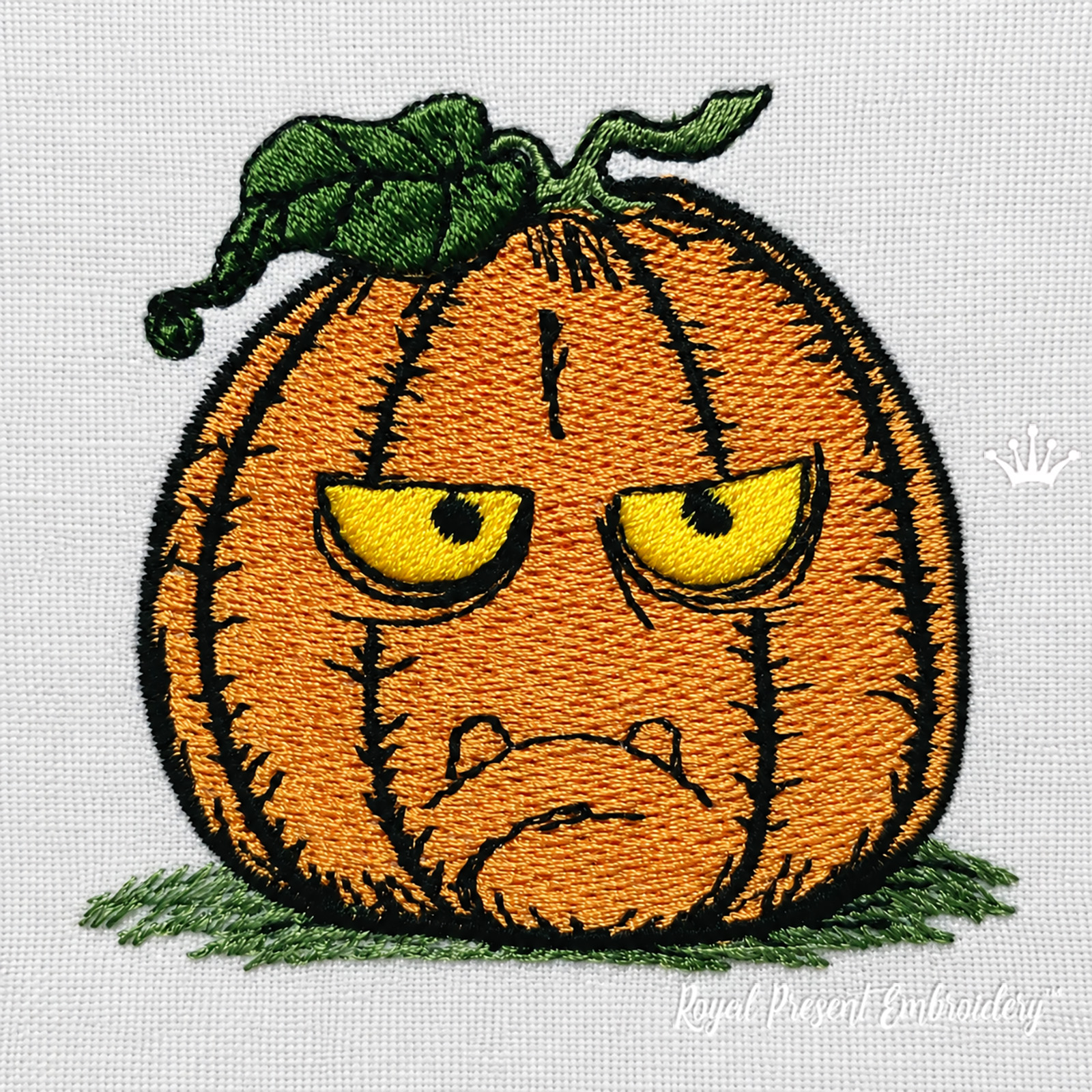
Small Sad Pumpkin is a digital machine embroidery file, not a finished product. The design shows an orange pumpkin with lowered eyes, a frowning mouth, dark sketch-style details, a green leaf and grass. Four compact versions preserve the expressive cartoon face at small sizes.
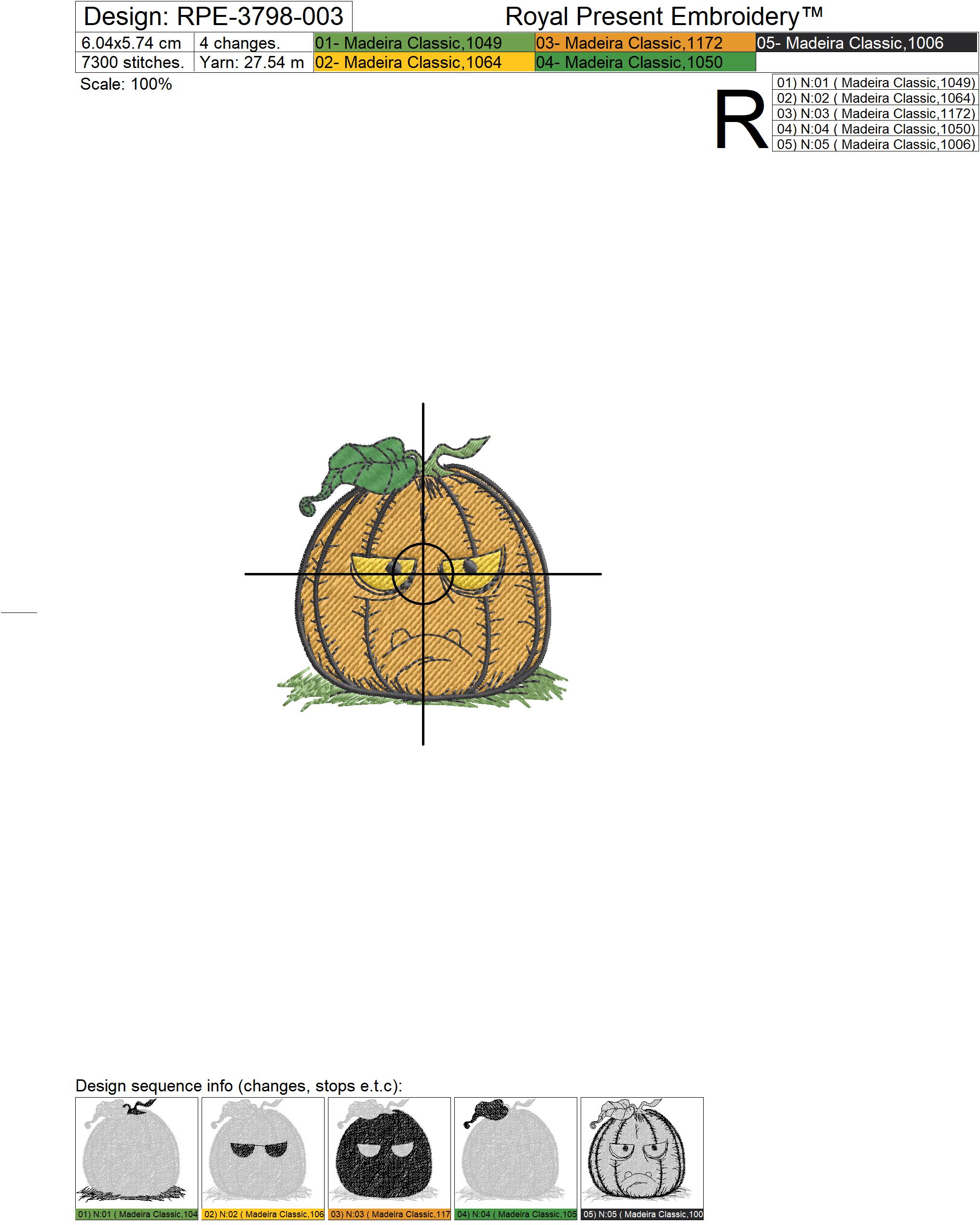
Size: 60.4x57.4 mm (2.38x2.26"). Stitches: 7300
Size: 66.4x62.8 mm (2.61x2.47"). Stitches: 8200
Size: 74.8x68.8 mm (2.94x2.71"). Stitches: 9400
Size: 81.4x76.4 mm (3.20x3.01"). Stitches: 10500
Formats: .dat, .dst, .exp, .hus, .jef, .jef+, .jpx, .pec, .pes, .sew, .vip, .vp3, .vp4, .xxx
After purchase, you receive a ZIP archive containing machine embroidery files. No embroidered item, fabric, thread or stabilizer is included. Extract the archive before transferring a file to your machine, then choose the required format and one of the four prepared sizes.
Minimum hoop sizes
For the 60.4x57.4, 66.4x62.8 and 74.8x68.8 mm files: 80x80 mm (3.15x3.15") hoop.
For the 81.4x76.4 mm (3.20x3.01") file: 100x100 mm (4x4") hoop.
Madeira Classic color chart
The design uses 5 thread colors and 4 color changes. Screen swatches are approximate; select thread by its Madeira number and a physical manufacturer color chart.
| Color | Madeira Classic | Embroidered area | |
|---|---|---|---|
|
1049 | grass beneath the pumpkin | |
|
1064 | eyes | |
|
1172 | main orange fill | |
|
1050 | leaf and stem | |
|
1006 | outline, pupils, mouth and sketch lines |
Stabilizing this filled design
For firm cotton, linen, twill and other stable woven fabrics, use one layer of medium-weight tear-away stabilizer around 50–70 g/m² (1.5–2.0 oz/yd²). Suitable choices include OESD Ultra Clean and Tear, Madeira Cotton Soft and Sulky Tear-Easy. Hoop the fabric and stabilizer securely without pulling the fabric off grain.
For T-shirt jersey, sweatshirt fleece and other stretchy materials, use a soft cut-away stabilizer around 60–80 g/m² (1.8–2.3 oz/yd²), such as OESD Polymesh CutAway, Madeira Weblon Cut Away or Sulky Soft ’n Sheer. The permanent backing prevents the filled area from stretching during wear and washing.
On terry cloth, fleece and other textured surfaces, add a lightweight water-soluble topping such as OESD AquaMesh WashAway, Madeira Avalon Film or Sulky Solvy. Topping holds the pile below the stitches so the eyes, mouth and fine sketch lines remain visible.
For standard 40 wt rayon or polyester embroidery thread, start with a new 75/11 embroidery needle. Dense fabric or a thicker specialty thread may require an 80/12 needle. Stitch a complete sample on matching fabric with the same thread and stabilizer before embroidering the finished item.
Pocket embroidery tip
The easiest method is to embroider the pocket before attaching it. For an existing pocket, hoop adhesive stabilizer such as OESD StabilStick TearAway, Madeira Cotton Fix or Sulky Sticky+, expose the adhesive inside the marked embroidery area and float the pocket on top. Move the pocket lining and garment layers completely out of the needle path. A basting box adds security without forcing the small pocket into the hoop.
Color tip
Replace Madeira 1172 with terracotta, honey or muted beige for a softer autumn palette, and substitute olive shades for greens 1049 and 1050. Keep clear contrast between the pumpkin fill, yellow eyes and dark outline so the face remains readable. Glow-in-the-dark thread may be used for the eyes after a test sample confirms the correct needle and tension.
More expressive pumpkin designs
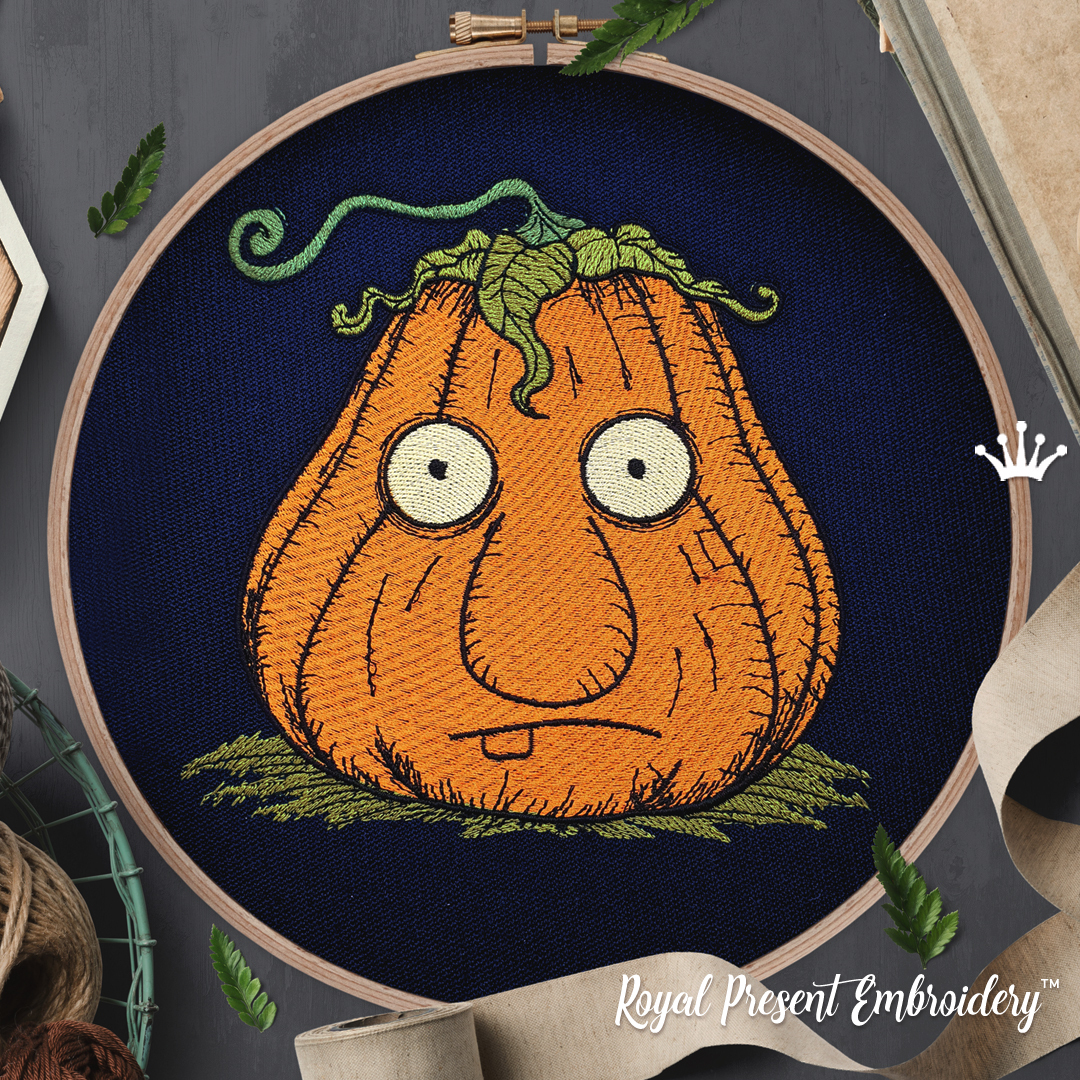
|
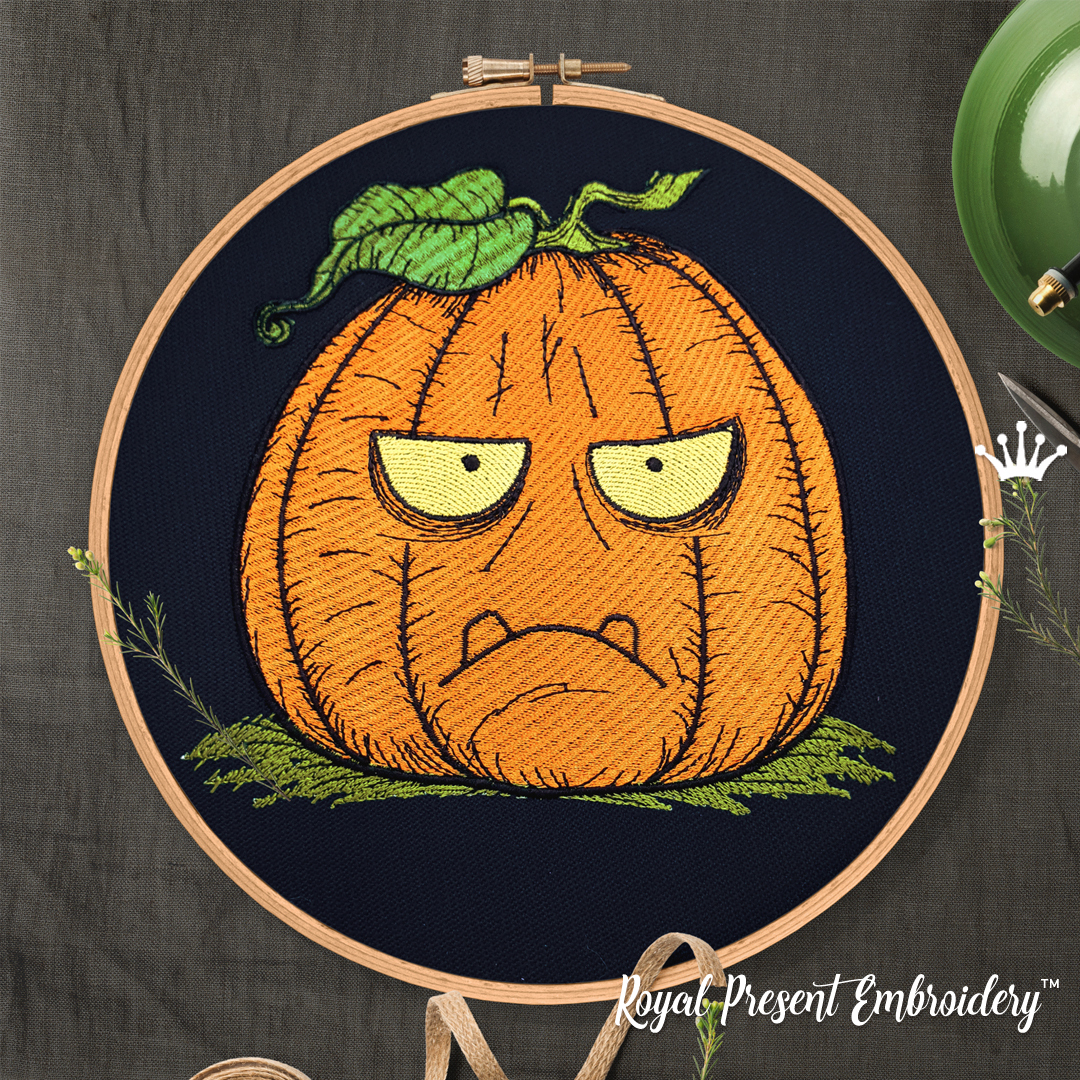
|
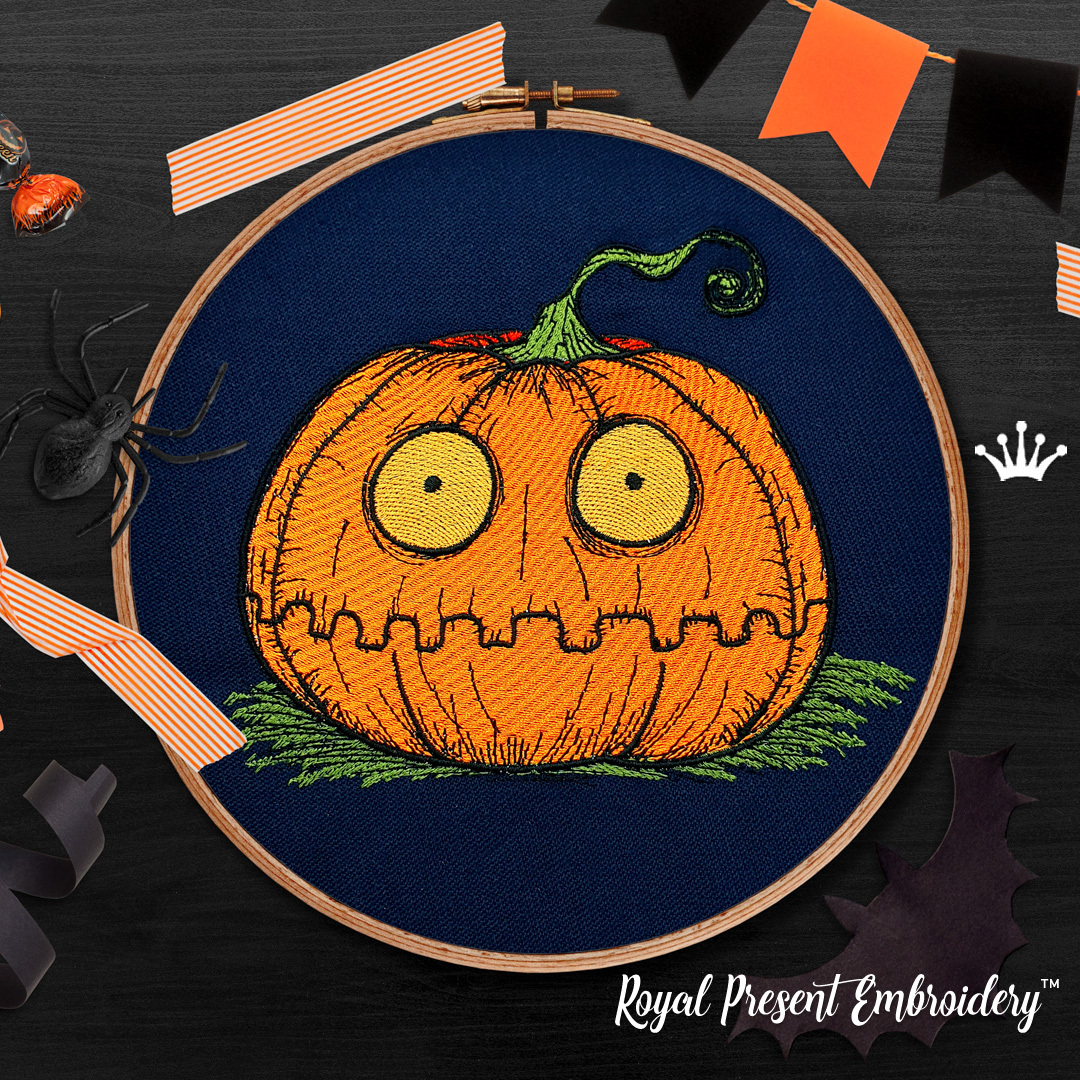
|
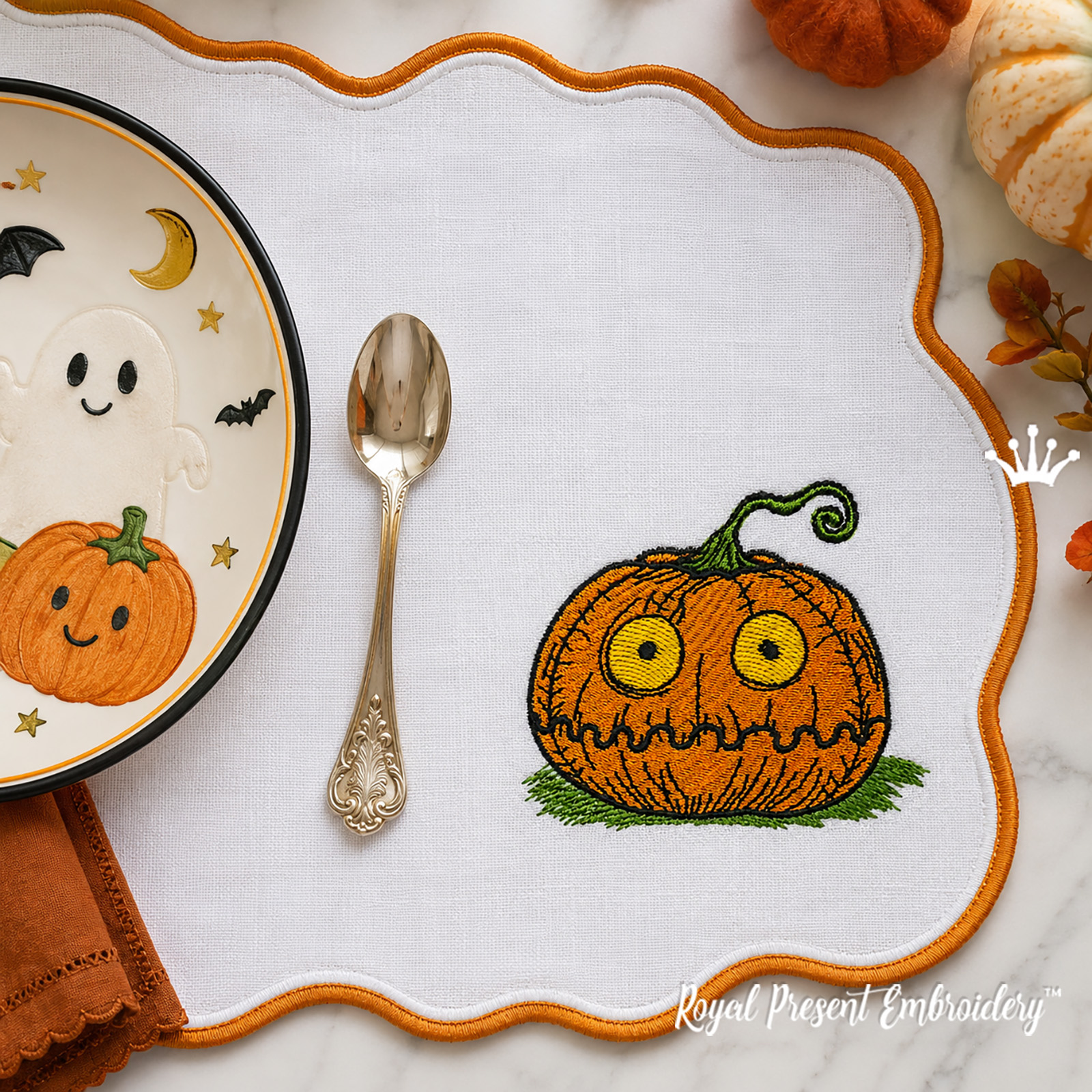
|
Technical questions
Why does knit fabric look wavy around filled embroidery after unhooping?
The fabric was usually stretched during hooping, or the backing was too light for the fabric’s elasticity. Hoop knit fabric in its relaxed state and use 60–80 g/m² (1.8–2.3 oz/yd²) cut-away stabilizer. When direct hooping is impractical, float the garment on OESD StabilStick, Madeira Cotton Fix or Sulky Sticky+ and secure it with a basting box.
How can I embroider a finished pocket without sewing it closed?
Hoop adhesive stabilizer and align the pocket on top. Before starting, move the hoop through its complete sewing area by hand and confirm that the pocket lining and garment layers are outside the needle path. If the construction does not provide access beneath the needle, remove the pocket or embroider it before final assembly.
When is water-soluble topping needed above the fabric?
Use topping on terry cloth, fleece, velour and other surfaces where pile can cover small facial lines. Place it directly over the fabric before stitching. The bottom stabilizer is still required: topping controls the pile but does not support the fabric.
Which needle should I use with regular and glow-in-the-dark thread?
For standard 40 wt machine embroidery thread, begin with a new 75/11 embroidery needle. For thicker glow-in-the-dark or other specialty thread, follow the thread manufacturer’s needle recommendation; an 80/12 embroidery or metallic needle is often suitable. Reduce the machine speed to about 450–550 stitches per minute and test the full thread, needle and stabilizer combination first.

 Get Sign-In Link
 Login with Google
 Login with Facebook
 Login with Amazon
 Login with Paypal