Raspberry Branches with Flowers Machine Embroidery Designs Set - 4 Sizes
By knowing the speed of your embroidery machine, you can find out how long it will take to embroider a design.
To use the embroidery calculator, click on the number of stitches in the product description.
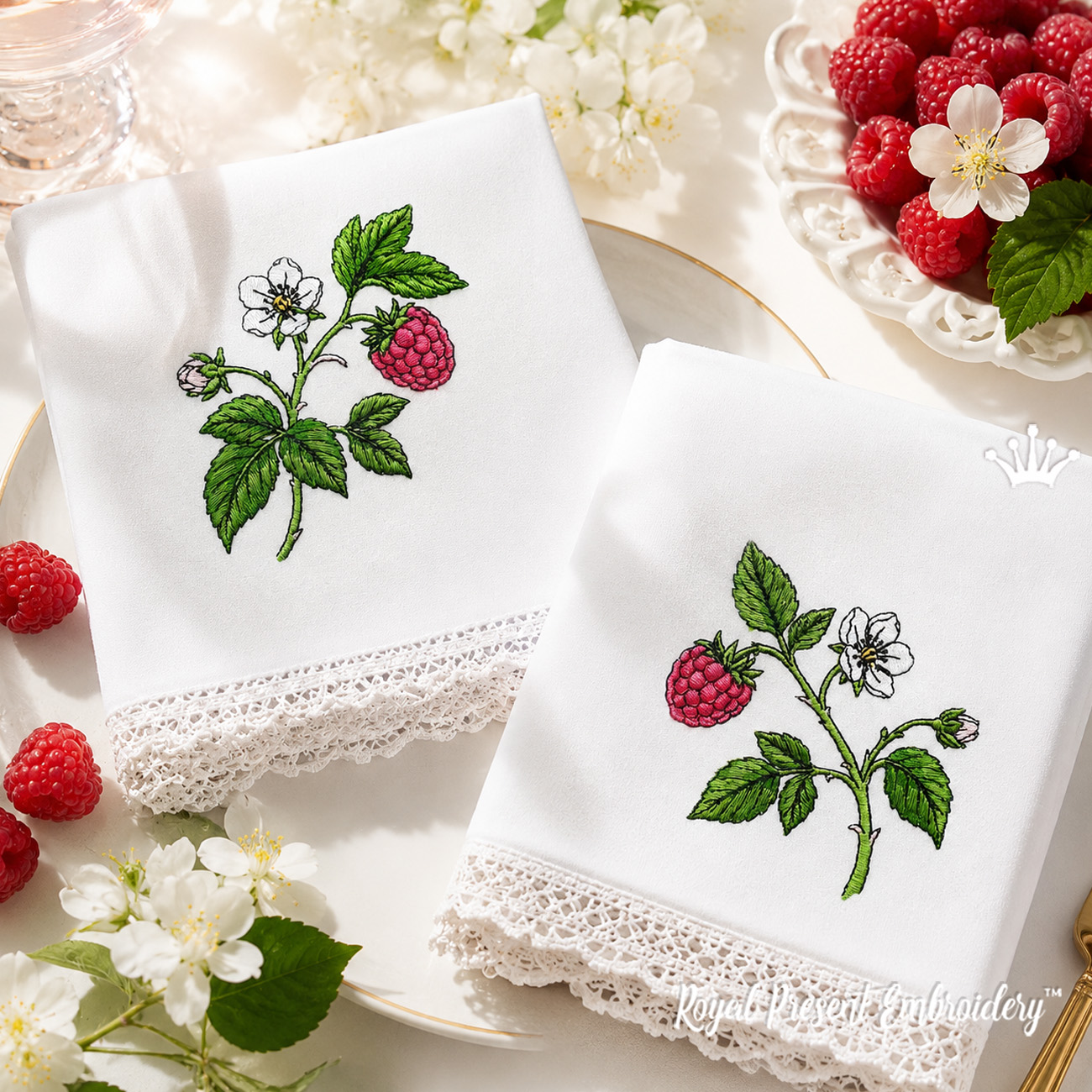
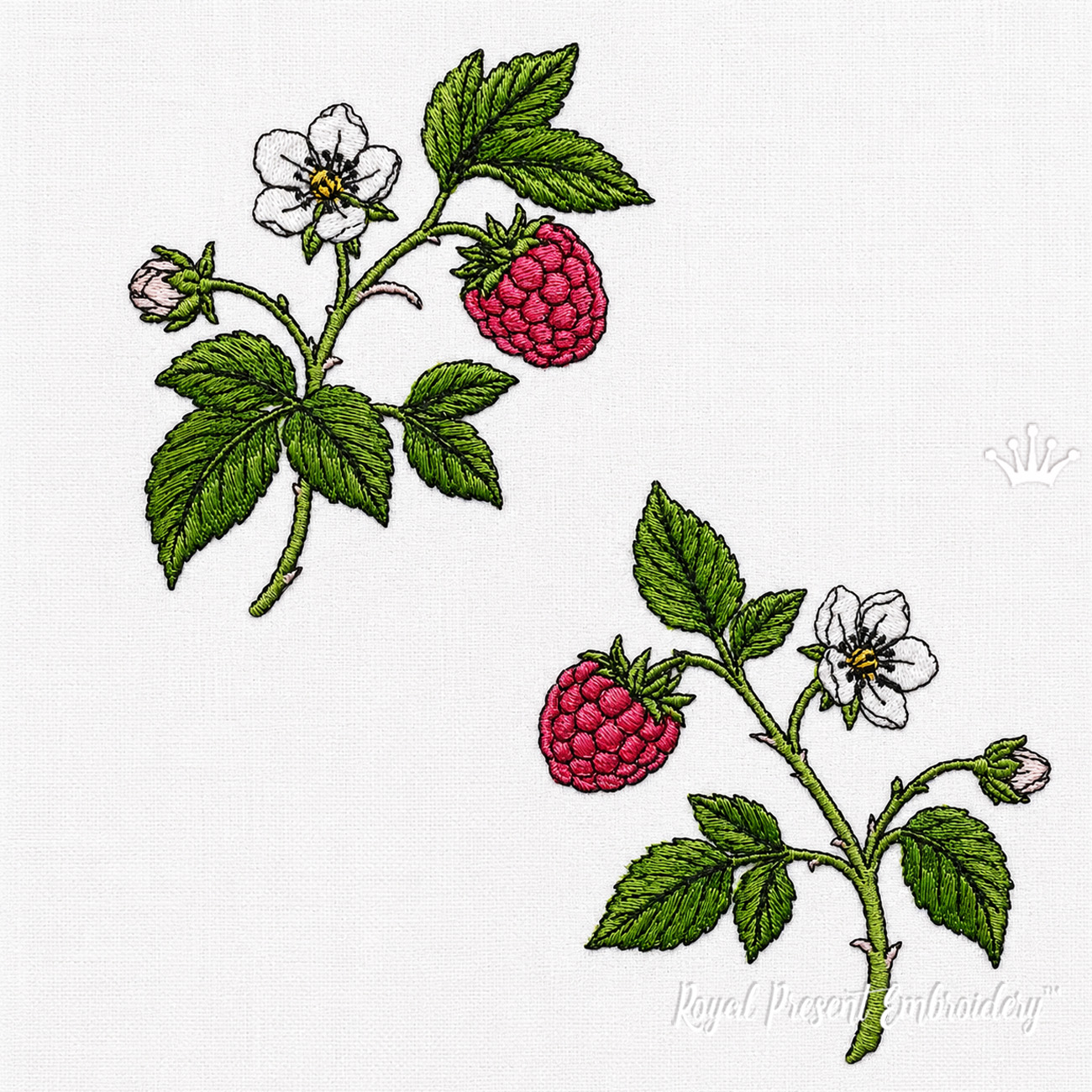
Raspberry Branches with Flowers Machine Embroidery Designs Set includes 2 berry branch designs for embroidery machines in 4 sizes. Use these raspberry branches with leaves, white flowers, buds and ripe berries on towels, napkins, aprons, bags, table linens and summer kitchen decor.
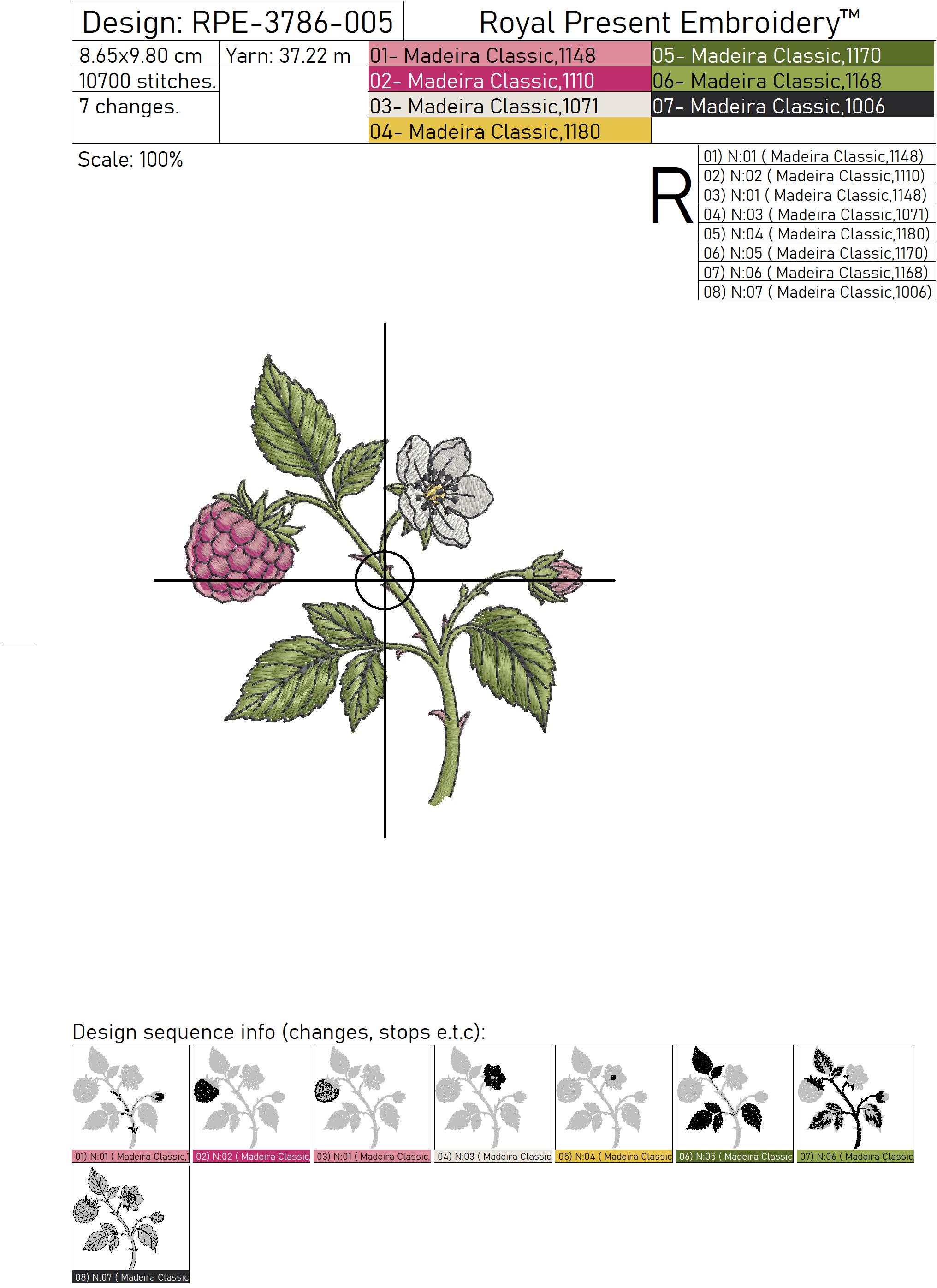
Raspberry #1
Size: 86.5x98.0 mm (3.41x3.86"), Stitches: 10187
Size: 95.2x107.8 mm (3.75x4.24"), Stitches: 11357
Size: 104.6x118.5 mm (4.12x4.67"), Stitches: 12916
Size: 115.2x130.4 mm (4.54x5.13"), Stitches: 14404
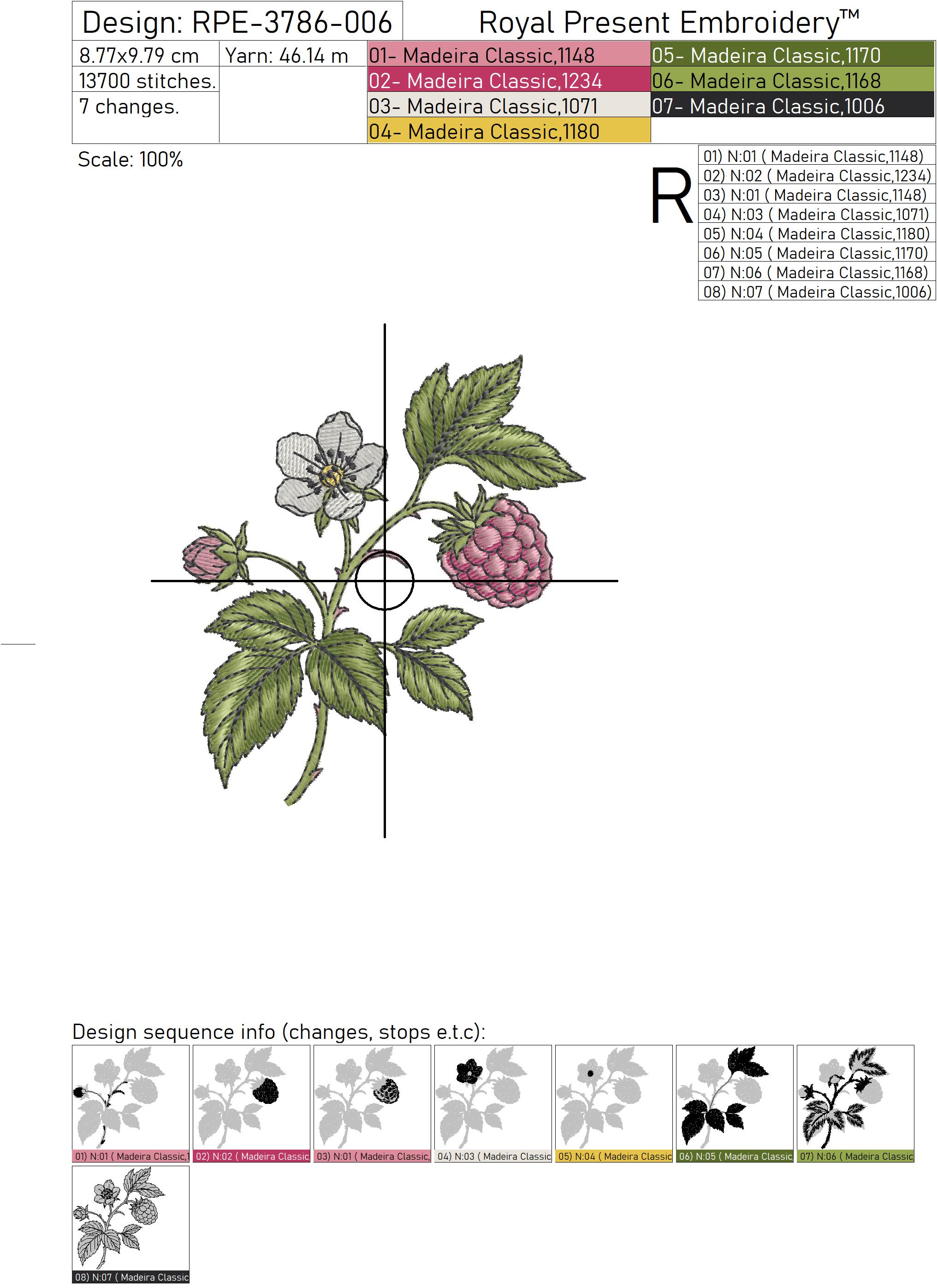
Raspberry #2
Size: 87.7x97.9 mm (3.45x3.85"), Stitches: 13112
Size: 96.4x107.8 mm (3.80x4.24"), Stitches: 14318
Size: 106.0 x 118.5 mm (4.17 x 4.67"), Stitches: 16142
Size: 116.9 x 130.3 mm (4.60 x 5.13"), Stitches: 18106
Formats: ..dst, .pec, .pes, .exp, .vip, .vp3, .vp4, .jef, .jef+, .sew, .hus, .xxx, .dat, .tap, .t03, .shv
Raspberry branches embroidery set for towels, napkins and kitchen decor
Raspberry Branches with Flowers Machine Embroidery Design Set is a botanical berry design set for embroidery machines. The set includes 2 different raspberry branch designs with leaves, white blossoms, buds and ripe red berries.
This set is useful when you need more than a tiny berry accent. The two raspberry branches can be stitched separately, used as a pair on one project or combined with other berry embroidery motifs for a summer kitchen, garden or tea-time theme.
These raspberry designs work well on smooth kitchen towels, tea towels, linen napkins, aprons, table runners, tablecloths, tote bags, cosmetic pouches, sachet bags, pillow covers and summer textile decor. The set includes 4 sizes, so you can choose the best option for your hoop, fabric and project area.
Raspberry embroidery is especially good for kitchen textiles, breakfast table linens, jam jar covers, handmade gift bags, summer cottage decor and berry-themed napkin sets. The flowers and buds make the design look more natural than a single berry motif, while the red raspberries keep it bright and easy to recognize.
Where to use this raspberry embroidery set
- Towels: stitch the raspberry branches on smooth kitchen towels, tea towels or decorative hand towels.
- Napkins: place one branch near a corner or use both branches as a paired composition on linen or cotton napkins.
- Aprons: add the raspberry motif to an apron pocket, bib area or lower edge.
- Table linens: use the branches on table runners, tablecloth corners, placemats or summer breakfast sets.
- Bags: stitch the designs on tote bags, fabric gift bags, cosmetic pouches, sachet bags or small handmade accessories.
- Pillows: use the raspberry branch as a light botanical accent on pillow covers or cottage-style decor.
- Clothing details: smaller sizes can work on pockets, cuffs, sleeves, collars or stable woven fabric areas.
How to place the two raspberry branches
The two branches can be used separately or together. For napkins, place one branch near a corner and leave enough distance from the hem. For table runners and towels, align the branch with the lower edge or use both motifs as a balanced pair.
If you are making a matching set of towels or napkins, create a simple placement template before stitching. Mark the center, the edge distance and the direction of the branch so every item in the set looks intentional and consistent.
For aprons and bags, place the design on stable areas such as the pocket, lower front area or center panel. Avoid stitching too close to thick seams, folded edges or bulky handles.
Best fabric choices
- medium-weight linen
- medium-weight cotton
- smooth kitchen towels
- tea towels
- linen napkins
- cotton napkins
- apron fabric
- canvas tote bags
- table runner fabric
- tablecloth fabric
- cotton pillow covers
- stable woven accessory fabric
Specific stabilizer recommendations
For linen or cotton napkins around 130–180 g/m², use medium tear-away stabilizer around 40–60 g/m². A simple starting formula is: fabric weight divided by 3 = approximate stabilizer weight. For example, 150 g/m² fabric starts around 50 g/m² stabilizer.
For smooth kitchen towels and tea towels around 180–240 g/m², use tear-away stabilizer around 60–80 g/m² under the fabric. If the towel is soft or the design is stitched in a larger size, use two lighter layers, such as 40–50 g/m² + 40–50 g/m², instead of one very stiff layer.
For terry towels, waffle towels and textured fabrics, add water-soluble topping on top of the fabric. Use a topping such as Sulky Solvy, Madeira Avalon Film or Madeira Avalon Ultra so the berries, flowers, leaves and small details do not sink into the fabric texture.
For aprons, tote bags, cosmetic pouches, sachet bags and canvas around 220–300 g/m², use cut-away stabilizer around 60–80 g/m². If the fabric is loose, soft or the design is stitched in the largest size, use a stronger cut-away backing.
For collars, cuffs, pockets, ready-made aprons or small areas that are difficult to hoop, use a self-adhesive tear-away stabilizer such as Madeira Cotton Fix. Hoop the stabilizer first, remove the paper layer and place the fabric on the adhesive surface before stitching.
For knitwear, stretchy clothing or soft garments, do not use regular tear-away stabilizer as the main backing. Use cut-away stabilizer or no-show mesh around 40–60 g/m², because it stays behind the embroidery and supports the stitches after washing and wearing.
Thread color tips
For the raspberries, use red, raspberry red, deep pink, dark red or burgundy thread shades. For the leaves, use two or three green shades to keep the branches natural. For the flowers, use white, cream or very pale pink; for flower centers, use yellow or warm golden thread.
On dark, bright or patterned fabric, test the thread colors first. White flowers should stay visible, green leaves should not disappear into the background, and the red berries should keep enough contrast.
How to avoid puckering
Do not stretch the fabric in the hoop. Stabilize the fabric according to its weight and the size of the design, and test stitch one branch on similar fabric before embroidering the final item.
Berry motifs often have denser areas in the fruit and leaves. If the fabric pulls around the berries, use stronger backing, add a second light stabilizer layer or choose a more stable fabric for the final project.
For items that will be washed often, such as towels, napkins and aprons, choose stable fabric and proper backing from the start. A pretty raspberry branch that puckers after washing is still a raspberry branch, but now with drama. We are avoiding drama.
Useful nearby
If you need a tiny berry accent for cuffs, pockets, sachet bags or small napkin details, see the Small Raspberry Machine Embroidery Design. For a decorative raspberry branch with an insect motif, see the Stag Beetle on Raspberry Branch Machine Embroidery Design.
Before stitching berry designs on towels, napkins, aprons or bags, read Perfecting Stitch Density, Fabric, and Stabilizer Balance. If you are working with small areas, ready-made items or hard-to-hoop fabric, see Madeira Cotton Fix: The Stabilizer You've Been Looking For.
Before stitching
Check the size of each design, your hoop area, fabric weight, stabilizer, thread colors and placement before stitching the final item. For matching towel, napkin or apron sets, test one branch first and use the same placement guide for the full set.
FAQ
What is included in the Raspberry Branches with Flowers set?
The set includes 2 raspberry branch machine embroidery designs in 4 sizes. The motifs include green leaves, white flowers, buds and ripe red raspberries.
What stabilizer should I use for linen napkins?
For linen or cotton napkins around 130–180 g/m², use tear-away stabilizer around 40–60 g/m². Calculate the starting stabilizer weight by dividing fabric weight by 3: 150 g/m² fabric starts around 50 g/m² stabilizer.
What stabilizer works best for kitchen towels?
For smooth kitchen towels and tea towels around 180–240 g/m², use tear-away stabilizer around 60–80 g/m² under the fabric. For soft towels or larger sizes, use two lighter stabilizer layers instead of one very stiff layer.
Do I need water-soluble topping for towels?
Yes, for terry towels, waffle towels and textured fabrics. Use water-soluble topping such as Sulky Solvy, Madeira Avalon Film or Madeira Avalon Ultra on top of the fabric so the berries, flowers and leaves stay clean.
What stabilizer should I use for aprons, tote bags and pouches?
For aprons, tote bags, cosmetic pouches, sachet bags and canvas around 220–300 g/m², use cut-away stabilizer around 60–80 g/m². For loose fabric or the largest design size, choose stronger cut-away backing.
What should I use for pockets, cuffs or hard-to-hoop areas?
Use self-adhesive tear-away stabilizer such as Madeira Cotton Fix. Hoop the stabilizer, remove the paper layer and place the fabric on the adhesive surface before stitching.
Which thread colors work best for raspberry embroidery?
Use red, raspberry red, deep pink, dark red or burgundy for the berries. Use green shades for the leaves, white or cream for the flowers and yellow or golden thread for flower centers.
How should I place the two raspberry branches on one project?
Place the branches diagonally, on opposite corners, along one edge or as a pair on a towel, napkin, apron or bag. Mark the center and edge distance before hooping so the composition looks balanced.
How can I avoid puckering around the berries and leaves?
Do not stretch the fabric in the hoop. Use stabilizer based on fabric weight and design size, check thread tension and test stitch on similar fabric before embroidering the final item.
What if I cannot open the ZIP archive?
If the archive does not open on your device, use the Royal Present online unzip tool. After extracting the archive, choose the embroidery format for your machine.

 Get Sign-In Link
 Login with Google
 Login with Facebook
 Login with Amazon
 Login with Paypal