Tiny Beetroot Machine Embroidery Design 4 sizes
By knowing the speed of your embroidery machine, you can find out how long it will take to embroider a design.
To use the embroidery calculator, click on the number of stitches in the product description.
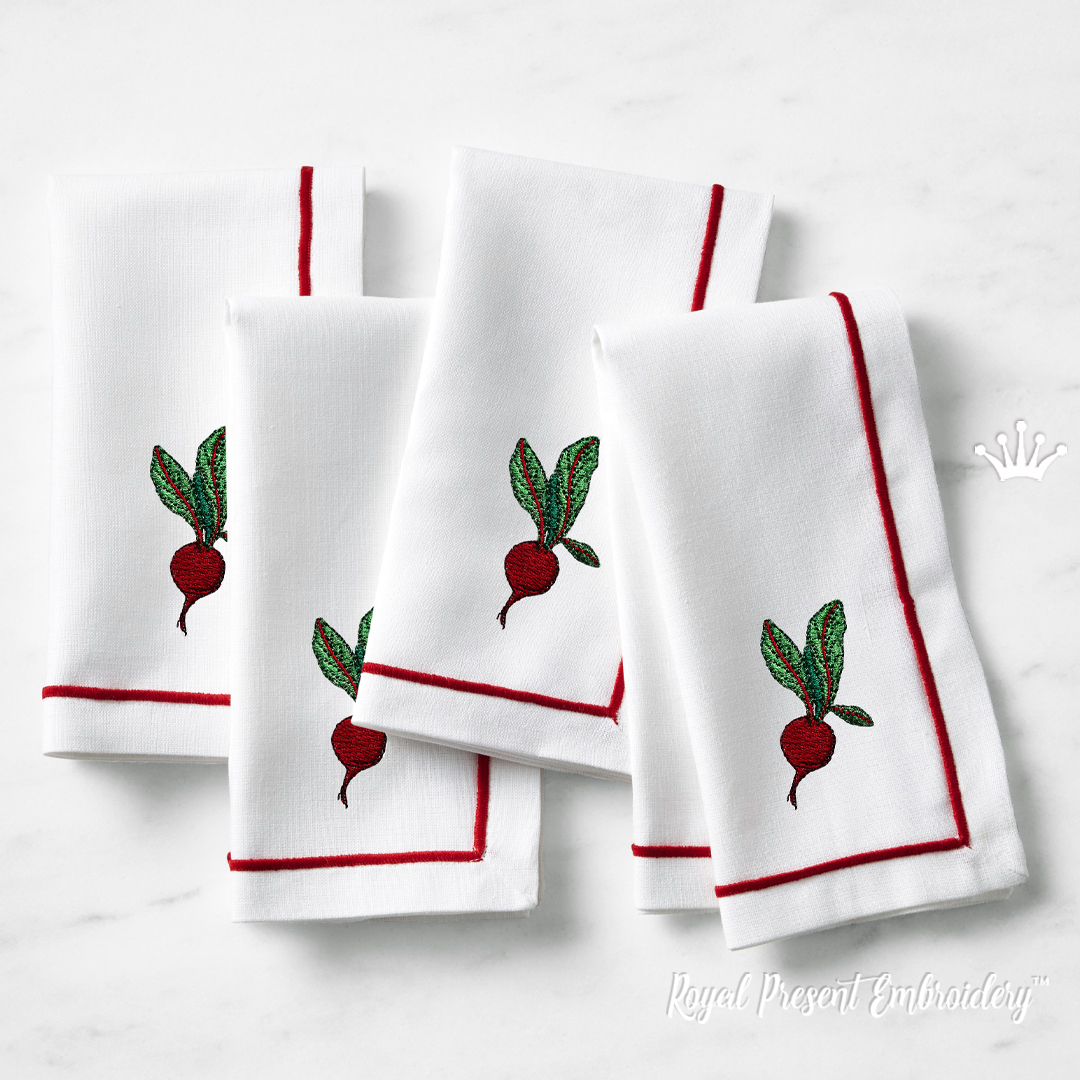
Tiny Beetroot Machine Embroidery Design is a digital embroidery file for computerized embroidery machines. The motif depicts one red-burgundy beetroot with a fine root tail and a cluster of green leaves marked by magenta and dark green veins. Tatami fill covers the beetroot bulb, compact satin-stitch sections form the leafy tops and stems, and fine running stitches create the colored veins and small root details. Four original sizes from 32.9x49.0 mm to 43.7x65.2mm are included; no finished embroidered item or physical product is shipped.
Size: 32.9x49.0 mm (1.30x1.93"), Stitches: 2220
Size: 36.2x53.9mm (1.43x2.12"), Stitches: 2430
Size: 39.8x59.3mm (1.57x2.33"), Stitches: 2656
Size: 43.7x65.2mm (1.72x2.57"), Stitches: 2963Formats: .dst, .jef, .pec, .vip, .hus, .pes, .exp, .sew, .dat, .vp3, xxx
Essential design facts
| Product type | Downloadable digital machine embroidery design; not a patch or finished textile item |
|---|---|
| Motif | One red-burgundy beetroot with green leafy tops, colored veins and a fine root tail |
| Stitch techniques | Tatami fill, compact satin-stitch sections and fine running stitches |
| Included | 1 separate beetroot motif in 4 original sizes |
| Minimum embroidery field | 80x80 mm (3.15x3.15 in) for all four files |
This beetroot belongs to the RPE-3500 series. It is also included in the Mini Fruits & Vegetables Machine Embroidery Design Set with the matching pumpkin, apple and pepper plant.
Exact design size and suitable hoop
| Original file size | Stitches | Suitable embroidery field |
|---|---|---|
| 32.9x49.0 mm (1.30x1.93") | 2220 | 80x80 mm (3.15x3.15 in) or larger |
| 36.2x53.9mm (1.43x2.12") | 2430 | 80x80 mm (3.15x3.15 in) or larger |
| 39.8x59.3mm (1.57x2.33") | 2656 | 80x80 mm (3.15x3.15 in) or larger |
| 43.7x65.2mm (1.72x2.57") | 2963 | 80x80 mm (3.15x3.15 in) or larger |
All four original files fit an 80x80 mm (3.15x3.15 in) embroidery field. A standard 100x100 mm (3.94x3.94 in), commonly called a 4x4 hoop, also accommodates every listed size.
Madeira Classic Rayon 40 color map
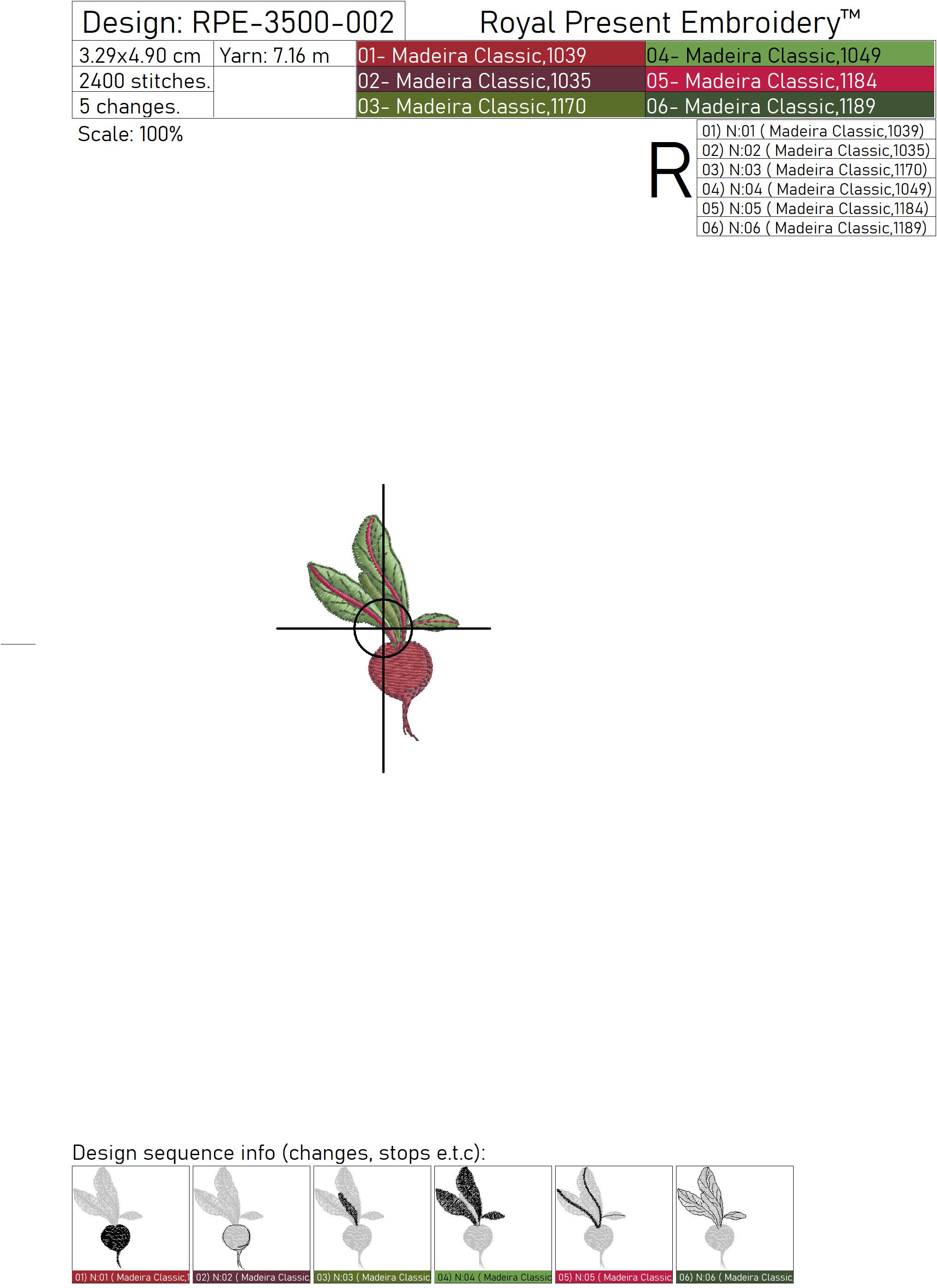
The original color chart contains six Madeira Classic 40 colors. Each square is an approximate screen preview; use the Madeira number as the thread reference. The final column states which visible part of the beetroot is stitched with each color.
| Color | Madeira Classic 40 | Visible shade | Embroidered fragments |
|---|---|---|---|
| ■ | 1039 | Deep red | Main tatami fill across the rounded beetroot bulb. |
| ■ | 1035 | Burgundy | Darker shading on the bulb, the lower root tail and the deepest root details. |
| ■ | 1170 | Deep olive green | First darker satin sections in the leafy tops and the green stem areas closest to the root. |
| ■ | 1049 | Light leaf green | Main light green satin fills across the beetroot leaves. |
| ■ | 1184 | Magenta red | Magenta central veins and red stem accents running through the leafy tops. |
| ■ | 1189 | Dark forest green | Dark green leaf edges, secondary veins and fine running-stitch details across the tops. |
Fabric, stabilizer and needle
| Fabric or item | Stabilizer | Practical setup |
|---|---|---|
| Medium cotton or linen | Medium-weight tear-away | Use a new 75/11 embroidery needle and hoop the fabric without stretching the grain. |
| Lightweight cotton | Medium tear-away; add a second light layer if the test puckers | Test the complete motif because the tatami-filled root needs flat, even support. |
| Canvas, twill or apron fabric | Strong medium tear-away | Embroider a flat pocket or front panel before assembly and keep construction seams outside the stitch area. |
| Terry kitchen towel | Tear-away underneath and thin water-soluble topping above | Choose a smooth woven towel band when possible so the root tail and colored leaf veins remain clear. |
| Knit garment | Medium cut-away | Use a 75/11 ballpoint embroidery needle and do not stretch the garment during preparation. |
Stable, smooth fabric helps the tatami-filled beetroot bulb remain flat and keeps the narrow leaf sections and colored veins in registration. For frequently washed kitchen towels and aprons, use quality 40-weight polyester thread; rayon gives decorative napkins a softer sheen. Begin near 500–650 stitches per minute and slow down if the compact satin sections become uneven. For additional setup guidance, read about stitch density, fabric and stabilizer balance.
Kitchen, garden and harvest project ideas
- Cocktail napkins, dinner napkins and smooth woven kitchen-towel bands.
- Apron pockets embroidered flat before the pocket is attached.
- Reusable produce bags, bread-basket liners and recipe-book covers.
- Garden aprons, seed-storage pouches and fabric labels for handmade pantry items.
- Placemats, table runners and coordinated farm-to-table or harvest linens.
- A four-piece kitchen textile set combined with the matching pumpkin, apple and pepper plant.
Stitching tips for the tiny beetroot motif
- Print the selected size at 100% and verify the complete placement with a paper template.
- Support the entire embroidery area so the tatami-filled bulb remains flat and the compact leaves keep their intended shape.
- Keep the fabric grain straight and avoid placing the fine root tail over a heavy hem, pocket edge or seam allowance.
- Test all six threads on the selected fabric and confirm that the magenta veins remain visible between the two greens.
- Run the machine trace function after loading the file, particularly on a finished napkin or narrow towel band.
Matching individual Tiny designs
Continue the small produce theme with separate Tiny product cards. Each link below opens one specific design rather than a mixed fruit-and-vegetable set.
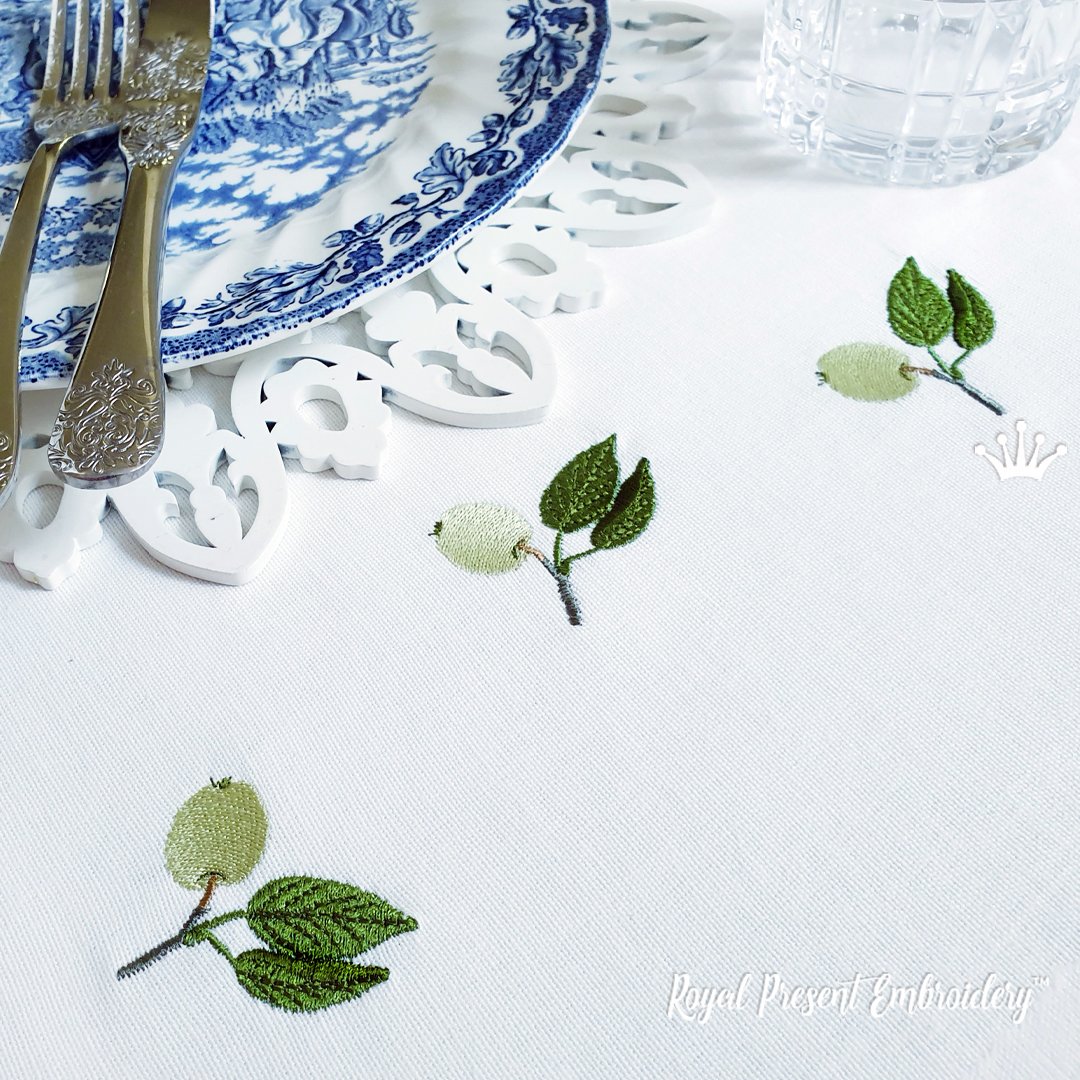 Tiny Apple Machine Embroidery Design Tiny Apple Machine Embroidery Design |
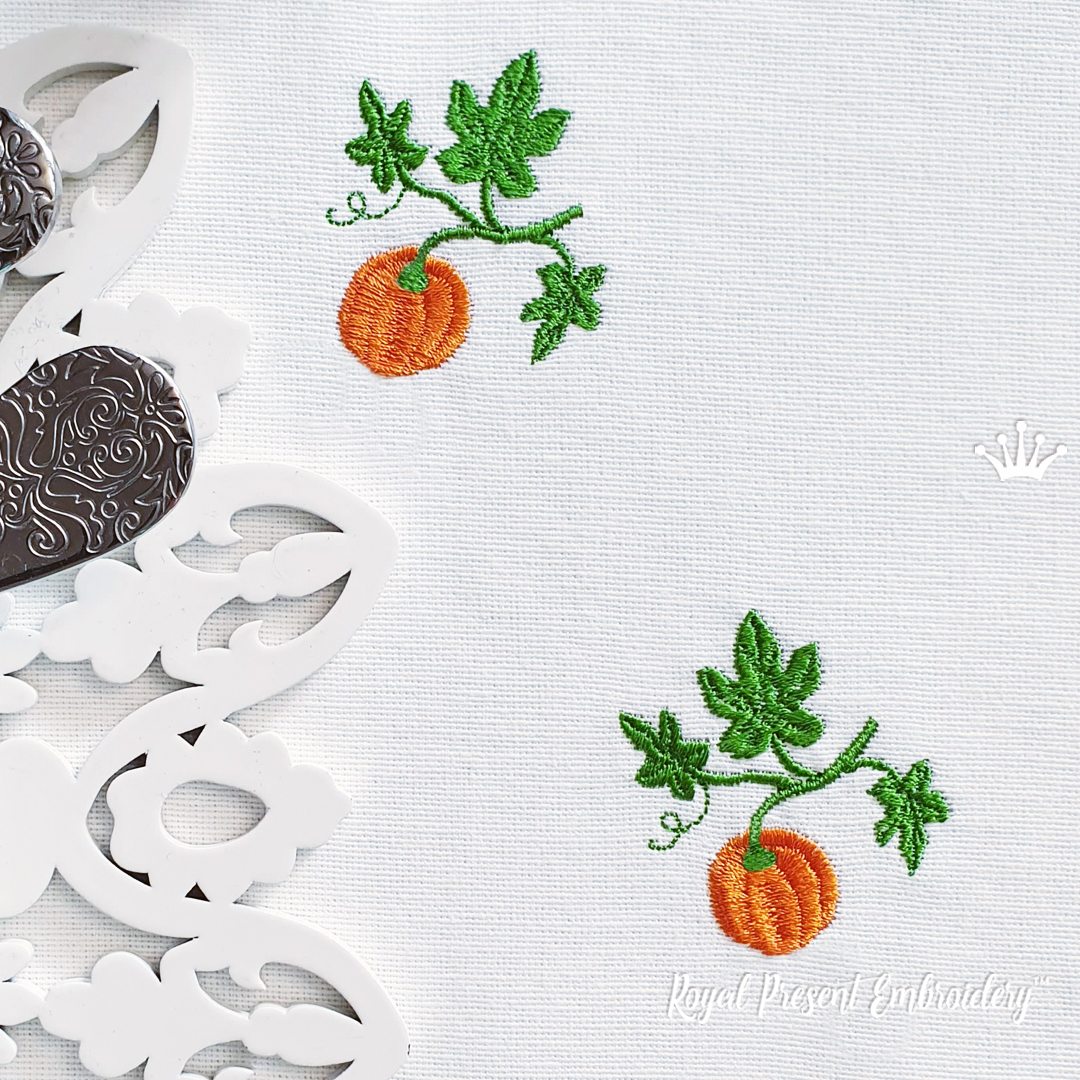 Tiny Pumpkin Machine Embroidery Design Tiny Pumpkin Machine Embroidery Design |
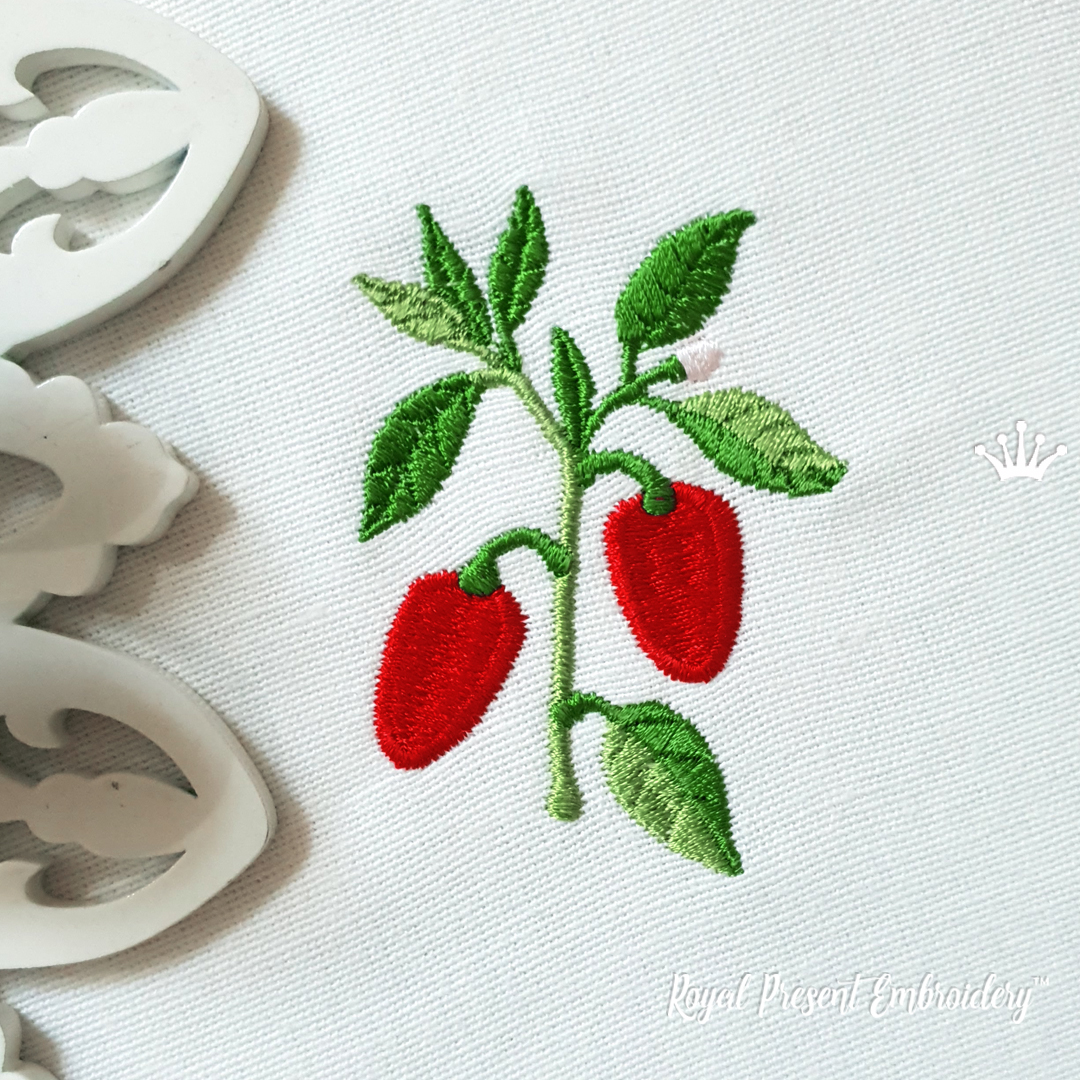 Tiny Pepper Machine Embroidery Design Tiny Pepper Machine Embroidery Design |
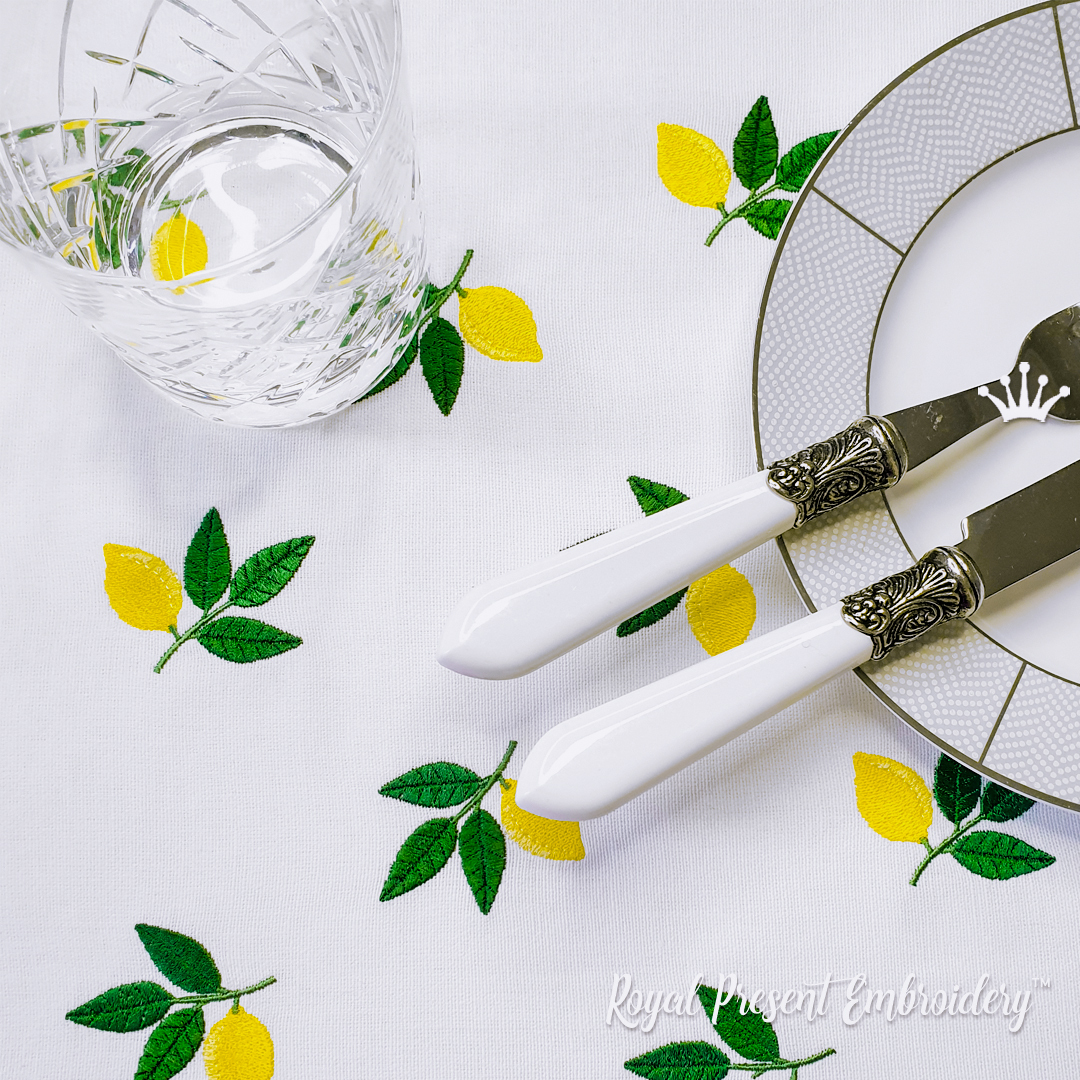 Tiny Lemon Machine Embroidery Design Tiny Lemon Machine Embroidery Design |
Frequently asked questions
Do all four files fit an 80x80 mm embroidery field?
Yes. The largest file is 43.7x65.2mm, so every original size fits an 80x80 mm (3.15x3.15 in) embroidery field.
Does the design fit a standard 4x4 hoop?
Yes. A 100x100 mm (3.94x3.94 in), commonly called a 4x4 hoop, accommodates all four listed files.
What stitch types are used in the beetroot?
Tatami fill covers the red beetroot bulb. Compact satin sections form the leafy tops and stems, while fine running stitches create the magenta and dark green veins and small root details.
Does the beetroot bulb use tatami fill?
Yes. The rounded root body uses tatami fill with darker burgundy shading; the leaves are constructed from smaller satin-stitch sections.
Is this a single beetroot or a complete produce set?
This product contains one beetroot motif in four sizes. The matching pumpkin, apple and pepper plant are separate products and are also available with the beetroot in the complete Mini Fruits & Vegetables set.
Can the beetroot be embroidered on a terry kitchen towel?
Yes. Use suitable backing underneath and thin water-soluble topping over the pile. A smooth woven towel band gives the clearest result for the fine root tail and colored leaf veins.
Is the design suitable for kitchen, garden and harvest projects?
Yes. The compact botanical beetroot works on kitchen linens, garden aprons, produce bags, farm-to-table textiles and coordinated harvest projects.
Can the six Madeira colors be replaced?
Yes. Keep visible separation between the red root, burgundy shading, green leaves and magenta veins. Select thread by Madeira number when reproducing the original palette because screen colors are only approximate.
Can this small design be resized substantially?
Using one of the four original files is safer. A strong reduction can make the root tail, leaf veins and compact satin sections too narrow, while automatic enlargement can change the tatami coverage.
Machine embroidery designer: Ludmila Konovalova.

 Get Sign-In Link
 Login with Google
 Login with Facebook
 Login with Amazon
 Login with Paypal